
When you bite into a fiery curry or sprinkle crushed chilli flakes over your pizza, have you ever wondered what makes some chillies burn your mouth while others add just a pleasant warmth? The answer lies in a scientific measurement system that has become the gold standard for rating pepper pungency worldwide. Whether you’re a home cook, a restaurant chef, or someone involved in the spice business, understanding how chilli heat is measured can transform the way you select, use, and trade these vibrant pods.
The Science Behind Chilli Heat Measurement
Created in 1912 by American pharmacist Wilbur Scoville, this rating system was designed to quantify the pungency of peppers. The method originally involved diluting chilli extracts in sugar water until the heat could no longer be detected by a panel of tasters. The degree of dilution needed determined the rating—a pepper requiring 1,000 dilutions would score 1,000 Scoville Heat Units (SHU).
Today, modern laboratories use High-Performance Liquid Chromatography (HPLC) to measure capsaicin concentration directly, providing more accurate and consistent results. This scientific approach has brought standardisation to an industry that once relied purely on subjective taste tests. The shift to laboratory analysis has been particularly valuable for the global spice market, where consistency and quality assurance drive buyer confidence.
Capsaicin: The Molecule Behind the Fire
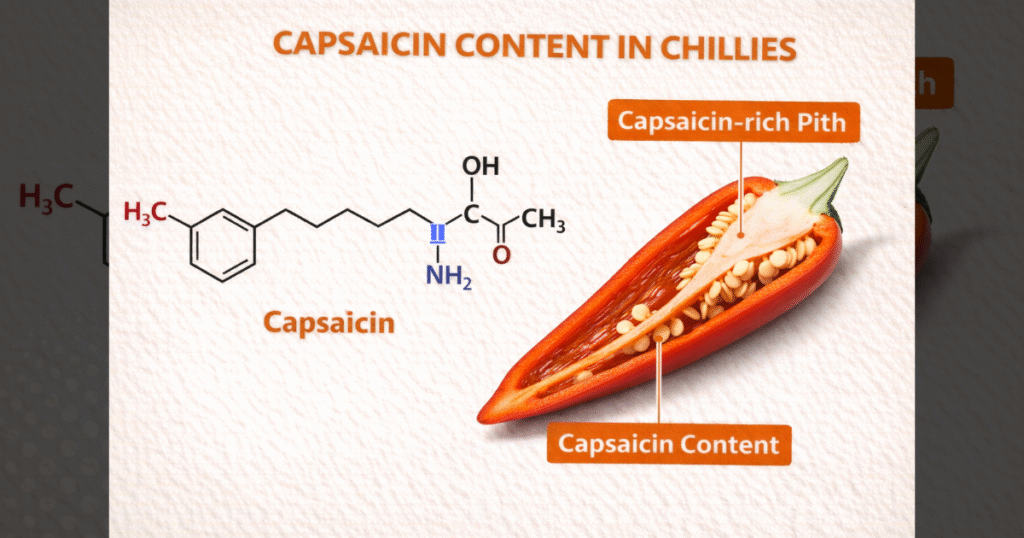
The burning sensation you experience from chillies comes from capsaicin and related compounds called capsaicinoids. These molecules are concentrated primarily in the white pith and seeds inside the pepper. When capsaicin comes into contact with pain receptors in your mouth, it triggers a heat response—though no actual temperature change occurs.
Different chilli varieties produce varying levels of capsaicinoids depending on their genetics, growing conditions, and maturity at harvest. This natural variation is why understanding heat ratings becomes essential for anyone working in agriculture or food preparation. A farmer growing chillies for powder production needs to know whether their crop will deliver mild flavour or intense heat, as this directly impacts market value and buyer requirements.
Heat Levels Across Popular Indian Varieties
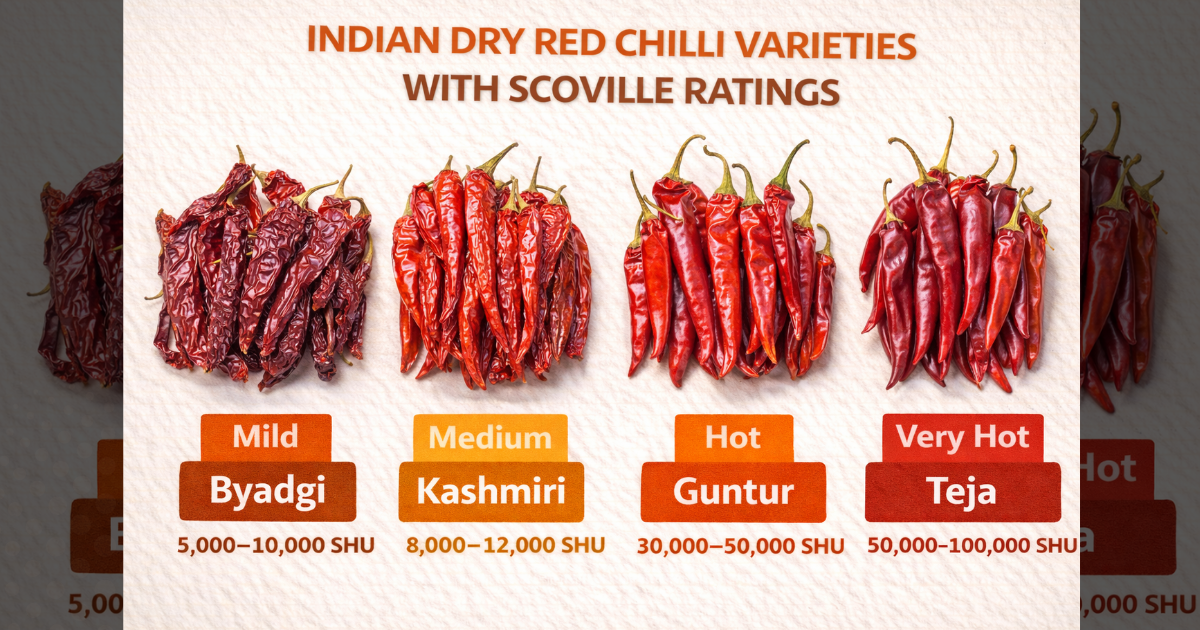
India produces some of the world’s most diverse range of dry red chillies, each with distinct heat profiles. Kashmiri chillies typically register between 1,000 to 2,000 SHU—relatively mild but prized for their brilliant red colour and ability to add visual appeal without overwhelming heat. They’re a favourite in dishes where colour matters as much as flavour.
Byadgi chillies from Karnataka measure around 8,000 to 15,000 SHU, offering moderate heat with a deep, rich colour. These are commonly used in South Indian cooking and have gained popularity in both domestic and international markets.
Guntur chillies from Andhra Pradesh, however, are the heavyweights, ranging from 30,000 to 50,000 SHU. These fiery pods are essential for those who want serious heat in their preparations. For context, a jalapeño pepper typically measures 2,500 to 8,000 SHU, making Guntur chillies significantly more potent.
Understanding these differences allows chefs and food manufacturers to select the right variety for their specific needs. An export company dealing with international clients must communicate these distinctions clearly, as Western and Asian markets often have different heat preferences.
Debunking the Colour-Heat Myth
A common misconception is that darker red chillies are always hotter. In reality, colour and heat are independent characteristics controlled by different genetic factors. The vibrant red colour comes from carotenoid pigments, while heat comes from capsaicin production.
Kashmiri chillies prove this point perfectly—they deliver stunning colour with minimal heat. Conversely, some pale or yellowish varieties can pack serious pungency. When sourcing chillies for commercial use, relying on appearance alone can lead to disappointing results. This is why standardised testing and clear labelling have become crucial in the agro-product sector.
Buyers in the spice trade increasingly demand laboratory certificates showing exact heat levels. This transparency benefits everyone in the supply chain, from farmers adjusting their cultivation practices to manufacturers formulating consistent products.
Making Informed Cooking Decisions
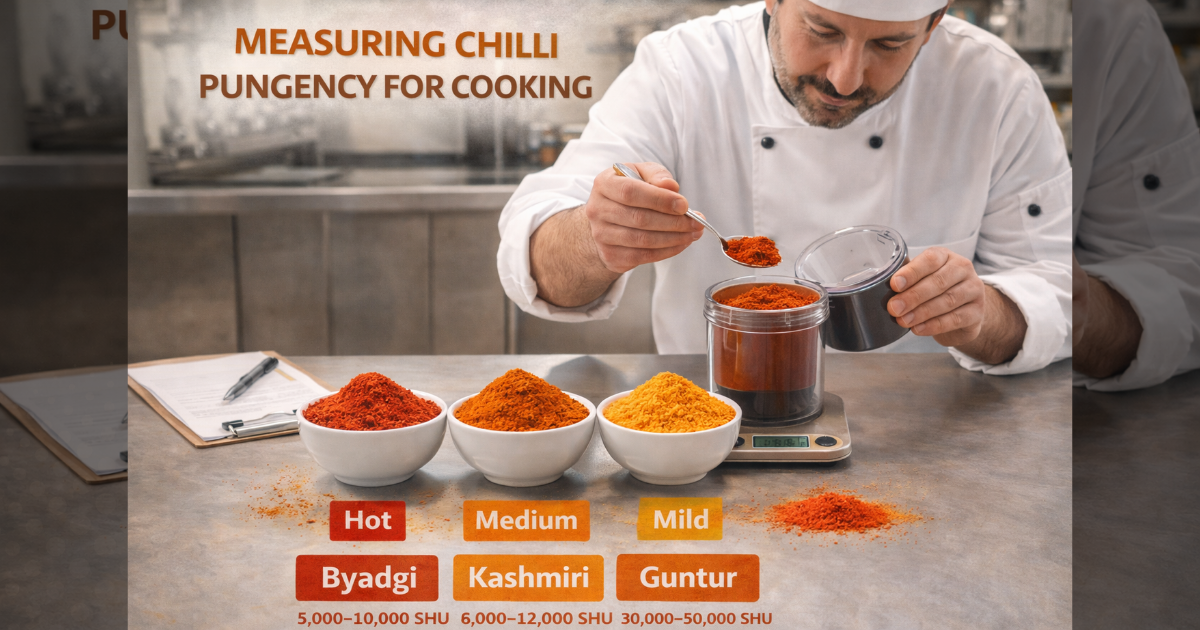
Knowing the heat rating of your dry red chillies empowers you to cook with confidence. If a recipe calls for mild heat, reaching for Kashmiri chillies at 1,500 SHU makes sense. For medium heat, Byadgi works beautifully. When you want fire, Guntur or similar high-SHU varieties deliver.
This knowledge is particularly valuable when adapting recipes from different cuisines. Korean gochugaru typically measures 1,500 to 10,000 SHU, while Thai bird’s eye chillies can reach 100,000 SHU. Understanding where Indian varieties fall on this spectrum helps you make appropriate substitutions without ruining a dish.
Professional chefs often blend different chilli varieties to achieve precise heat levels while maintaining colour and flavour complexity. This technique requires knowing the baseline heat rating of each component—guesswork simply doesn’t cut it in commercial kitchens.
The Role of Heat Ratings in Global Trade
The international spice market operates on specifications. When a buyer in Europe orders containers of chilli powder, they specify not just the variety but the acceptable heat range. A product meant for mild paprika seasoning cannot arrive with 40,000 SHU—it would be unusable for the intended purpose.
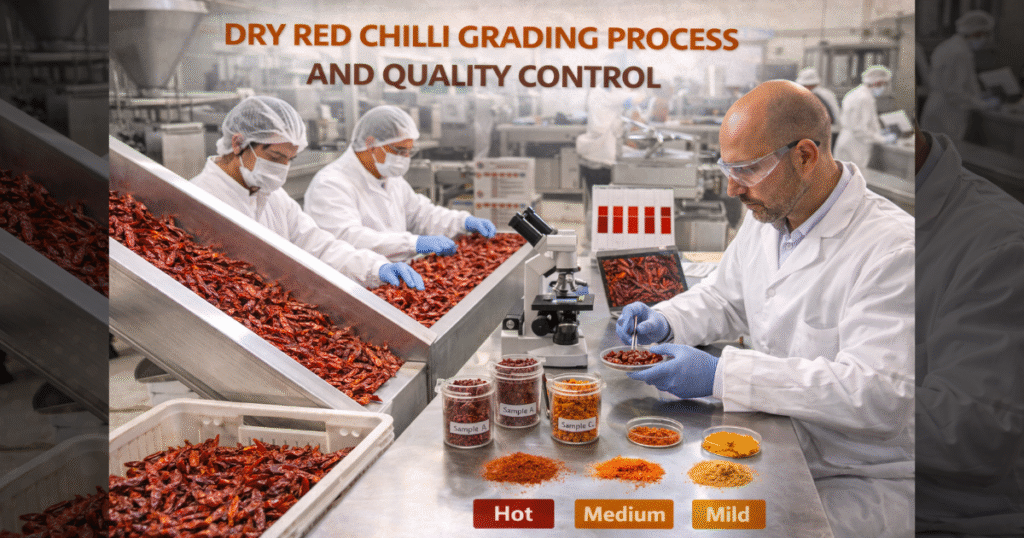
This is where proper grading and certification become essential. Export-oriented businesses invest in testing facilities or partner with certified laboratories to verify heat levels before shipping. These quality parameters build trust and enable long-term relationships with international buyers.
Agriculture-focused companies understand that consistent heat levels require attention throughout the production process. The same chilli variety grown in different regions or under varying conditions can produce pods with different capsaicin concentrations. Factors like soil composition, water availability, temperature stress, and harvest timing all influence final heat levels.
Smart farming practices, combined with proper post-harvest handling, help maintain consistency. Sun-drying versus mechanical drying, storage conditions, and processing methods can all affect the final product’s pungency.
Environmental and Agricultural Factors
Capsaicin production in chilli plants increases under stress conditions. Plants exposed to heat stress, water scarcity, or certain soil deficiencies often produce hotter peppers as a defensive mechanism. While this might seem beneficial for high-heat varieties, excessive stress can reduce yield and pod quality.
Farmers aiming for consistent heat profiles need to balance growing conditions carefully. Those in the agriculture sector working with farmers often provide guidance on optimal irrigation, fertilisation, and pest management to achieve target heat levels year after year.
Climate variation between seasons can create challenges. A particularly hot summer might push Byadgi chillies beyond their typical range, while a cool, wet season could produce milder pods. This natural variability is why batch testing remains important even with established varieties.
How Premium Spice Companies Support Global Markets
Companies specialising in agro-product distribution play a vital role in connecting quality producers with international buyers. Vipra Overseas, for instance, has established expertise in sourcing, grading, and exporting a diverse range of agricultural products. Their portfolio includes fresh fruits that meet international quality standards, fresh vegetables harvested at peak ripeness, various beans processed to customer specifications, frozen products maintained under optimal cold chain conditions, premium spices including precisely graded chillies, and grains processed for both domestic and international markets.
Such companies understand that successful export operations require more than just moving products across borders. They involve quality assurance, documentation compliance, proper packaging, and clear communication of product specifications—including Scoville ratings for chillies. This infrastructure supports farmers by providing market access while giving buyers confidence in the products they receive.
The best agro-exporters maintain relationships with farming communities, often providing technical support and market feedback that helps improve cultivation practices. This collaborative approach elevates quality standards across the entire supply chain.

Using Heat Knowledge Wisely
Understanding the science behind chilli heat transforms these colourful pods from mysterious ingredients into predictable, manageable components of your cooking or business. Whether you’re experimenting with new recipes at home or managing large-scale spice procurement, knowing your Scoville numbers gives you control.
Start by testing small amounts of unfamiliar chilli varieties before committing to large quantities. Document the heat levels of products you purchase regularly, noting batch numbers and suppliers when possible. This creates a reference library for future use.
For businesses involved in agriculture or food manufacturing, investing in proper testing and documentation pays dividends through consistent products, satisfied customers, and reduced waste. The small cost of laboratory analysis is negligible compared to the potential loss from shipping incorrect specifications.
The Scoville scale may have begun as a simple taste test over a century ago, but it has evolved into an indispensable tool for anyone serious about chillies. From the farmer’s field to the kitchen table, from local markets to international export containers, understanding heat ratings helps ensure that every dried red chilli finds its perfect application. Armed with this knowledge, you can select, use, and trade these fiery pods with the confidence that comes from scientific understanding and practical experience.