
A Modern Answer to Limited Land
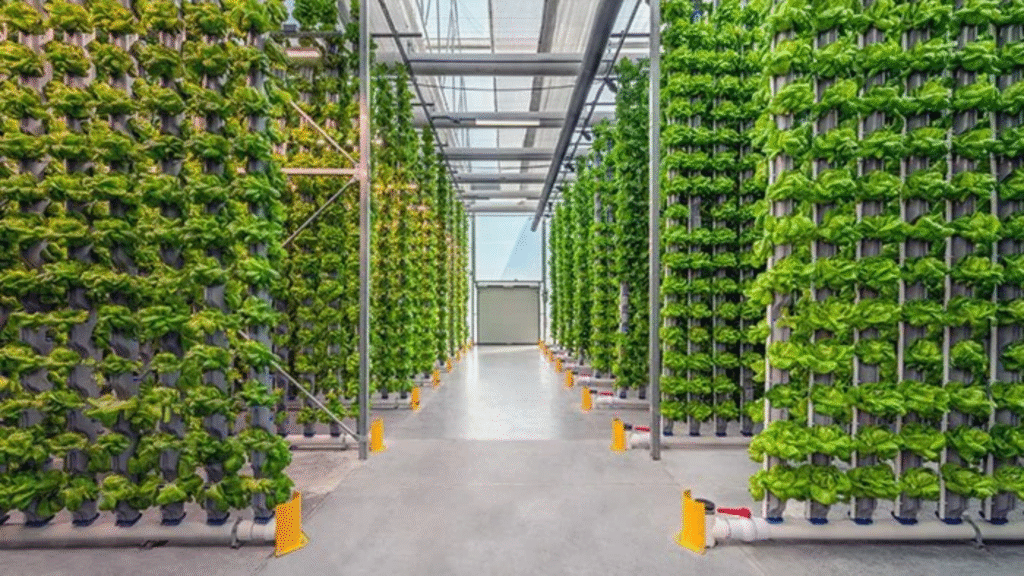 As cities expand and farmland becomes harder to access, agriculture is being forced to adapt. Vertical farming has emerged as one of the most practical answers to this challenge. Instead of spreading crops across wide fields, this method grows plants upward in stacked layers, often inside controlled indoor spaces.
Vertical farming is no longer a concept limited to innovation labs. It is already being used to grow vegetables, herbs, and fruits in urban centers, close to consumers, with impressive efficiency and consistency.
Maximum Use of Small Spaces
One of the most powerful advantages of vertical 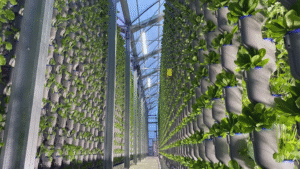 farming is how effectively it uses space. By stacking crops vertically, growers can produce many times more food in the same footprint compared to traditional farming.
This approach is ideal for:
-
Urban buildings
-
Warehouses
-
Rooftops
-
Indoor growing units
Even a small setup can turn into a reliable source of fresh produce, making it suitable for local supply and commercial use.
Year-Round Production Without Seasonal Limits
Vertical farms operate in controlled environments where temperature, humidity, light, and airflow are managed 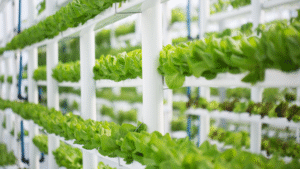 carefully. This removes dependence on weather and seasons.
Crops can be grown continuously throughout the year, allowing growers to plan harvests accurately and maintain stable supply for markets. This reliability is especially valuable for businesses that require consistent volumes week after week.
Reduced Water Usage
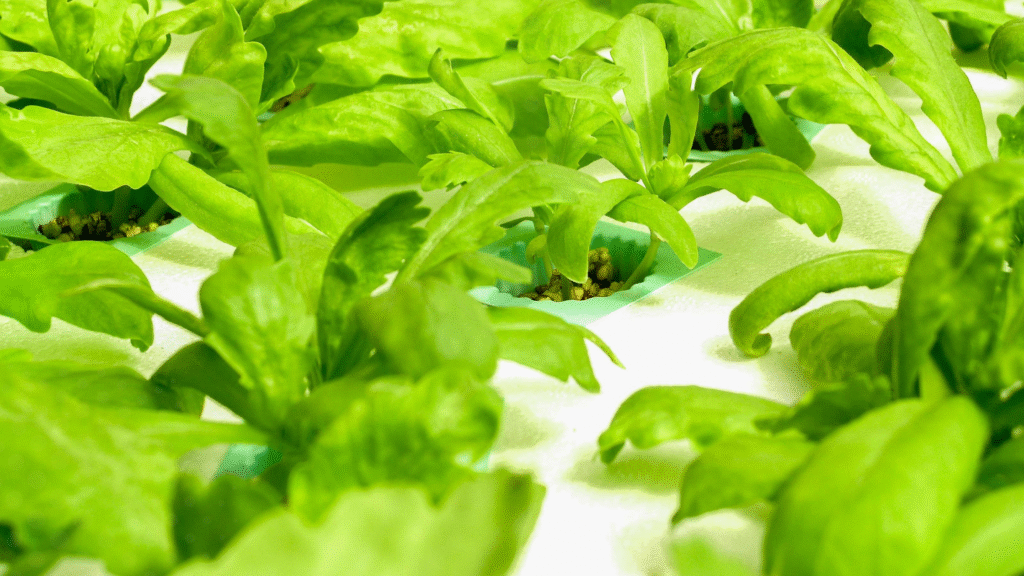 Vertical farming uses significantly less water than open-field agriculture. Most systems rely on hydroponics or aeroponics, where water is recycled and reused instead of being lost to the soil.
This water efficiency makes vertical farming a smart solution for regions facing water stress while still maintaining strong production output.
Cleaner Growing Conditions
Since vertical farms are usually indoor or semi-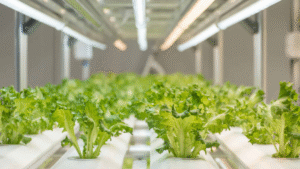 enclosed, plants are protected from dust, pollution, and many outdoor pests. This creates a cleaner growing environment where crops remain free from soil contamination.
As a result:
-
Washing requirements are reduced
-
Chemical usage drops
-
Crop quality improves
Consumers increasingly value this level of cleanliness and traceability.
Faster Growth and Higher Yield
In vertical farming, plants receive nutrients, 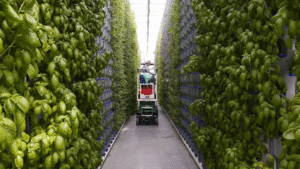 light, and water exactly when they need them. This precision allows crops to grow faster and more evenly.
Faster growth cycles mean:
-
More harvests per year
-
Better planning for sales
-
Reduced crop loss
This efficiency supports strong business models, especially for urban farms and exporters.
Lower Transportation Time and Cost
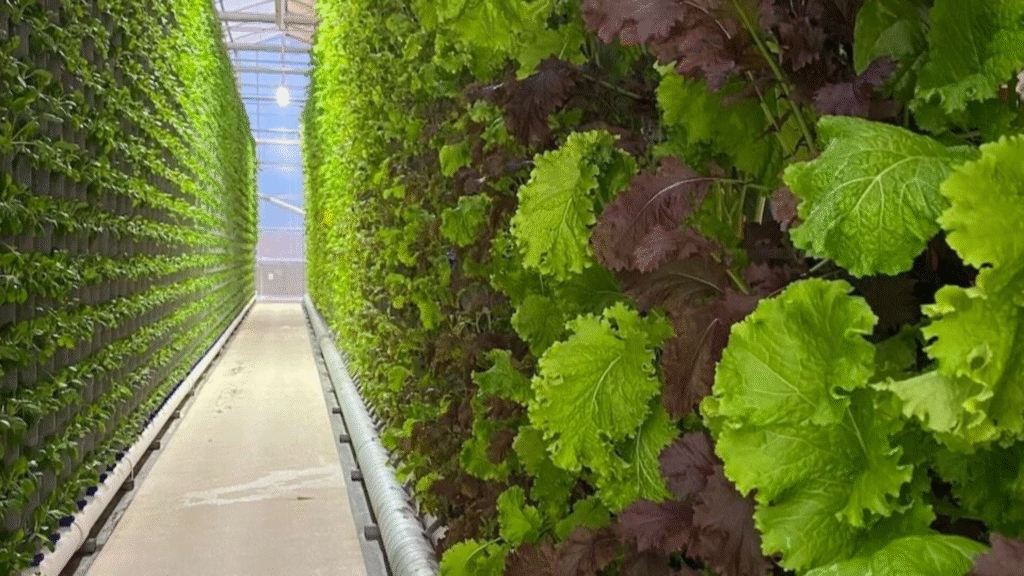 Vertical farms are often located close to cities and consumption hubs. This shortens the distance between harvest and market.
Reduced travel time helps:
-
Preserve freshness
-
Extend shelf life
-
Cut transportation costs
-
Lower carbon emissions
Fresh produce reaches consumers quickly, making vertical farming ideal for local distribution and premium markets.
Support for Diverse Crop Types
Vertical farming is not limited to leafy greens alone. With the right 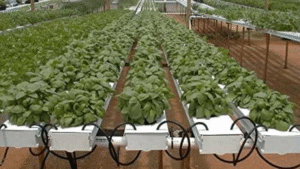 setup, growers can raise a wide variety of crops, including herbs, vegetables, and select fruits.
This flexibility supports supply chains dealing with kinds of fruits and vegetables, allowing producers to adapt to changing market demand without expanding land area.
Strong Fit for Home and Community Growing
Vertical systems are also suitable for small-scale 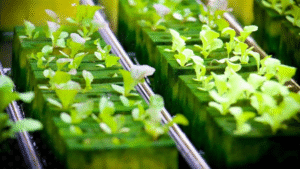 use. Many households and community projects use compact vertical units to grow fresh food indoors.
This approach supports local access to clean produce and allows families to maintain a small fruits house setup for daily use without depending entirely on external supply.
Growing Global Demand and Cultural Connection
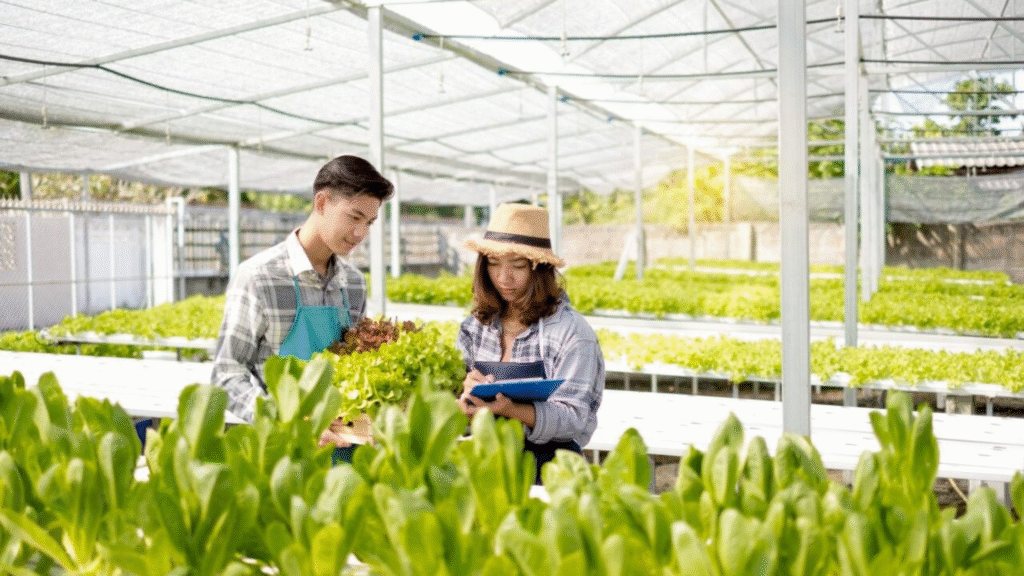 Vertical farming also supports the cultivation of region-specific crops in controlled conditions. Growers can experiment with varieties connected to tradition and taste preferences, including crops linked to fruits originated in india, while ensuring stable quality and yield.
This opens doors for niche markets and export-focused production.
Export Opportunity and the Role of Vipra Overseas
 As vertical farming produces clean, uniform, and well-controlled crops, it fits well into international trade requirements. Export buyers value consistency, hygiene, and longer shelf life—qualities that vertical farming delivers naturally.
This is where Vipra Overseas plays an important role in the supply chain. Vipra Overseas helps export agro products such as:
-
Fresh fruits
-
Fresh vegetable
-
Beans
-
Frozen products
-
Spices
-
Grains
By handling quality checks, packaging standards, cold-chain logistics, and export documentation, Vipra Overseas helps growers and producers reach global markets with confidence. Vertical farming operations benefit greatly from such export support as they scale beyond local distribution.
Encouraging Innovation and New Careers
Vertical farming attracts young professionals, engineers, and 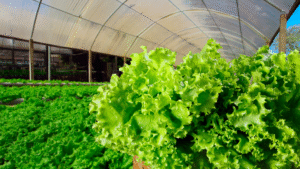 entrepreneurs who bring fresh thinking into agriculture. Automation, sensors, and data-driven systems are commonly used, creating new job roles and business opportunities.
This shift helps agriculture evolve into a technology-supported industry while maintaining its core purpose of food production.
Final Thoughts
Vertical farming offers a clear solution to many challenges facing modern agriculture. From space efficiency and water conservation to cleaner crops and year-round production, its advantages are difficult to ignore. As cities grow and food demand increases, vertical farming provides a reliable, flexible, and future-ready approach to cultivation.
With export support from experienced partners like Vipra Overseas, vertically grown produce is not only serving local markets but also reaching international buyers. This combination of innovation and global connectivity makes vertical farming one of the most promising paths forward for agriculture.