
Signs Your Dry Red Chillies Have Gone Bad
Dry red chillies form the backbone of countless recipes across kitchens worldwide. Whether you’re a home cook or running a commercial kitchen, knowing when these essential pods have deteriorated can save you from ruined dishes and potential health concerns. After years of inspecting batches destined for both local markets and international trade, I’ve developed a keen eye for recognising when chillies have crossed the line from usable to unusable.
Understanding Spoilage in Dried Chillies
When we talk about dry red chillies “going bad,” we’re referring to several degradation processes. Unlike fresh produce that rots quickly, dried chillies deteriorate gradually through moisture absorption, oxidation, pest infestation, or microbial growth. The drying process removes most water content, which normally preserves them for months or even years. However, improper handling or storage conditions can reverse this preservation, allowing quality to decline rapidly.
The difference between fresh harvest and spoiled stock becomes obvious once you know what to look for. Quality batches maintain their characteristics even after extended storage, while compromised ones show clear warning signals.
Visual Indicators of Deterioration
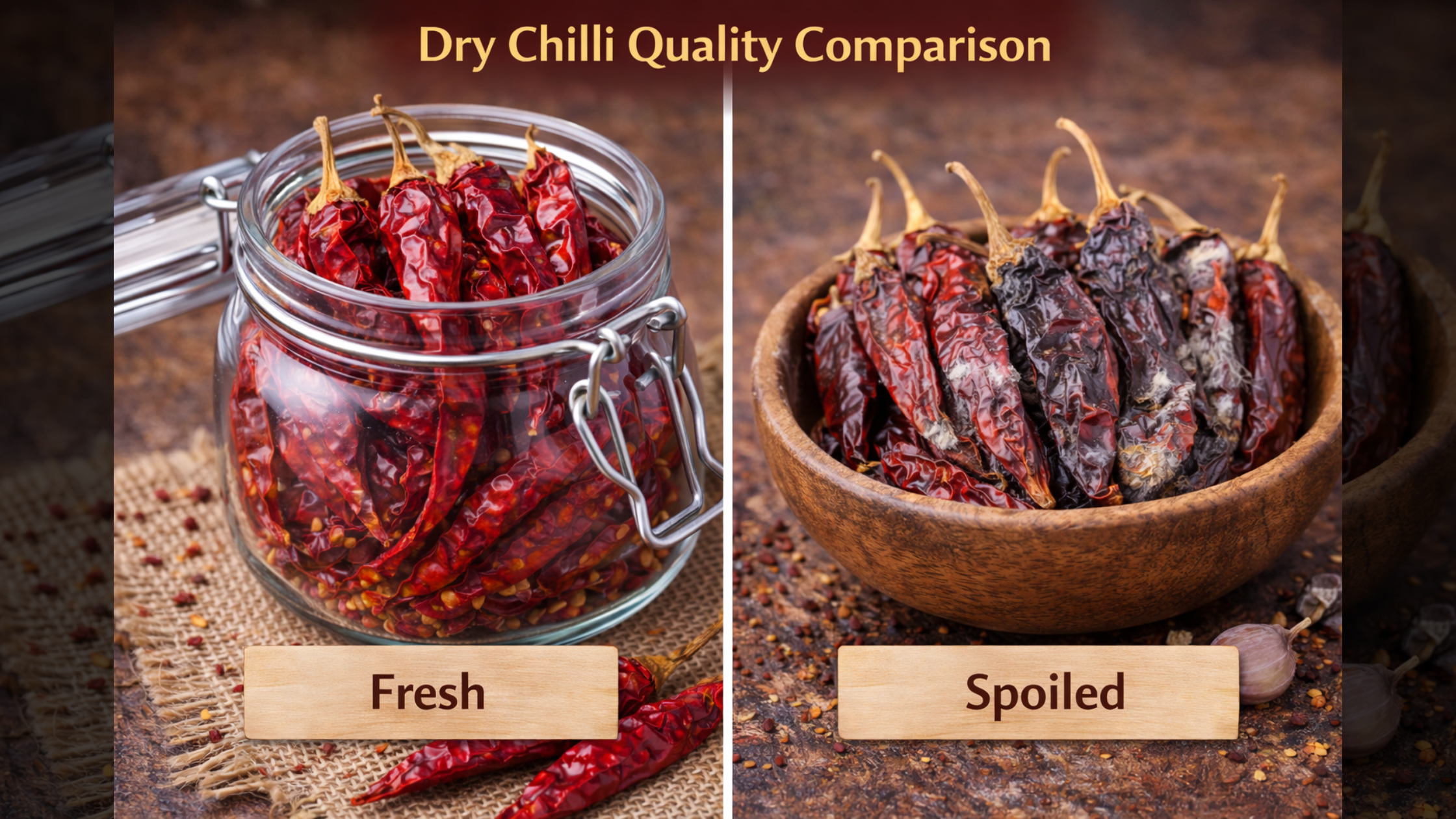
Your eyes provide the first line of defence against using compromised chillies. Fresh, properly dried pods display vibrant deep red or burgundy hues. When they start degrading, you’ll notice the colour fading to dull brown, orange, or even greyish tones. This discolouration indicates oxidation and loss of capsaicinoids, the compounds responsible for both colour and heat.
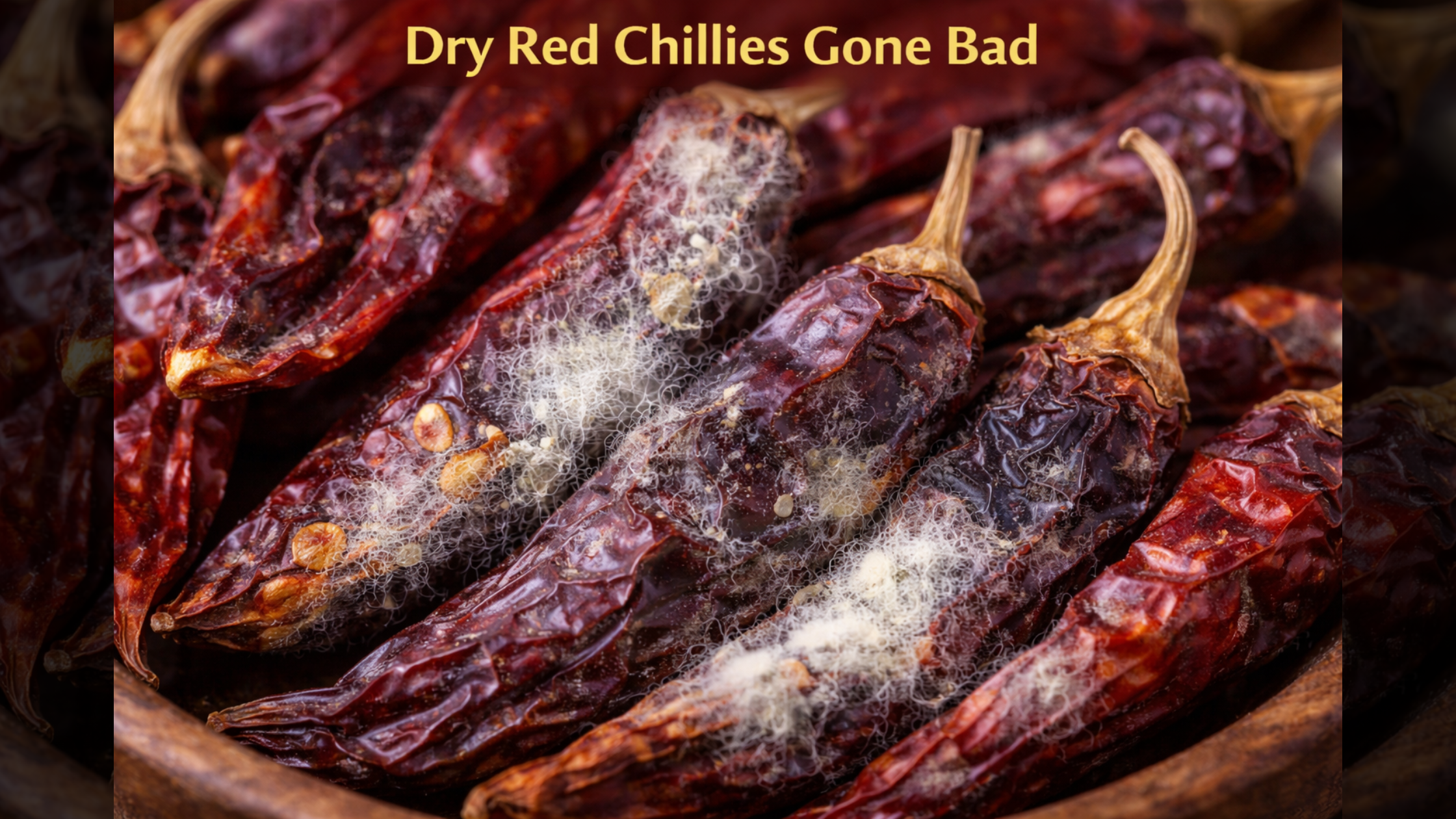
Look closely at the surface. White, green, or black spots signal mould growth, which thrives when moisture levels exceed safe limits. Sometimes you’ll see a powdery coating or fuzzy patches—both unambiguous signs of fungal contamination. Any chilli displaying these characteristics should be discarded immediately.
Check for uniformity too. Batches with inconsistent colours, where some pods look significantly darker or lighter than others, suggest poor post-harvest handling or mixing of different harvest periods.
Changes in Aroma and Texture
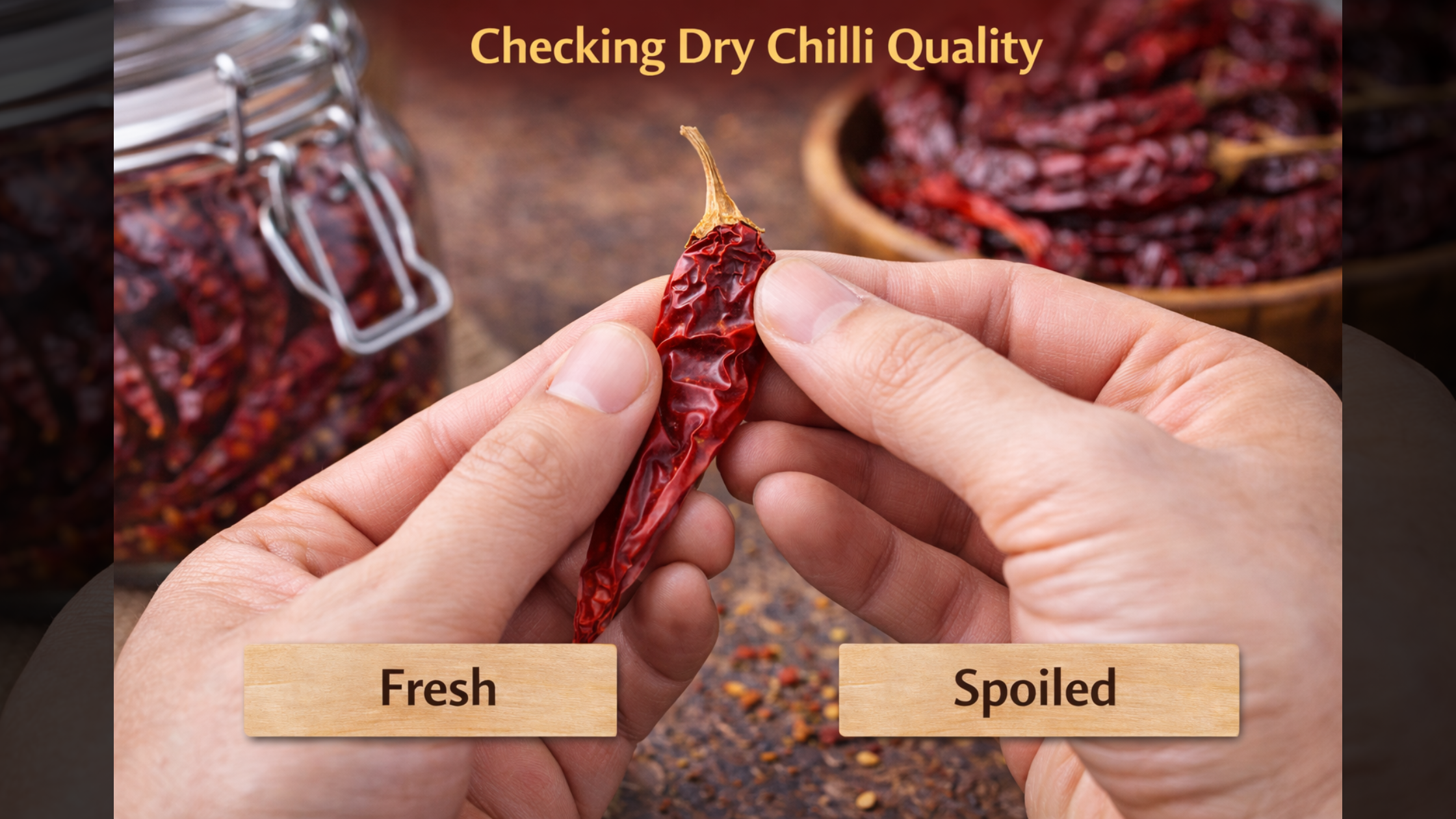
Pick up a chilli and give it a gentle squeeze. Properly dried ones feel brittle and snap cleanly when bent. If they feel soft, pliable, or rubbery, moisture has infiltrated the structure. This happens frequently during monsoon seasons or in humid storage areas. The texture becomes leathery rather than crisp, indicating rehydration that creates perfect conditions for microbial activity.
Now bring the chilli close to your nose. Fresh dried chillies release a sharp, pungent, slightly smoky aroma that makes your nostrils tingle. When they’ve gone bad, this smell transforms into something musty, stale, or completely absent. Some deteriorated batches emit a sour or fermented odour—a dead giveaway of bacterial action.
Mould, Pests, and Moisture Problems
Mould represents one of the most serious issues with stored dried chillies. It doesn’t just affect flavour; certain moulds produce aflatoxins, dangerous compounds that can cause serious health problems. Professional quality controllers reject entire batches if even a small percentage shows mould, especially for products heading toward export markets where food safety standards remain stringent.
Insect infestation is another common problem. Look for tiny holes in the chilli skin, a sign that beetles or weevils have burrowed inside. You might find webbing, frass (insect droppings), or even live insects crawling through your storage container. These pests often arrive during field drying or enter through inadequate packaging.
Moisture damage manifests in clumping. When individual chillies stick together or form hard clusters, excess humidity has caused them to partially rehydrate and then dry again with altered structure.
Taste-Related Warning Signs
While visual and smell tests catch most problems, sometimes a small taste test provides final confirmation—though this should be done carefully. Break off a tiny piece from a chilli that has passed other checks. Good dried chillies deliver immediate heat with complex, slightly fruity undertones.
Spoiled ones taste flat, bitter, or develop off-flavours that are hard to describe but unmistakably wrong. If you detect any soapy, chemical, or rancid notes, spit it out immediately and discard the batch. Never taste chillies showing visible mould or pest damage.
Storage Mistakes That Accelerate Spoilage
Most spoilage issues trace back to storage errors. Keeping dried chillies in areas with high humidity exposure tops the list. Even brief periods in damp environments can trigger quality loss. Similarly, exposure to direct sunlight degrades colour and essential oils, while temperature fluctuations create condensation inside storage containers.
Using non-airtight containers allows both moisture and pests to enter. Clear plastic bags might seem convenient, but they offer minimal protection against environmental factors. Mixing old stock with fresh arrivals without proper rotation means older batches sit longer, increasing deterioration risk.
In regions producing large quantities for domestic use and export, particularly across various states of India, proper warehouse management becomes crucial. Temperature-controlled facilities and moisture-proof packaging protect product integrity from farm to final destination.
Health Risks of Consuming Spoiled Chillies
Using compromised dry red chillies isn’t just about flavour—it poses real health concerns. Mould-contaminated products may contain mycotoxins that cause anything from digestive upset to more serious long-term effects. Aflatoxins specifically have been linked to liver damage with prolonged exposure.
Insect-infested chillies carry contamination from pest waste and can trigger allergic reactions in sensitive individuals. The bacterial growth associated with moisture damage can lead to food poisoning, though this is less common with dried products than fresh ones.
Professional food safety protocols in export-oriented businesses require rigorous testing precisely because compromised batches can damage brand reputation and consumer trust permanently.
Professional Quality Assessment Methods
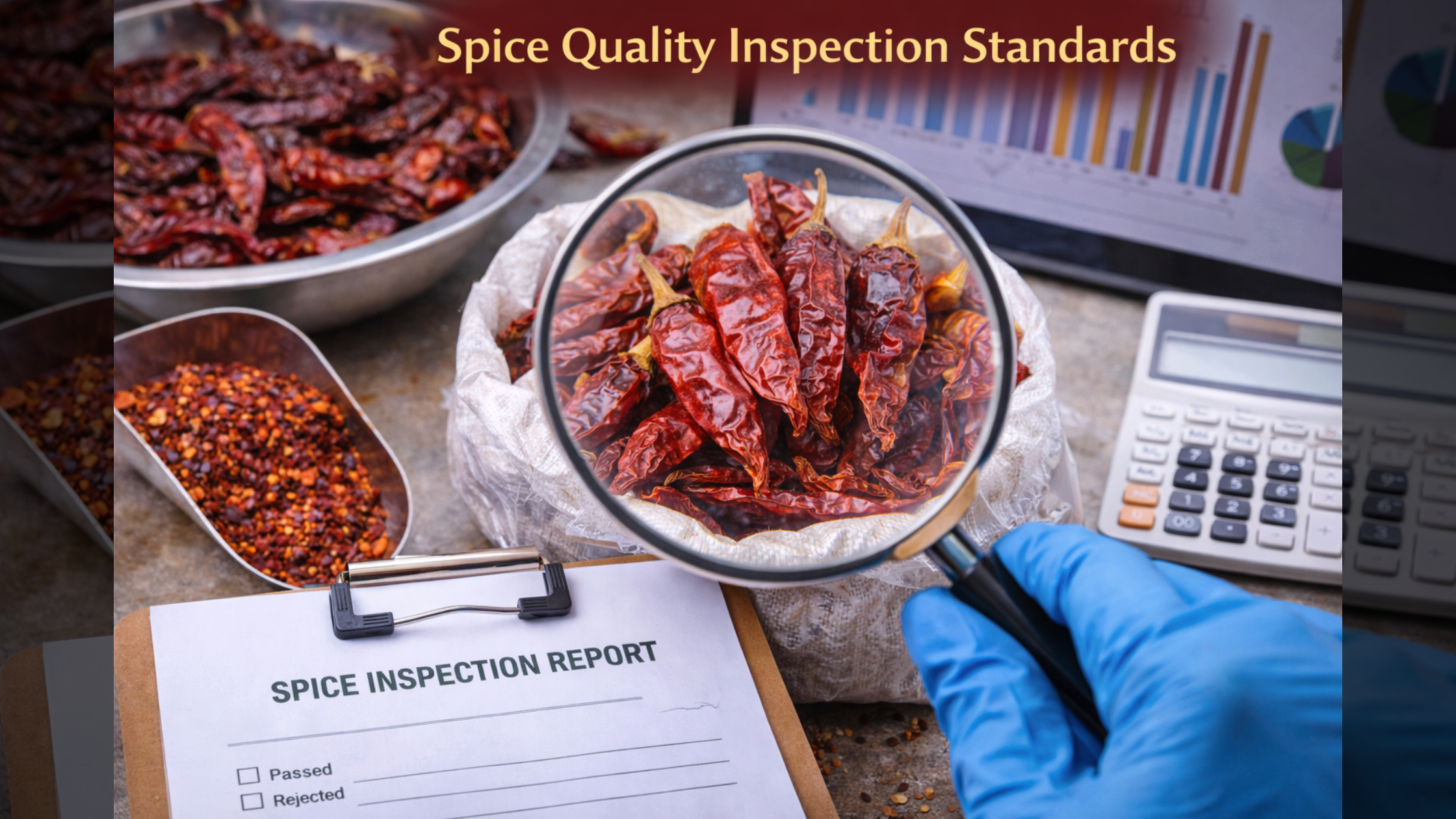
In the commercial world, especially for businesses handling export shipments of spices and other agro products, quality checks follow systematic protocols. Inspectors sample random pods from different sections of a batch, checking moisture content with calibrated meters. Acceptable levels stay below 10-12% for most dried chilli varieties.
Colour measurement uses standardised charts to ensure consistency. Laboratory analysis detects aflatoxin presence, pesticide residues, and microbial counts. Visual sorting removes damaged, discoloured, or pest-affected pieces before packaging.
Countries importing from India maintain strict specifications. Batches failing to meet these standards get rejected at borders, causing significant financial losses. This reality drives quality-focused suppliers to implement thorough inspection systems at every stage.
How Vipra Overseas Ensures Quality in Agro Exports
At Vipra Overseas, quality control forms the foundation of our operations. As exporters specialising in a diverse range of agricultural products—including fresh fruits, fresh vegetables, beans, frozen products, spices, and grains—we understand that consistency and safety cannot be compromised.
Our spice handling procedures begin with careful supplier selection, working directly with farmers who follow proper post-harvest practices. Each incoming batch undergoes thorough inspection before acceptance. Temperature-controlled storage facilities maintain optimal conditions, preventing the moisture and temperature fluctuations that lead to spoilage.
For dried chillies specifically, we implement multi-stage quality checks: initial visual assessment, moisture testing, laboratory analysis for contaminants, and final pre-shipment inspection. This rigorous approach ensures that products reaching international markets meet both Indian export standards and destination country requirements.
Our commitment extends beyond spices. Whether handling fresh produce requiring cold chain management or frozen items needing consistent sub-zero temperatures, the same quality-first philosophy guides every operation. This attention to detail has helped establish long-term relationships with buyers across multiple continents.

Keeping Your Chillies Fresh and Flavourful
Prevention remains far easier than dealing with spoiled stock. Store dry red chillies in airtight glass or food-grade plastic containers, away from direct light and heat sources. Keep them in the coolest, driest part of your kitchen or pantry.
Buy quantities you’ll use within six months to a year for home use. Larger commercial operations should implement first-in-first-out rotation systems. Consider refrigeration or freezing for extended storage, though this works better for ground chilli powder than whole pods.
Regular inspection catches problems early. Check your stock monthly, removing any pods showing deterioration before they affect the entire batch. This simple habit prevents small issues from becoming large losses.
The global trade in quality agricultural products, from India to markets worldwide, depends on maintaining these standards at every level—from small-scale farmers to large export houses. When everyone in the supply chain understands proper handling, the final consumer receives products that are safe, flavourful, and worth every penny.
Quality dry red chillies should enhance your cooking, not compromise it. By learning to recognise the signs of spoilage and implementing proper storage practices, you protect both the investment in your spice collection and the health of those enjoying your food.