
Understanding the Critical Role of Residue Compliance in Spice Exports
Exporting chilli powder to European Union markets demands rigorous adherence to pesticide residue regulations. The EU maintains some of the world’s strictest food safety standards, and spice exporters must navigate complex compliance frameworks to access these lucrative markets. For Indian exporters, understanding and implementing maximum residue limit protocols is not optional—it’s essential for market entry and sustained business relationships.
The stakes are high. A single non-compliant shipment can result in border rejections, financial losses, and long-term damage to export credentials. Beyond immediate commercial impacts, violations affect the reputation of entire supply chains and can trigger enhanced scrutiny on future shipments from the same origin.
EU Food Safety Framework for Imported Spices
The European Food Safety Authority (EFSA) establishes pesticide residue standards that apply uniformly across all member states. These regulations form part of the comprehensive EU food law framework designed to protect consumer health. For chilli powder and other dried spices, residue limits are particularly stringent because the drying process concentrates any pesticide residues present in the raw material.

Regulation (EC) No 396/2005 serves as the primary legislative instrument governing maximum residue limits in food products, including those containing fresh fruits and related agricultural commodities. This regulation undergoes regular updates as new scientific evidence emerges and as EFSA reviews existing pesticide approvals.
Defining Maximum Residue Limits for Export Operations
Maximum residue limits represent the highest legally permissible concentration of a pesticide residue in or on food commodities. These limits are expressed in milligrams of residue per kilogram of product (mg/kg). For chilli powder, limits often range from 0.01 mg/kg for certain substances to higher levels for approved agricultural chemicals when used according to good agricultural practices.
The establishment of these limits involves comprehensive risk assessments considering toxicological data, expected dietary exposure, and agricultural usage patterns. Exporters must recognize that EU limits often differ significantly from domestic standards, requiring dedicated compliance efforts.
Pesticide Residues Commonly Monitored in Chilli Powder
European laboratories routinely screen chilli powder shipments for a broad spectrum of pesticide residues. Common substances tested include organophosphates like chlorpyrifos and profenofos, pyrethroids such as cypermethrin, and various fungicides used in cultivation and post-harvest treatment.

Particular attention focuses on substances banned or restricted in the EU but potentially still used in producing countries. Carbendazim, ethion, and certain other compounds frequently appear in non-compliance reports. Multi-residue screening methods can detect hundreds of different substances in a single analytical procedure, making comprehensive testing both feasible and standard practice.
Bridging the Gap Between Indian and EU Standards
A significant challenge for exporters lies in the divergence between FSSAI regulations and EU requirements. While India has established its own maximum residue limits for pesticides in food commodities, these often permit higher levels than EU standards. This discrepancy stems from different risk assessment methodologies, dietary consumption patterns, and agricultural practice considerations.
For instance, certain pesticides approved for use on chilli cultivation in India may be completely prohibited in the EU, resulting in default limits of 0.01 mg/kg—essentially the analytical limit of quantification. Exporters cannot rely solely on compliance with domestic regulations; they must specifically target EU standards throughout their production and sourcing operations.
Comprehensive Testing and Certification Protocols
Meeting EU residue requirements begins at the farm level and extends through processing, storage, and shipment. Accredited laboratories play a crucial role in pre-export verification. These facilities must follow ISO 17025 standards and employ validated analytical methods that meet EU criteria for sensitivity, accuracy, and reproducibility.
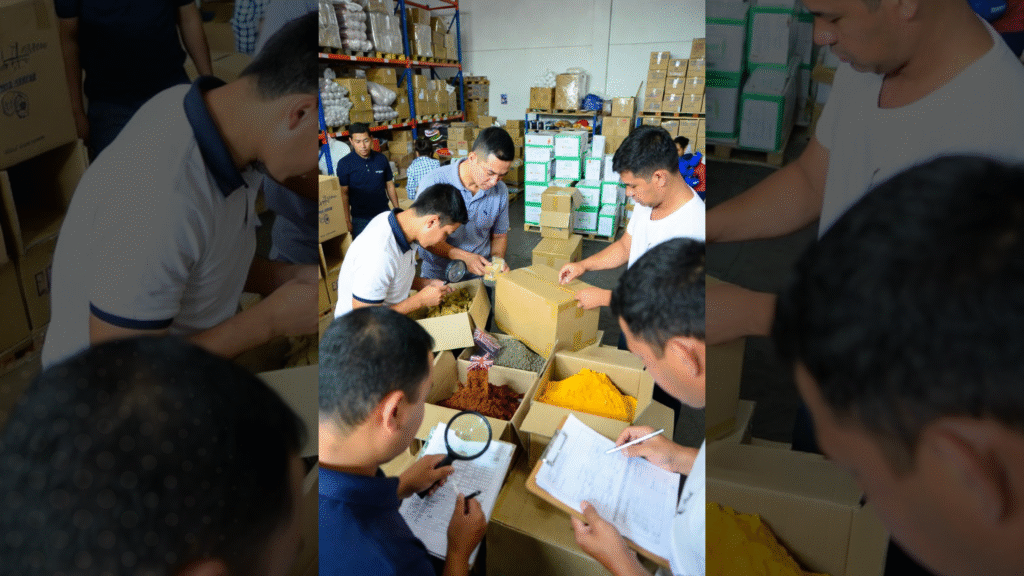
Export-oriented producers should implement systematic sampling and testing programs. Testing frequency depends on risk profiles, with new suppliers, seasonal variations, and changes in agricultural inputs warranting increased monitoring. Certificate of Analysis documents from EU-recognized laboratories provide essential evidence of compliance.

APEDA registration and adherence to their guidelines offer additional credibility. Many EU importers now require third-party certification schemes demonstrating commitment to food safety management systems.
Traceability Systems and Farm-Level Controls
Robust traceability represents a cornerstone of modern spice export compliance. The EU requires that food business operators can identify the immediate supplier of products and the immediate customer, enabling rapid response to food safety incidents. For chilli powder exporters, this means documenting the complete journey from farm to final package.
Implementing farm-level controls includes training farmers in integrated pest management, maintaining records of all agricultural inputs, and establishing buffer zones between conventional and organic production areas. Many successful exporters work with farmer cooperatives or contracted growers, enabling better oversight of cultivation practices and input usage.
Quality management systems should track batch-specific information including cultivation location, pesticide application records, harvest dates, processing parameters, and storage conditions. This documentation proves invaluable when addressing importer queries or investigating potential non-compliance issues.
Consequences of Non-Compliance in European Markets
Border rejections at EU entry points trigger immediate financial losses including product value, shipping costs, and potential destruction or re-export expenses. Beyond direct costs, rejected shipments enter the Rapid Alert System for Food and Feed (RASFF), a publicly accessible database that buyers worldwide consult when evaluating potential suppliers.
Repeated violations can result in enhanced controls, where authorities subject all shipments from specific operators or regions to mandatory testing before release into EU markets. This classification severely impacts competitiveness due to additional costs and delays.
Legal consequences may extend to monetary penalties, loss of export licenses, and in severe cases, permanent market exclusion. The reputational damage often proves more devastating than immediate financial impacts, as rebuilding buyer confidence requires years of consistent compliance.
Best Practices for Achieving EU Compliance Standards
Successful exporters adopt proactive compliance strategies rather than reactive approaches. This includes sourcing from verified farms implementing good agricultural practices, conducting regular in-house monitoring beyond mandatory testing, and maintaining open communication channels with buyers regarding test results and corrective actions.
Investing in proper storage facilities prevents cross-contamination and pest-related issues that might necessitate prohibited post-harvest treatments. Many exporters maintain segregated systems for EU-destined products, applying stricter controls than required for other markets.
Staff training in food safety principles, documentation requirements, and regulatory updates ensures organizational capacity to maintain compliance. Engaging technical consultants with expertise in EU regulations provides valuable guidance, particularly when regulations change or new requirements emerge.
How Vipra Overseas Supports Compliant Agro Product Exports
Navigating complex EU regulations requires expertise, infrastructure, and commitment to quality that many individual producers struggle to achieve independently. Vipra Overseas specializes in facilitating exports of agricultural commodities that meet stringent international standards.
Our portfolio encompasses fresh fruits sourced from certified orchards, premium fresh vegetables grown under controlled conditions, various beans meeting import specifications, frozen products processed in EU-approved facilities, authentic spices including compliant chilli powder, and grains tested for contaminants and residues.
We maintain relationships with accredited testing laboratories, provide pre-shipment verification, and offer comprehensive documentation support. Our supplier network consists of farms and processors committed to sustainable agricultural practices and compliance with international food safety standards. By consolidating volumes and implementing rigorous quality controls, we help producers access European markets while meeting all regulatory requirements.
Moving Forward with Confidence in EU Markets
Maximum residue limit compliance for chilli powder exports demands technical knowledge, operational discipline, and continuous monitoring. The complexity of EU regulations should not deter exporters but rather encourage investment in robust quality management systems that create sustainable competitive advantages.
As EU standards continue evolving with new scientific understanding and changing agricultural practices, exporters must remain adaptable. Regular review of regulatory updates, participation in industry associations, and engagement with buyers regarding emerging requirements position businesses for long-term success.
The European market offers premium prices and stable demand for high-quality spices. By prioritizing compliance from cultivation through shipment, Indian exporters can secure their position in this valuable market while contributing to enhanced food safety standards across the global spice trade.