
Kashmiri vs Byadgi vs Guntur: Which Dry Red Chilli Should You Use?
Selecting the right dry red chilli can transform an ordinary dish into something extraordinary. In Indian kitchens and commercial food preparation worldwide, three varieties dominate: Kashmiri, Byadgi, and Guntur. Each brings distinct characteristics to the table, from vibrant colour to fiery heat, making them irreplaceable in regional cuisines and export markets alike.
Understanding these differences helps home cooks, professional chefs, and buyers make informed choices. Whether you’re preparing a mild curry for family dinners with home vegetable preparations or sourcing quality ingredients for commercial use, knowing your chillies matters.
Understanding How Chilli Varieties Differ
Not all dry red chillies are created equal. While they share common origins in Capsicum annuum species, growing conditions, soil quality, and traditional cultivation methods create remarkable variations. The primary factors distinguishing these varieties include:
- Capsaicin content – determines pungency and heat intensity
- Colour pigmentation – affects visual appeal of finished dishes
- Aroma profile – influences overall flavour complexity
- Size and thickness – impacts grinding quality and texture
These characteristics make certain chillies perfect for specific applications. A chilli prized for its deep red hue might lack the fiery kick another variety delivers effortlessly.
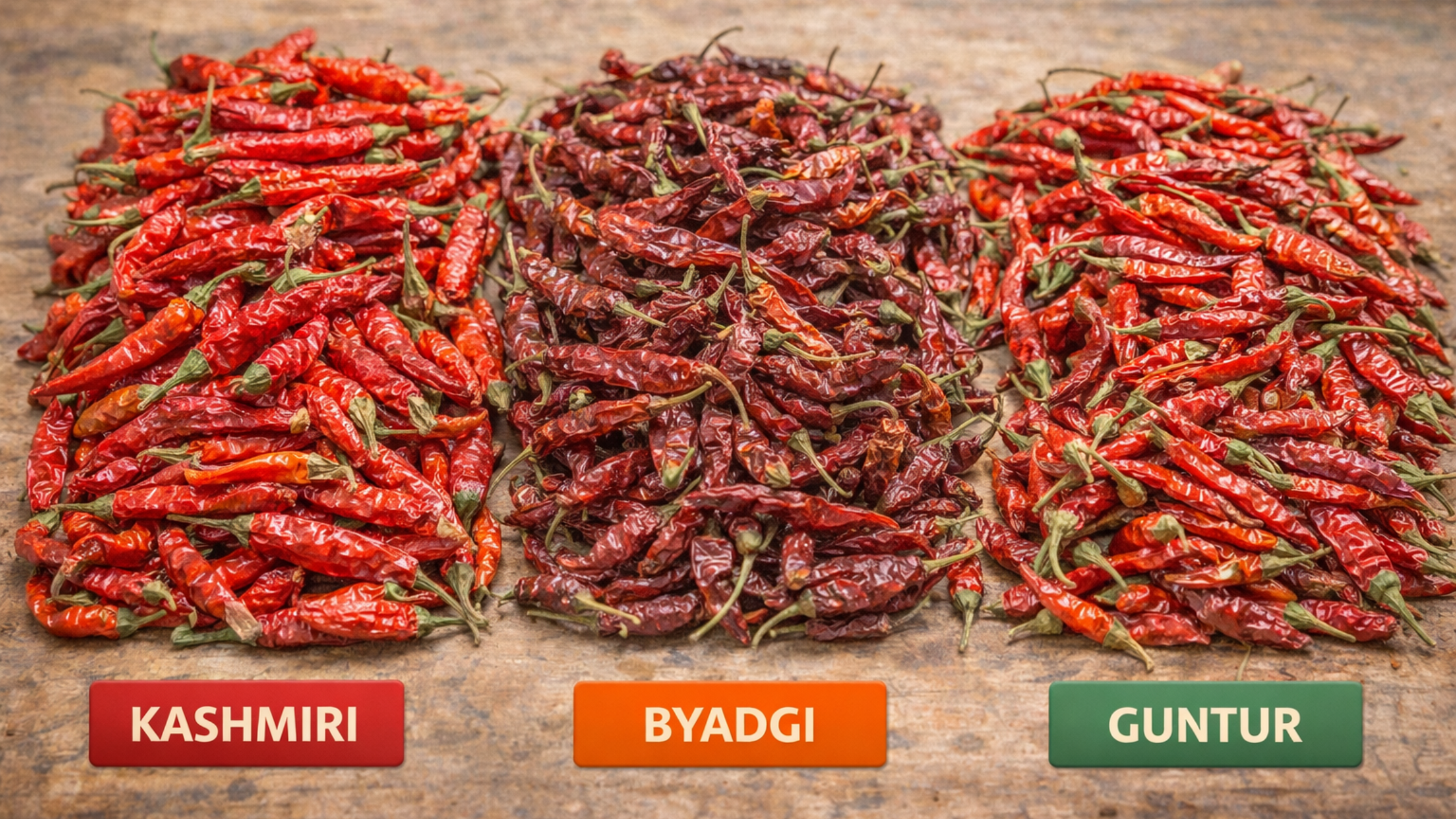
Kashmiri Chilli: The Colour Champion
Kashmiri dry red chilli stands out for its stunning deep red colour and relatively mild heat. Grown primarily in Kashmir valley and parts of Himachal Pradesh, this variety measures 1,000 to 2,000 Scoville Heat Units (SHU), making it one of the mildest options available.
The magic of Kashmiri chilli lies in its ability to impart rich colour without overwhelming heat. Professional chefs and home cooks preparing tandoori marinades, butter chicken, or Kashmiri rogan josh rely on this variety. The chilli’s thick flesh and wrinkled skin contain natural pigments that dissolve beautifully in oil, creating that signature restaurant-style red tint.
Export buyers particularly value Kashmiri chillies for international markets where colour matters more than intense spiciness. Many india fruits and vegetable suppliers include premium Kashmiri chillies in their spice portfolios because global demand continues rising.
Byadgi Chilli: Balanced Heat and Aroma
Byadgi dry red chilli, cultivated in Karnataka’s Byadgi region, offers an elegant middle ground. This variety registers between 8,000 to 15,000 SHU, delivering moderate heat with exceptional aroma. Its characteristic deep red colour rivals Kashmiri varieties, though Byadgi presents a slightly different shade.
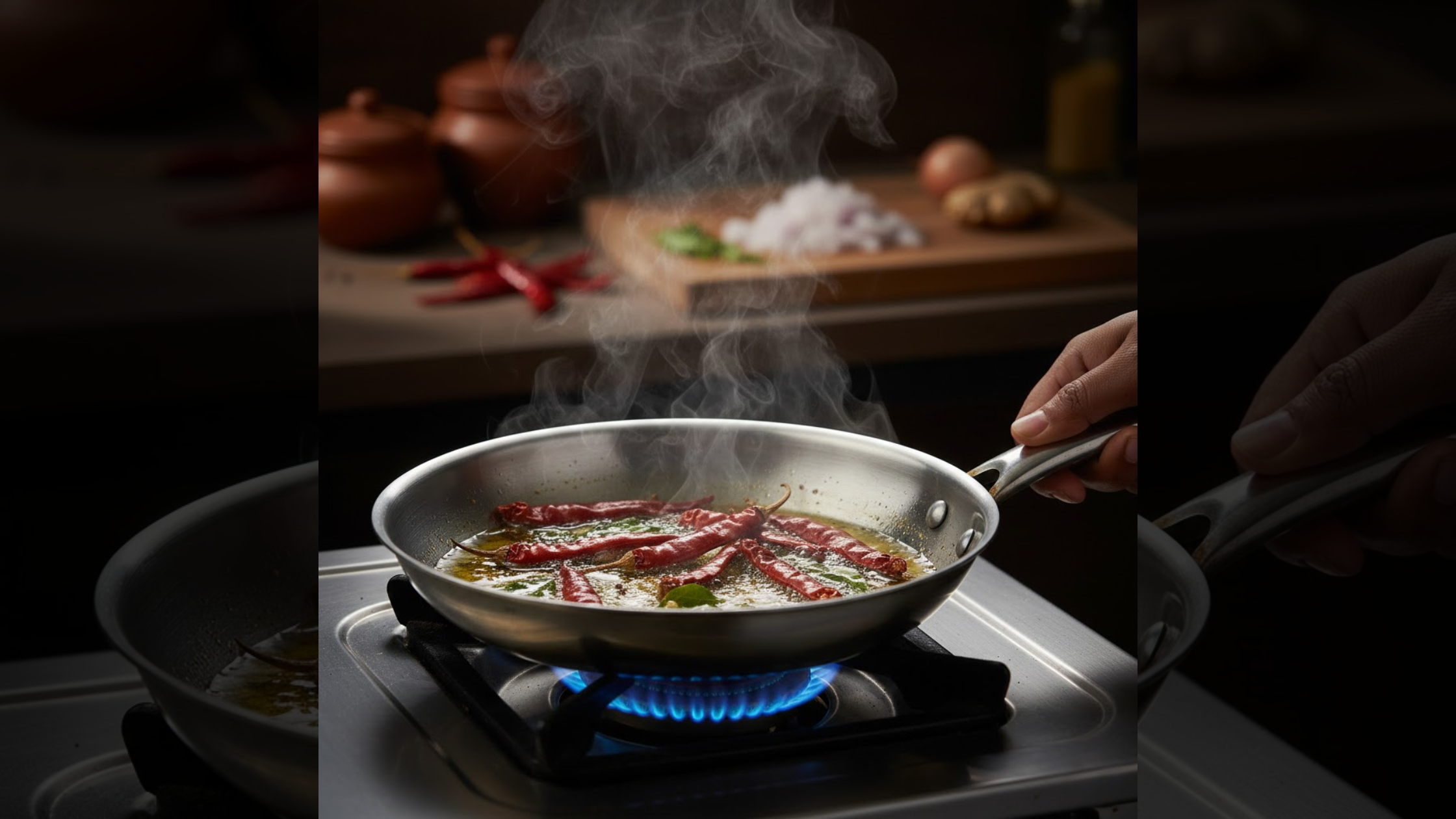
What sets Byadgi apart is its complex flavour profile. The chilli releases a distinct fruity aroma when toasted, making it ideal for South Indian sambar, rasam, and chutneys. The variety’s balanced pungency works wonderfully in dishes requiring both colour and noticeable heat without overpowering other ingredients.
Farmers in Karnataka take pride in traditional cultivation methods, often intercropping with other home vegetable varieties to maintain soil health. This sustainable approach produces high-quality chillies sought after by premium spice brands and export companies.
Guntur Chilli: The Heat Powerhouse
Guntur dry red chilli from Andhra Pradesh is India’s most pungent variety, ranging from 30,000 to 50,000 SHU. This variety doesn’t compromise on heat, delivering an intense, lingering burn that defines Andhra cuisine’s fiery character.
Guntur chillies are slender, have thinner skin compared to Kashmiri or Byadgi varieties, and grind into fine, vibrant red powder. The colour is bright rather than deep, and the heat develops quickly on the palate. This variety is essential for authentic Andhra pickles, Guntur chicken, and spicy seafood preparations.
The region’s hot climate and specific soil conditions create ideal growing environments. Guntur serves as India’s largest chilli trading hub, where farmers bring product frozen and fresh varieties for processing, grading, and distribution to domestic and international markets.
Side-by-Side Comparison for Cooking Decisions
| Characteristic | Kashmiri | Byadgi | Guntur |
|---|---|---|---|
| Heat Level (SHU) | 1,000-2,000 | 8,000-15,000 | 30,000-50,000 |
| Primary Quality | Colour | Balance | Heat |
| Texture | Thick, wrinkled | Medium thickness | Thin, smooth |
| Best For | Tandoori, mild curries | South Indian dishes | Spicy pickles, Andhra cuisine |
| Market Price | Premium | Moderate to High | Variable |
Understanding these differences helps in choosing the right chilli for different dishes. A tandoori marinade benefits from Kashmiri chilli’s colour without excessive heat, while authentic Andhra recipes demand Guntur’s fiery intensity.
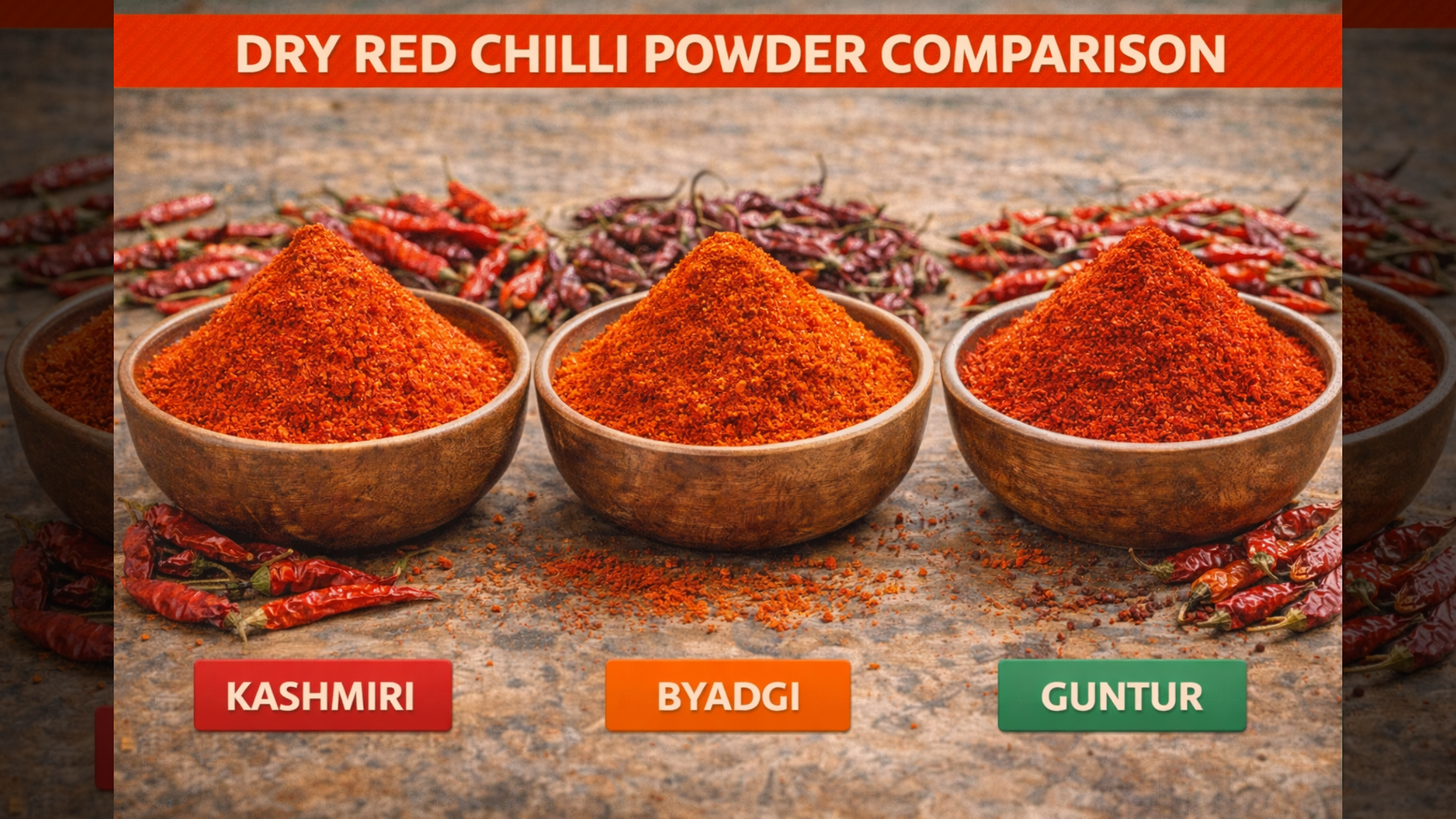
Choosing the Right Chilli for Different Dishes
For Rich, Colourful Gravies: Kashmiri chilli powder blended with Byadgi creates stunning visual appeal while maintaining moderate heat levels. This combination works excellently in butter-based curries and restaurant-style preparations.
For Balanced Everyday Cooking: Byadgi alone handles most home cooking needs perfectly. Its moderate pungency suits family meals, especially when cooking for children or those preferring milder flavours.
For Authentic Regional Spice: Guntur chilli is non-negotiable in Andhra and Telangana cuisines. Gongura pickle, spicy chutneys, and fiery seafood preparations need this variety’s characteristic heat.
For Commercial Food Processing: Many manufacturers blend varieties to achieve desired heat and colour specifications. Quality control involves testing Scoville levels and colour units to ensure consistency across batches.
How Farming and Processing Influence Chilli Quality
Quality begins at the farm. Farmers growing premium dry red chilli varieties follow specific practices:
- Soil preparation: Well-drained soil with organic matter produces better flavour compounds
- Irrigation timing: Controlled watering concentrates capsaicin and colour pigments
- Harvesting maturity: Picking at peak ripeness ensures maximum colour and heat development
- Drying methods: Sun-drying versus mechanical drying affects final aroma and quality
Processing standards separate export-grade chillies from domestic varieties. Premium processors remove stems, sort by size, and eliminate damaged pieces. Many india fruits and vegetable export companies maintain strict quality protocols, ensuring only top-grade chillies reach international markets.
Temperature-controlled storage prevents moisture absorption and quality degradation. Product frozen storage facilities help preserve seasonal harvests, making year-round supply possible for commercial buyers.
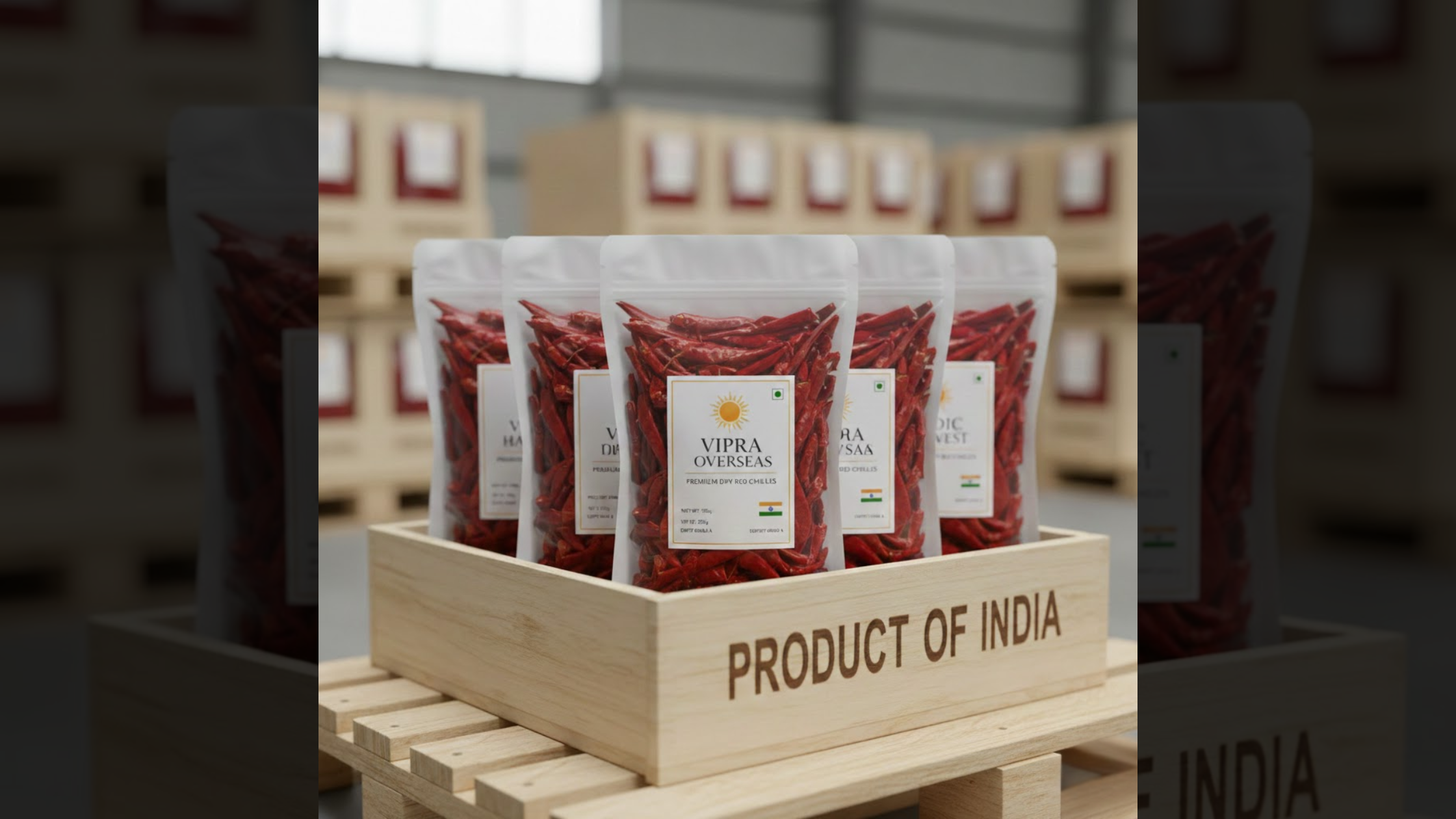
Growing Global Demand for Indian Chilli Varieties
India produces approximately 1.5 million tonnes of dry chillies annually, making it the world’s largest producer and exporter. International demand continues expanding as global cuisines embrace Indian flavours and authentic spice profiles.
Key export markets include:
- United States and Canada: Growing Indian diaspora and mainstream acceptance of spicy foods
- Middle East: Traditional use in regional cuisines and increasing restaurant demand
- Europe: Premium food manufacturers seeking quality ingredients
- Southeast Asia: Commercial food processing and ethnic food producers
Traceability and food safety certifications have become essential. Export-quality chillies must meet stringent pesticide residue limits and quality parameters defined by importing countries.
How Vipra Overseas Helps Export Agro Products
Vipra Overseas specializes in sourcing and exporting premium agricultural products from India to global markets. Understanding that quality begins at the farm, the company maintains direct relationships with farmers and processing units across major growing regions.
Fresh Fruits: Mangoes, pomegranates, bananas, grapes, and seasonal fruits meeting international quality standards
Fresh Vegetables: Onions, potatoes, tomatoes, leafy greens, and speciality vegetables for retail and commercial buyers
Beans: Various legume varieties including kidney beans, chickpeas, and lentils
Frozen Products: IQF (Individually Quick Frozen) vegetables, fruits, and value-added items with extended shelf life
Spices: Complete range including turmeric, coriander, cumin, and all three dry red chilli varieties discussed—Kashmiri, Byadgi, and Guntur
Grains: Rice, wheat, millets, and other cereals for wholesale and retail distribution
The company ensures proper grading, packaging, and cold chain management throughout the export process. Documentation support, quality certifications, and timely logistics make Vipra Overseas a reliable partner for international buyers seeking authentic Indian agricultural products.
Selecting the Perfect Chilli for Taste and Purpose
Making the right choice between Kashmiri, Byadgi, and Guntur chillies ultimately depends on your specific needs. Consider these final guidelines:
Choose Kashmiri when: Colour is priority, preparing mild dishes, or cooking for heat-sensitive diners
Choose Byadgi when: Seeking balanced heat and colour, preparing South Indian recipes, or wanting aromatic complexity
Choose Guntur when: Maximum heat is desired, making authentic Andhra dishes, or creating spicy pickles and condiments
For commercial buyers, working with established exporters ensures consistent quality, proper documentation, and reliable supply chains. Whether sourcing for restaurants, retail, or food manufacturing, understanding these chilli varieties helps maintain product standards and customer expectations.
The difference between Kashmiri, Byadgi, and Guntur chilli extends beyond simple heat levels—it encompasses cultural heritage, regional pride, and generations of agricultural expertise. Selecting wisely means honouring these traditions while creating exceptional culinary experiences.