
Indian Red Chilli Powder Export Trends
India dominates the global spice trade, and red chilli powder sits at the heart of that success. For exporters and farmers alike, understanding where the market is headed can mean the difference between a profitable season and missed opportunities. Buyers in Asia, the Middle East, Europe, and North America continue to seek reliable suppliers who can deliver consistent quality, proper documentation, and competitive pricing.
The landscape is changing. Importers now scrutinize maximum residue limits more carefully, demand traceability, and often prefer single-origin spices over generic blends. Exporters who adapt to these shifts—and who work with experienced partners—find themselves better positioned to capture premium contracts and build long-term buyer relationships.
This article walks through the current state of the Indian red chilli powder export sector, covering everything from production practices and grading standards to logistics, compliance, and value-added opportunities that can lift your margins.
 Global Demand and Market Position
Indian red chilli powder has earned its reputation through decades of reliable supply and bold flavor profiles. The country produces several hundred thousand metric tons annually, with a significant share destined for international markets. Importing regions include Southeast Asia (Malaysia, Singapore, Thailand), the Gulf states (UAE, Saudi Arabia), the United Kingdom, the United States, and increasingly, markets in Africa and Latin America.
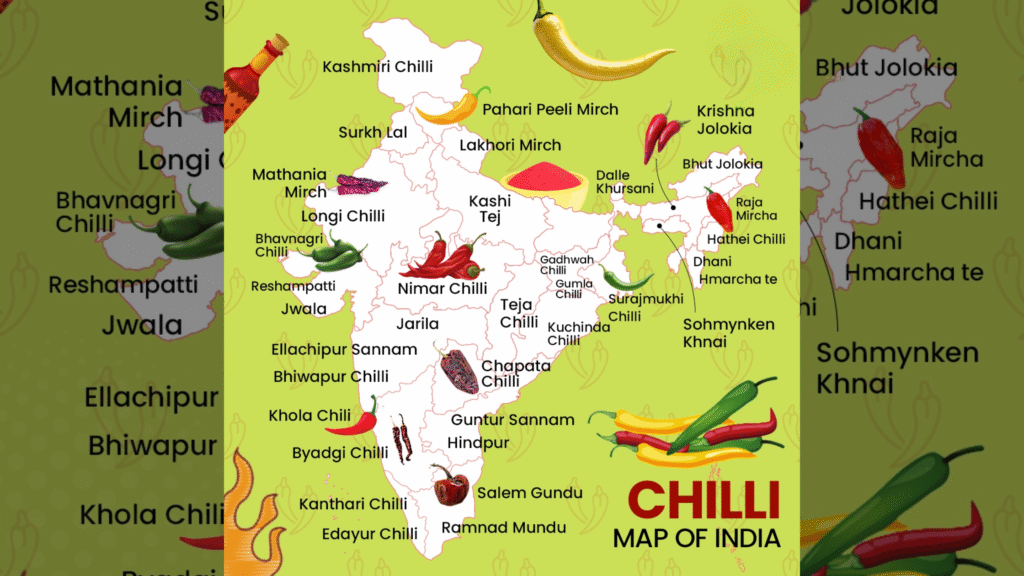
What sets Indian powder apart is variety. Guntur chilli from Andhra Pradesh delivers high pungency, Byadgi chilli from Karnataka offers vibrant color with moderate heat, and Kashmiri chilli provides a deep red hue prized by processors and restaurants. Each variety serves different buyer needs, and exporters who understand these nuances can target the right segments.
Demand drivers remain strong. Growing diaspora populations, expanding foodservice sectors in emerging economies, and rising interest in ethnic cuisines all contribute to steady year-on-year growth. However, competition from countries like China, Pakistan, and Vietnam means Indian suppliers must stay sharp on quality and price.
Varieties, Grading and Quality Parameters
Buyers evaluate red chilli powder on several technical criteria. Pungency, measured in Scoville units or capsaicin level, determines how much heat the powder delivers. Color value, often assessed using ASTA color standards, indicates visual appeal—critical for products where appearance matters. Moisture content must stay below specified thresholds (typically around 10–12%) to prevent mold growth and ensure shelf stability.
Grading also involves checking for extraneous matter, pest damage, and aflatoxin levels. In recent years, maximum residue limits for pesticides have become a major checkpoint. Buyers in the EU, Japan, and North America enforce strict MRL standards, and a single failed test can result in shipment rejection and reputational damage.
Exporters who invest in lab testing, maintain supplier traceability, and educate farmers on safe agrochemical use gain a competitive edge. Certifications from FSSAI and compliance with phytosanitary certificate requirements are no longer optional—they’re baseline expectations.
Production and Processing Practices
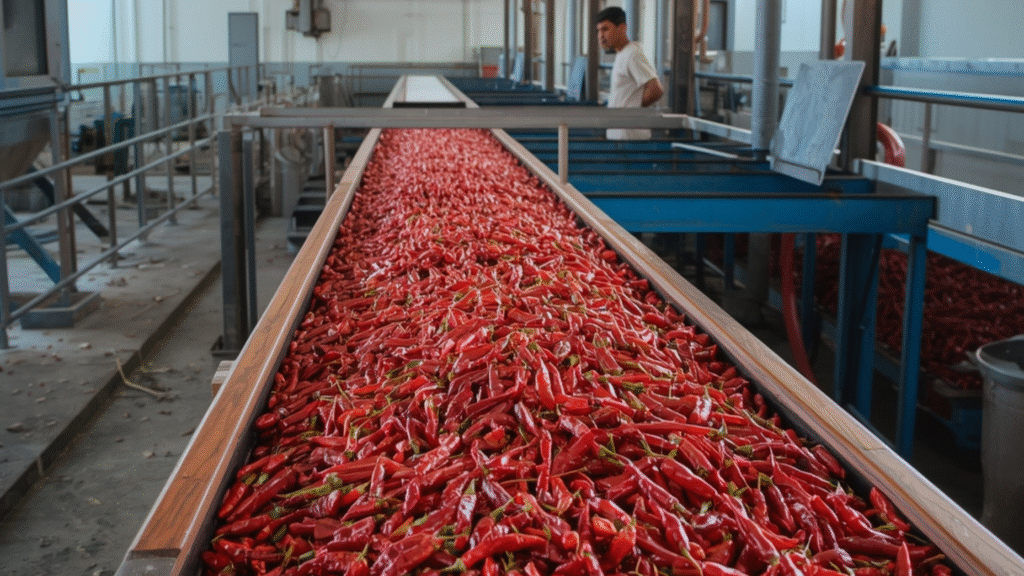
The journey from farm to export container involves multiple steps. After harvest, chillies undergo washing to remove soil and debris, then drying—either sun-dried or using mechanical dryers. Flame-dried chilli powder, a traditional method, imparts a smoky note that some buyers prefer, while cold grinding preserves volatile oils and delivers a brighter flavor.
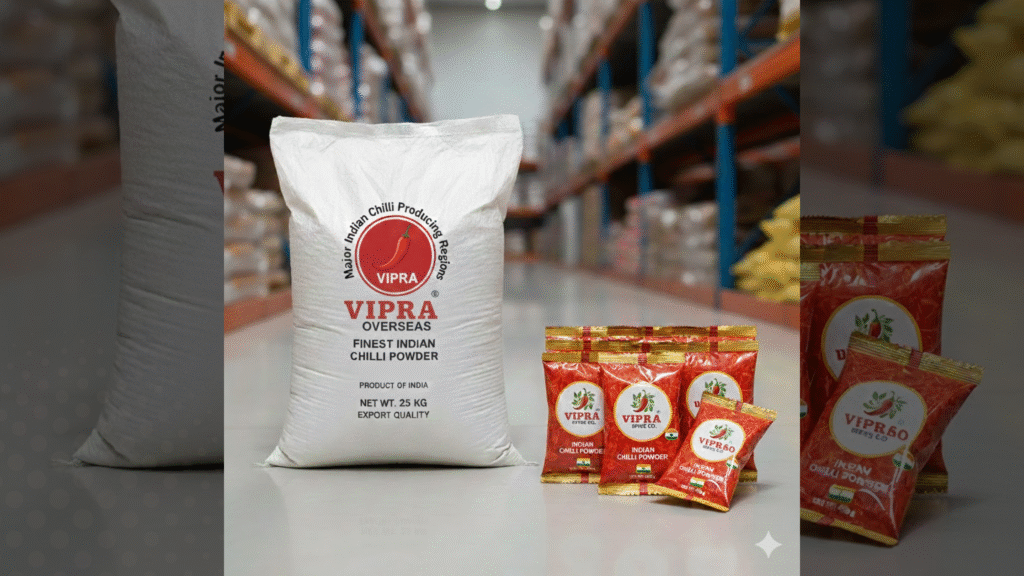
Modern processing units incorporate metal detectors, color sorters, and grading lines to ensure consistency. Grinding must be controlled to achieve the desired particle size; too fine and the powder clumps, too coarse and it doesn’t blend well in recipes. Packaging for export typically involves multi-layer kraft or polypropylene bags for bulk shipments, while retail packs use vacuum packaging or sachets with tamper-evident seals.
Quality controls at every stage matter. Sampling incoming raw material, monitoring moisture during drying, testing finished powder for microbial load, and verifying labeling accuracy all reduce the risk of buyer complaints or border rejections.
Export Logistics and Compliance
Shipping red chilli powder internationally means navigating a web of regulations. Labeling must include country of origin, net weight, ingredient list (if blended), and allergen warnings where applicable. The HS code for spices guides customs classification, and using the correct code avoids delays or penalties.
FSSAI registration is mandatory for food processors in India. Exporters also need to secure phytosanitary certificates from the Plant Quarantine authorities to prove the product is free from pests and diseases. Some markets require additional documentation, such as halal certification for Gulf buyers or organic certificates for EU organic channels.
Containerization offers cost efficiency for bulk orders, but consolidating shipments with other products—such as a fruits exporter combining chilli powder with product frozen items or even fruits frozen consignments—can optimize freight costs. Proper stowage, moisture barriers, and temperature monitoring (especially when sharing container space) protect product quality during transit.
Exporters should verify the latest import rules for their target markets, as requirements evolve. What was acceptable last year may not meet this year’s standards.
Pricing and Trade Dynamics
Chilli powder prices fluctuate based on several factors. Crop seasonality plays a major role; harvest months often see lower prices due to increased supply, while off-season periods push prices up. Weather events—droughts, unseasonal rains—can damage crops and tighten availability, spiking prices temporarily.
Global demand also influences pricing. When major buyers like Bangladesh or Sri Lanka face domestic shortages, they increase imports, driving up Indian export prices. Currency exchange rates matter too; a weaker rupee makes Indian spices more competitive, while a stronger rupee can price some exporters out of cost-sensitive markets.
Traders watch production forecasts from key growing regions closely. For example, reports from Guntur’s chilli market often set the tone for national price trends. Exporters who maintain direct relationships with farmer groups or cooperatives can secure better pricing and more predictable supply than those relying solely on spot markets.
Value-Added Opportunities
Standard bulk powder remains the backbone of the trade, but value-added products offer higher margins. Organic red chilli powder commands a premium, provided the exporter holds valid organic certification and can trace the product back to certified farms. Single-origin labels—such as “Byadgi” or “Guntur”—appeal to gourmet buyers and specialty importers willing to pay more for authenticity.
Private label spice packs represent another growth area. Retailers in developed markets increasingly want their own branding on smaller consumer packs, and Indian processors with flexible packaging lines can service this demand. Blended grades, where mild and hot varieties mix to achieve a target Scoville level, cater to buyers seeking consistency across batches.
Some exporters also explore combined shipments. A company handling fresh fruits and fresh vegetables might add spices to the same logistics chain, sharing container space when temperature requirements align. Similarly, businesses already exporting beans or grains can diversify into spices without building an entirely new supply chain. This works particularly well when a fruits exporter has established cold-chain infrastructure and decides to add ambient products like chilli powder to improve load efficiency.
Even within the frozen segment, there’s room for synergy. A supplier of fruits frozen or product frozen items can offer spice sachets as complementary products to foodservice buyers, creating bundled deals that simplify procurement for restaurants and caterers.
Challenges and Risk Management
Despite strong demand, exporters face real hurdles. MRL compliance remains the top concern. Pesticide residues that exceed buyer limits result in rejected containers and financial losses. Regular testing, farmer training, and sourcing from areas with good agricultural practices reduce this risk but require upfront investment.
Freight costs and lead times are unpredictable. Port congestion, vessel shortages, and fuel price swings all affect margins. Exporters who book shipping space early and maintain buffer inventory can cushion themselves against delays.
Quality variation between batches frustrates buyers. Chilli crops grown in different soils or microclimates produce powder with varying color and pungency. Blending and rigorous quality checks help standardize output, but transparency with buyers about natural variation builds trust.
Adulteration is another concern. Some unscrupulous processors mix artificial colorants or cheaper fillers into chilli powder. This damages the reputation of Indian spices overall. Exporters who invest in transparency—lab reports, farm visit invitations, traceability codes—differentiate themselves in a crowded market.
Seasonality affects cash flow. Farmers need payment shortly after harvest, but buyers often pay on longer credit terms. Managing working capital during peak procurement season requires strong financial planning or access to trade finance.
How Vipra Overseas Supports Exporters and Farmers
Vipra Overseas bridges the gap between farm production and international buyers through practical, hands-on support. The company works directly with farmer groups to ensure proper post-harvest handling—grading raw chillies by size and color, rejecting pest-damaged material, and advising on safe drying methods that preserve quality.
At processing facilities, Vipra Overseas conducts quality checks at multiple points: incoming raw material inspection, moisture testing during grinding, microbial testing of finished powder, and metal detection before packing. This reduces the risk of contamination and ensures consistency batch after batch.
Packaging for export is tailored to buyer specifications. Bulk bags for industrial clients, retail sachets for supermarket chains, and vacuum packs for premium segments are all handled in-house. Vipra Overseas also manages compliance documentation—FSSAI certificates, phytosanitary approvals, lab test reports—so exporters and buyers have the paperwork ready when customs requires it.
Beyond red chilli powder, the company exports a full range of agro products: fresh fruits like mangoes and pomegranates, fresh vegetables including onions and tomatoes, beans such as chickpeas and lentils, product frozen items like cut vegetables and fruit pulp, and other spices and grains. This diversified portfolio allows for consolidated shipments, optimizing container loads and reducing per-unit freight costs.
Logistics coordination includes booking shipping space, arranging inland transport, and tracking shipments until they reach the destination port. For new exporters or farmers looking to enter international markets, Vipra Overseas provides guidance on pricing, market selection, and buyer expectations, making the process less intimidating and more profitable.
Actionable Takeaways
Indian red chilli powder exporters who succeed in today’s market combine traditional strengths—flavor, variety, competitive pricing—with modern practices around quality control, traceability, and compliance. Investing in lab testing, maintaining transparent supply chains, and staying updated on importing country regulations are no longer optional extras.
Diversification helps manage risk. Exporters who handle multiple spice varieties, or who combine spices with fresh fruits, fresh vegetables, product frozen lines, or grains, can smooth out seasonal fluctuations and serve a broader buyer base. Value-added products, from organic powder to private label packs, offer margin improvement for those willing to invest in packaging and certification.
Building relationships matters. Long-term contracts with buyers provide stability, while partnerships with experienced logistics providers or export facilitators like Vipra Overseas reduce operational headaches. For farmers, connecting with reputable exporters ensures fair pricing, timely payments, and access to better agronomic advice.
The market remains strong, but competition is fierce. Exporters who focus on quality, compliance, and customer service will continue to thrive in the years ahead.