
Can You Replace Dry Red Chillies with Paprika?
Walk into any spice aisle and you’ll find paprika sitting next to dried chillies, both promising to add colour and warmth to your dishes. But are they interchangeable? This question comes up constantly in kitchens worldwide, especially when recipes call for one and you only have the other on hand.
The short answer: sometimes yes, but often no. Understanding why requires looking beyond their similar appearance and diving into what makes each spice unique.
What Dry Red Chillies Bring to a Dish
Dry red chillies are whole dried peppers that pack concentrated heat, vibrant colour, and a distinctive smoky-sweet complexity. Varieties like Kashmiri, Byadgi, or Thai bird’s eye each deliver different intensity levels and flavour notes.
When you add whole dried chillies to hot oil or grind them fresh, you’re releasing essential oils that create layers of taste. The heat comes from capsaicin, which varies dramatically between varieties. Kashmiri chillies offer mild warmth with deep red colour, while smaller varieties bring fierce spiciness.
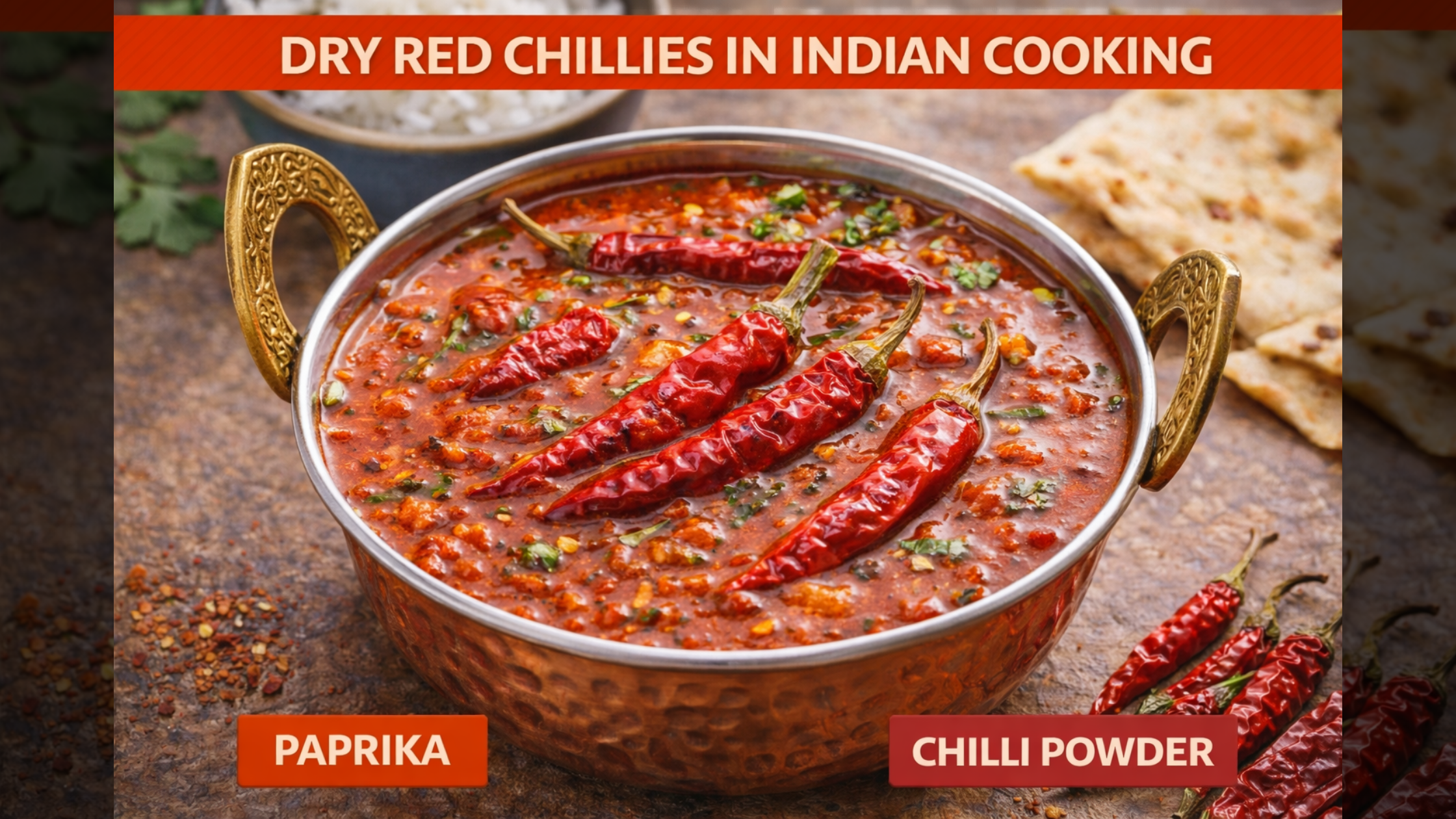
These chillies form the backbone of countless cuisines. In Indian cooking, they’re tempered in oil to infuse curries. Chinese dishes use them for that signature numbing heat. Mexican moles rely on specific dried chilli varieties for authentic flavour profiles.
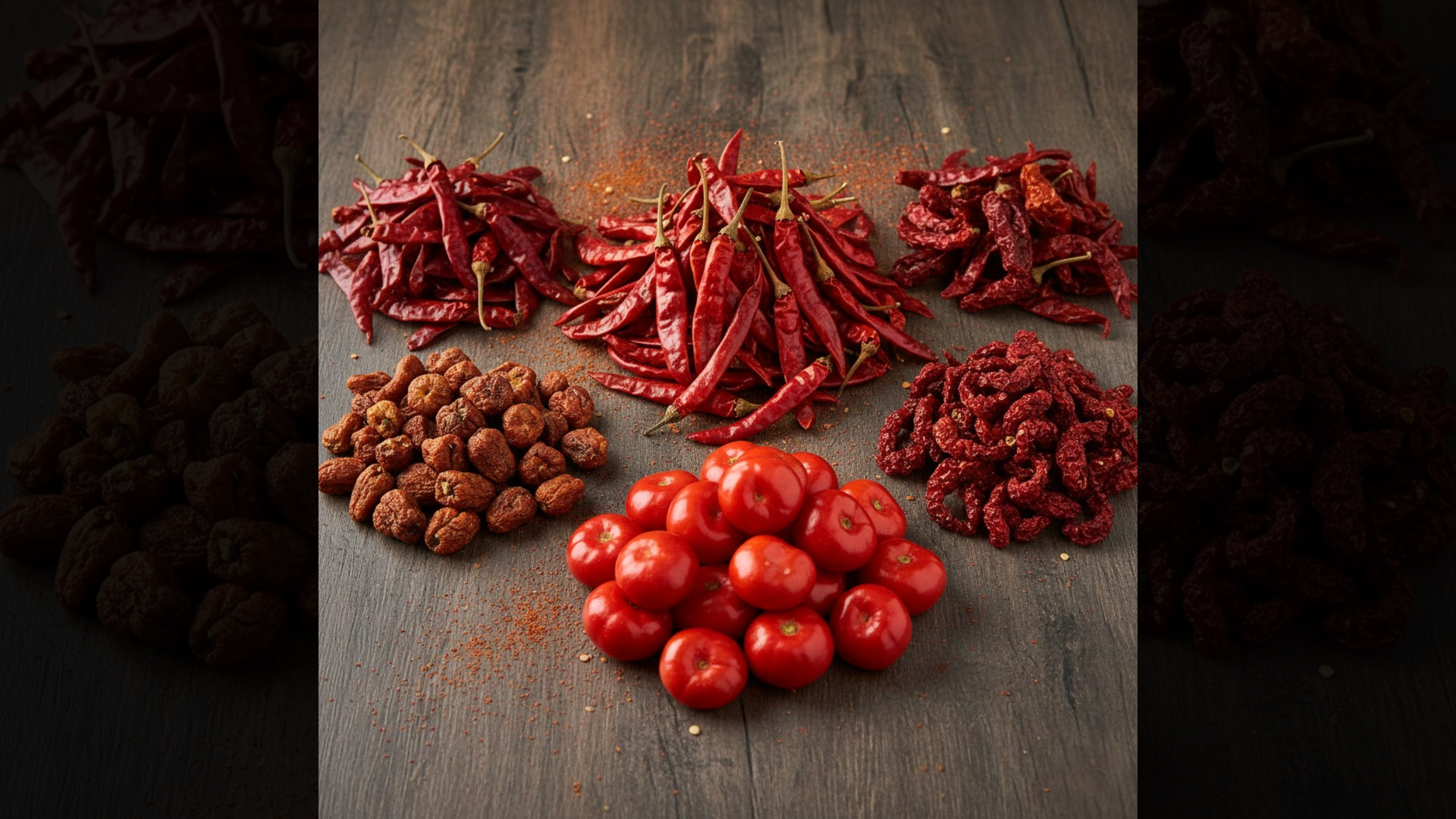
Understanding Paprika and How It Is Made
Paprika is ground powder made from specific pepper varieties, predominantly bell peppers and sweet red peppers. The production process involves drying these peppers and grinding them into fine powder.
Originating from Central America but perfected in Hungary and Spain, paprika comes in several types: sweet (mild), hot, and smoked. Sweet paprika dominates grocery shelves and contains minimal heat. Smoked paprika, or pimentón, adds a distinct smokiness achieved through controlled wood-smoking during drying.
The grinding process for paprika often includes seeds and stems, which affects the final taste. Quality paprika should smell sweet and slightly fruity, not harsh or bitter.
Key Differences in Flavour, Heat, and Aroma
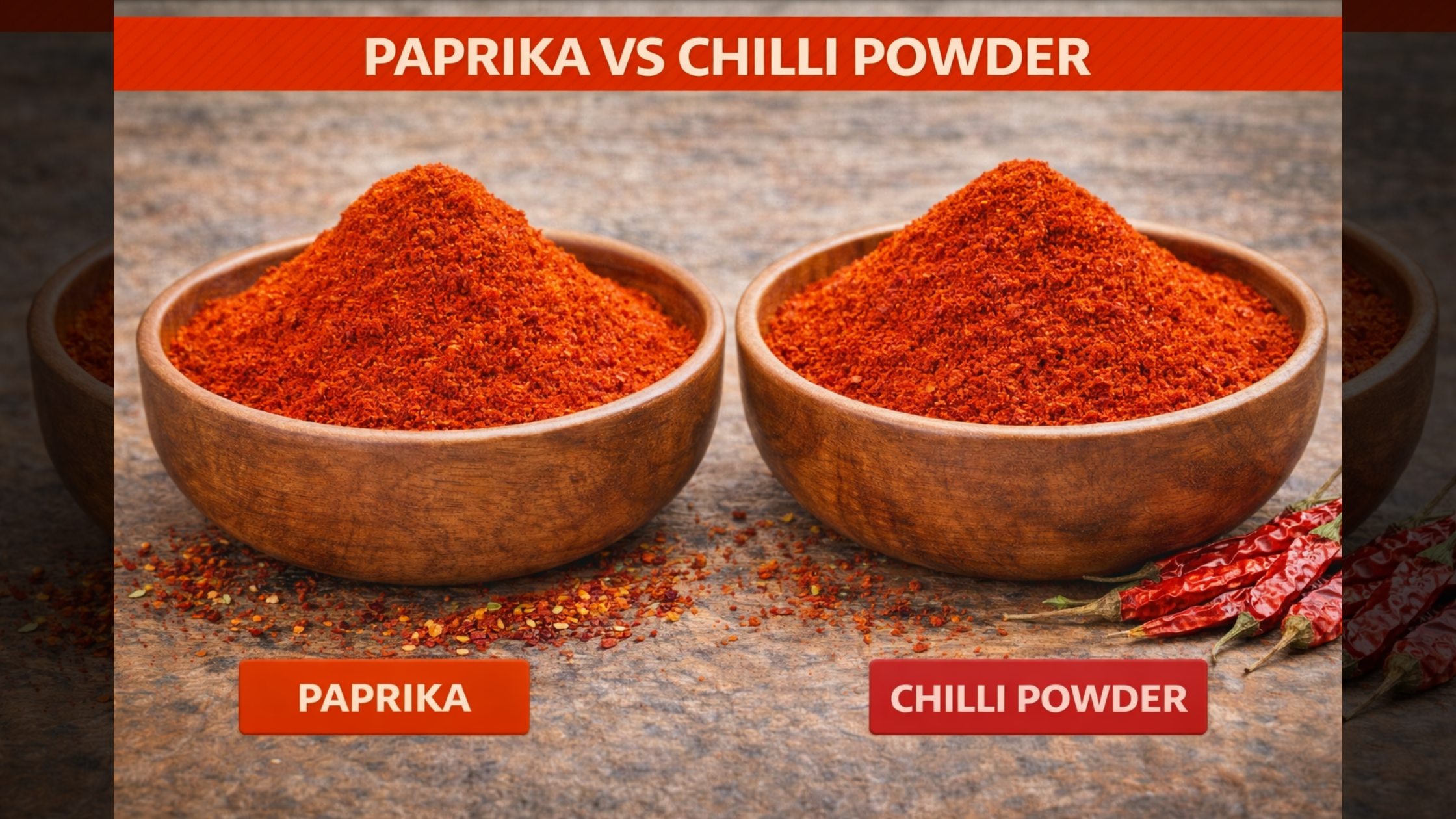
Here’s where substitution gets tricky. Standard sweet paprika registers near zero on the Scoville scale, while common dry red chillies range from 2,500 to 50,000 Scoville units or higher.
The flavour profiles diverge significantly. Dry red chillies offer earthy, sometimes fruity notes with pronounced heat. Paprika brings sweetness and mild pepper flavour without significant spiciness. When ground into powder, dried chillies retain more volatile oils than commercially processed paprika.
Aroma tells another story. Fresh-ground dried chillies release pungent, almost sharp scents that clear sinuses. Paprika smells gentle, sweet, and approachable.
When Paprika Can Work as a Substitute
Paprika can replace dry red chillies when your priority is colour over heat. If a recipe needs visual appeal—think golden rice, reddish stews, or garnished potatoes—paprika delivers beautiful hues without overwhelming spiciness.
In European and American cooking contexts, where moderate heat is preferred, paprika works wonderfully. Deviled eggs, Hungarian goulash, Spanish chorizo, and roasted vegetables all benefit from paprika’s gentle warmth.
For those with low spice tolerance, paprika offers a gateway to pepper-forward flavours. It provides the appearance of spicy food without the burn, making dishes accessible to broader audiences.
Smoked paprika specifically can mimic some aspects of dried chillies when smokiness matters more than heat. It works well in barbecue rubs, grilled dishes, and smoky bean preparations.
When Paprika Fails to Replace Dry Red Chillies
Authentic Indian, Thai, Mexican, or Korean dishes demand real dried chillies. The heat level is non-negotiable in these cuisines—it’s part of the cultural identity and intended experience.
Consider a traditional vindaloo or Sichuan hot pot. Using paprika would fundamentally change the dish’s character. The expected heat, the way capsaicin interacts with other spices, and the gradual building warmth would disappear.
Whole dried chillies also behave differently when cooked. They infuse oils with flavour during tempering, creating aromatic bases impossible to achieve with ground paprika. The texture of rehydrated chillies in sauces or pastes has no paprika equivalent.
When recipes specifically call for chilli heat as a preservative or flavour balancer—like in pickles, chutneys, or fermented foods—paprika cannot substitute effectively.
Regional Cooking Considerations and Cultural Usage
Geography shapes spice preferences dramatically. Mediterranean and Eastern European cuisines embrace paprika’s sweetness. Hungary’s national dishes revolve around it. Spain’s tapas culture features smoked pimentón prominently.
Meanwhile, regions across Asia, Latin America, and parts of Africa build entire flavour systems around dried chillies. The spice isn’t just heat—it represents tradition, identity, and generations of culinary evolution.
Understanding these cultural contexts prevents substitution mistakes that could alienate your audience or misrepresent a cuisine. A Korean kimchi made with paprika isn’t kimchi. A Goan fish curry without proper dried chillies loses its soul.
Impact of Spice Choice on Colour and Taste
Both spices add red colouration, but the shade differs. Dry red chillies, especially Kashmiri varieties, create deep, rich crimson tones. Paprika leans toward brighter, orange-red hues.
Taste balance changes dramatically with substitution. Paprika’s sweetness can clash with dishes designed for chilli’s sharpness. You might need additional ingredients like cayenne pepper or chilli flakes to compensate for heat loss when using paprika.
The finishing texture matters too. Fresh-ground dried chillies have coarser particles that add textural interest. Commercial paprika is uniformly fine, creating different mouthfeel in final dishes.
How Global Food Trade Influences Spice Substitutions
The availability of spices worldwide depends heavily on international agriculture and trade networks. Countries engaged in exporting fruits from India and similar agricultural activities ensure that authentic ingredients reach global markets.
Quality differences between locally-grown and imported spices affect substitution decisions. Access to specialty us vegetables and authentic spice varieties through established trade channels means cooks can choose authenticity over convenience.
The frozen vegetables and fruits industry has expanded to include frozen spice pastes and pre-ground authentic chilli products, making it easier to maintain traditional flavours even in regions far from spice origins.
As global supply chains improve, the need for substitution decreases. However, understanding when and how to substitute remains valuable knowledge for home cooks and professional chefs alike.
How Vipra Overseas Supports Global Spice and Agricultural Trade
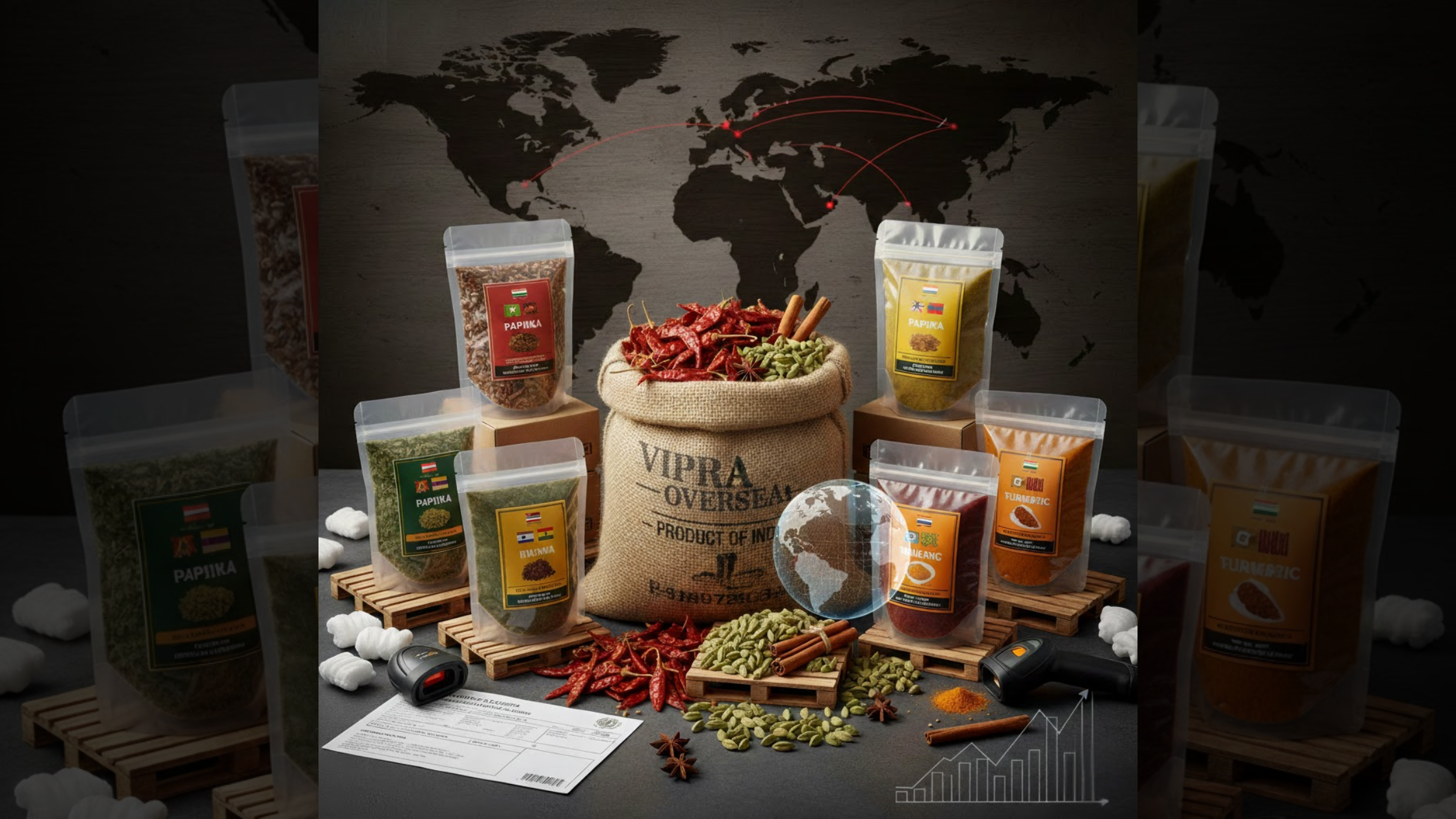
Quality matters immensely when sourcing spices and agricultural products for authentic cooking. Vipra Overseas specializes in connecting global markets with premium Indian agricultural exports, ensuring that authentic ingredients reach kitchens worldwide.
Their comprehensive product range includes fresh fruits sourced from India’s diverse growing regions, ensuring seasonal availability year-round. The company handles fresh vegetables with stringent quality controls, maintaining nutritional value and flavour integrity throughout the export process.
Vipra Overseas also exports various beans, which pair beautifully with both paprika and dried chillies in countless traditional recipes. Their frozen products division ensures that seasonal ingredients remain available regardless of harvest cycles, supporting consistent menu planning for restaurants and food manufacturers.
The spices category includes authentic dried red chillies, quality paprika varieties, and numerous other essential seasonings. Proper handling during processing and export preserves the essential oils and flavour compounds that make these spices valuable.
Additionally, Vipra Overseas supplies various grains that form the base of dishes where spice choice matters most. Whether you’re preparing traditional Indian biryanis requiring authentic dried chillies or European grain bowls enhanced with paprika, having reliable sources for all ingredients ensures culinary success.
By maintaining relationships with farmers and adhering to international quality standards, Vipra Overseas helps preserve authentic food cultures while making ingredients accessible globally. This connection between origin and destination allows cooks everywhere to make informed choices about spice selection and substitution.
Choosing the Right Spice with Confidence
The paprika versus dry red chillies question has no universal answer. Your choice depends on the dish, intended heat level, cultural authenticity requirements, and personal preference.
For colour without heat: choose paprika. For authentic regional dishes: use the specified dried chilli variety. For experimenting: try blending both to create custom heat and flavour profiles.
Understanding each spice’s unique properties empowers better cooking decisions. Rather than viewing one as inferior, recognize them as distinct ingredients suited to different culinary applications.
Stock both in your pantry. Learn which dried chilli varieties match your favourite cuisines. Experiment with different paprika types. Your expanded spice knowledge will elevate everyday cooking and help you recreate authentic global flavours with confidence.
The truth about replacing dry red chillies with paprika? Sometimes it works perfectly, sometimes it doesn’t work at all, and sometimes a creative combination delivers the best results. Know your ingredients, respect their origins, and cook with intention.