
What to Look for When Buying Dry Red Chillies in Bulk
Procuring dry red chillies in large quantities requires more than just negotiating prices. Whether you’re sourcing for domestic distribution, restaurant chains, or international markets, understanding quality benchmarks is essential. A single compromised batch can affect your entire supply chain, damage client relationships, and lead to financial losses. This guide walks you through the critical evaluation points that experienced buyers use when purchasing bulk dry red chillies.
Understanding Quality Parameters in Dry Red Chillies
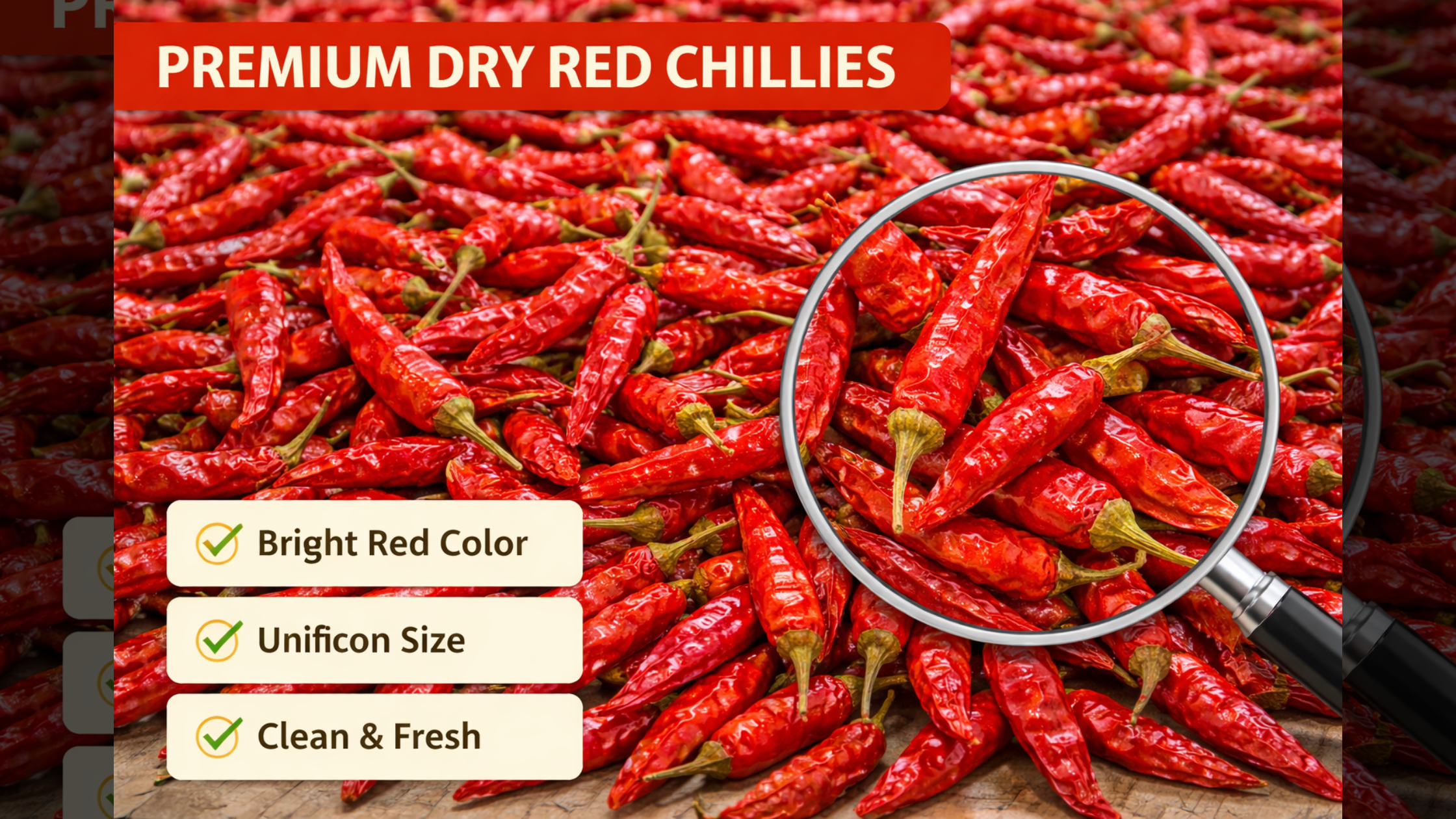
Quality assessment begins with visual inspection. The colour should be uniform—deep red or maroon depending on the variety. Discolouration, pale patches, or blackened stems often indicate poor post-harvest handling or fungal contamination. Authentic Indian red chilli varieties like Guntur, Teja, or Byadgi each have distinct colour profiles that buyers should familiarize themselves with before placing orders.
Texture matters equally. Fresh samples should feel firm yet slightly pliable, not brittle or overly soft. Excessive brittleness suggests over-drying, while softness points to moisture retention—both problematic for long-term storage.
Checking Colour, Aroma, and Pungency in Bulk Lots
Colour retention is a primary indicator of handling practices. Natural drying methods preserve pigmentation better than artificial alternatives. Request samples from different sections of the lot—top, middle, and bottom—to verify consistency. Some suppliers mix lower-grade chillies within bulk consignments, so random sampling across multiple bags or containers is non-negotiable.
Aroma testing provides insights into freshness. Crush a few pods between your fingers. A sharp, spicy fragrance indicates proper curing and storage. Musty or off-putting odours signal mold development or contamination, common issues when fruits and vegetables are stored improperly.
Pungency levels vary by variety and growing conditions. While laboratory testing offers precise Scoville heat unit measurements, experienced buyers can gauge intensity through cautious tasting. However, always request certificates from recognized testing facilities for export quality dry red chillies, especially when supplying to regulated markets.
Moisture Levels and Their Impact on Shelf Life
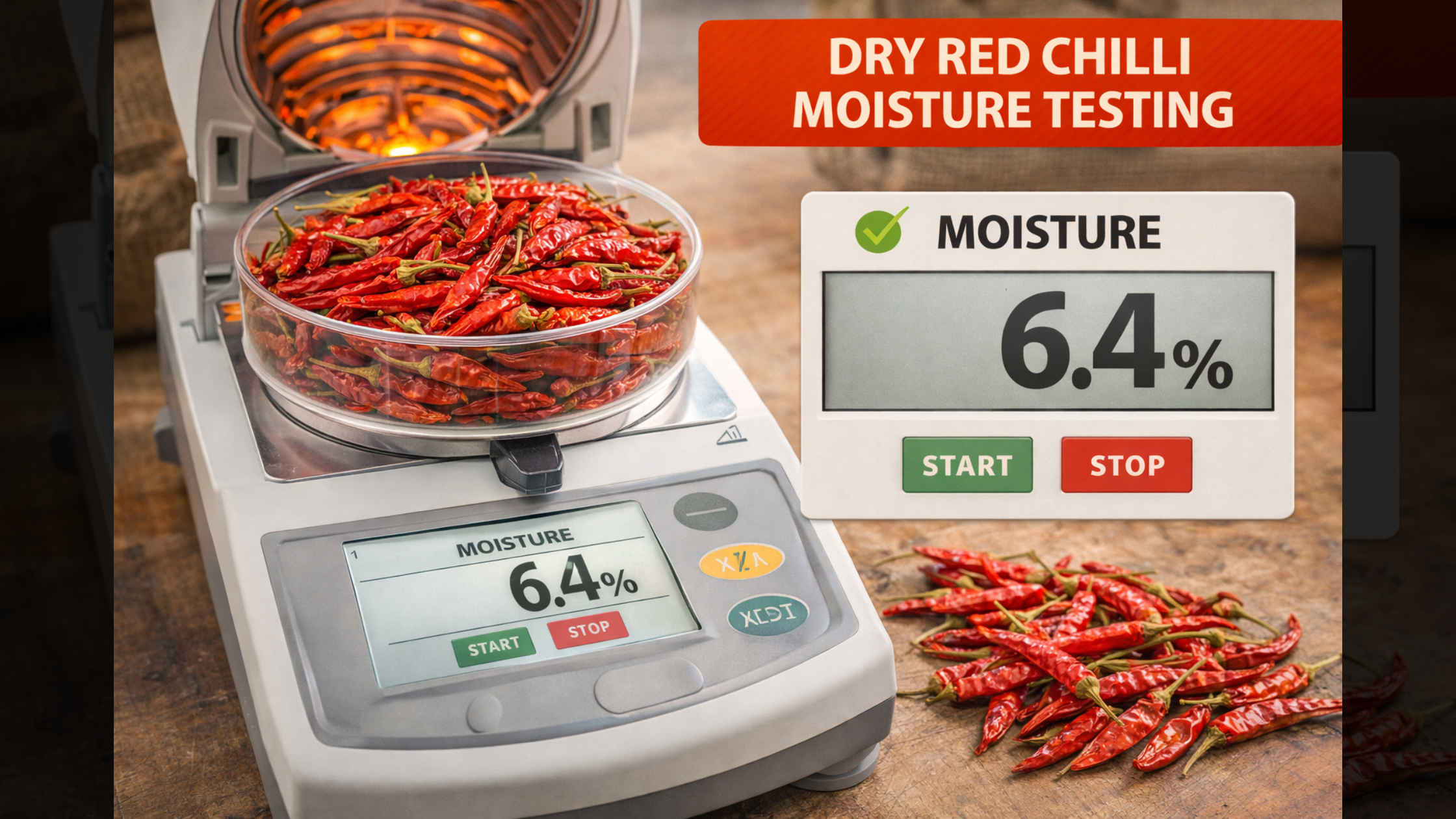
Moisture content directly affects shelf life and quality preservation. The ideal range falls between 8% to 12%. Higher moisture encourages mold growth, insect infestation, and quality degradation. Lower levels make chillies brittle and prone to breakage during transportation.
Professional buyers use moisture meters for accurate readings. In their absence, a simple test involves breaking a stem—it should snap cleanly without bending. If the stem bends, moisture content exceeds acceptable limits. This principle applies across agricultural commodities, similar to how buyers evaluate dried fruits vegetables during bulk procurement.
Ask suppliers about their drying methods. Sun-drying remains popular in India but weather-dependent results can vary. Mechanical dryers offer consistency but may impact colour if temperature control is inadequate. Understanding these processing details helps predict how your purchase will perform during storage.
Importance of Grading, Sorting, and Uniformity
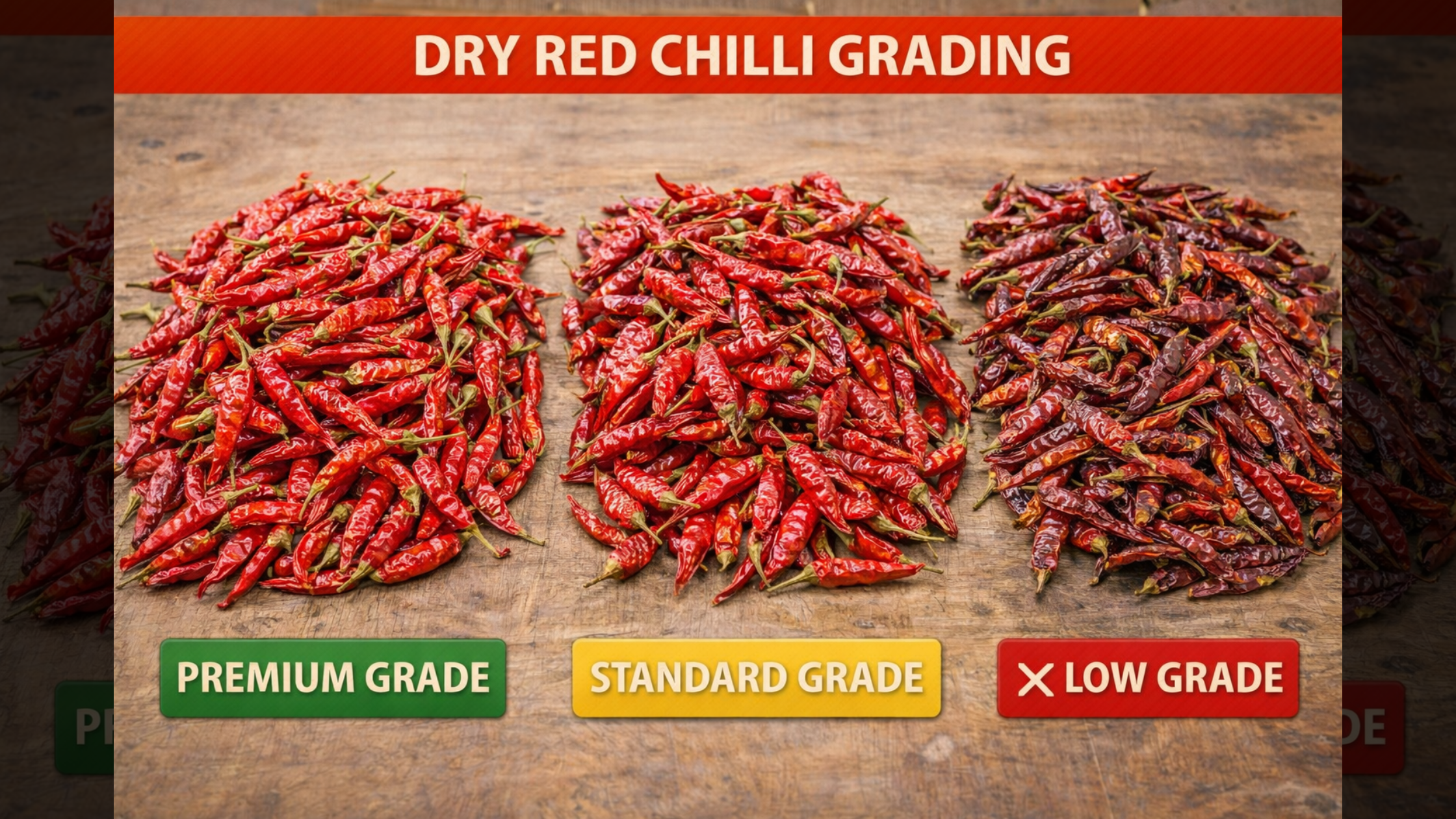
Chilli grading standards classify produce by size, colour, stem retention, and defect levels. Premium grades contain whole pods with stems attached, minimal breakage, and zero foreign matter. Commercial grades may include some broken pieces and slight colour variation but should still meet baseline quality thresholds.
Examine the lot for stem content. While some buyers prefer stem-on chillies for authenticity, excessive stem weight reduces the actual chilli content you’re paying for. Similarly, check for seeds, dust, and debris—indicators of inadequate cleaning processes.
Uniformity in size matters for industrial buyers who require consistent grinding results. Mixed sizes complicate processing and affect final product quality, whether you’re producing chilli powder, flakes, or whole-pod packs for retail.
Packaging and Handling Considerations for Large Volumes
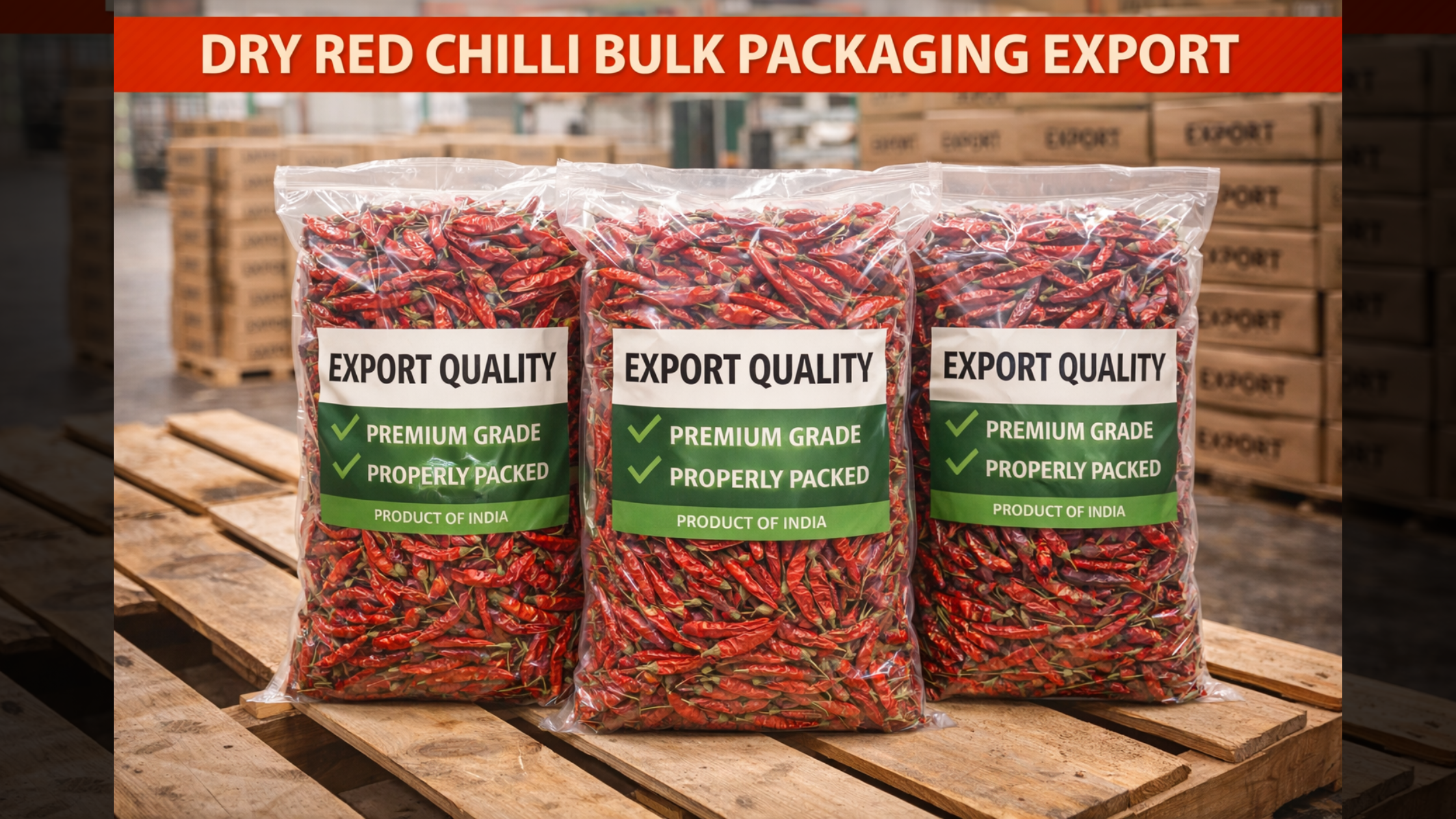
Bulk spice packaging must protect contents from moisture, light, and physical damage. Common options include jute bags, polypropylene sacks, and vacuum-sealed bags. Each has advantages—jute allows breathability but offers less moisture protection, while polypropylene provides better barrier properties.
Inspect packaging materials before finalizing purchases. Torn bags, improper sealing, or evidence of water exposure should raise immediate concerns. For export shipments, verify that packaging complies with destination country regulations regarding material types, labeling, and fumigation requirements.
Handling protocols during loading and transit significantly impact quality. Stacking height, ventilation, and container conditions all play roles. Discuss these logistics with suppliers and freight partners upfront, just as you would when managing shipments of fresh fruits and vegetables that require temperature control.
Supplier Credibility and Sourcing Transparency
Working with reputable wholesale spice suppliers reduces risk substantially. Verify their track record through references, certifications, and facility visits when feasible. Established suppliers maintain consistent quality because their reputation depends on it.
Supply chain transparency has become increasingly important. Buyers want to know farming practices, pesticide usage, and post-harvest handling procedures. Farm-sourced spices with documented traceability offer peace of mind, particularly for organic or specialty market segments.
Request documentation including phytosanitary certificates, quality test reports, and export licenses. For international transactions, ensure compliance with spice export standards of both origin and destination countries. This diligence prevents costly rejections at customs and protects your business reputation.
Storage and Logistics Factors for Bulk Buyers
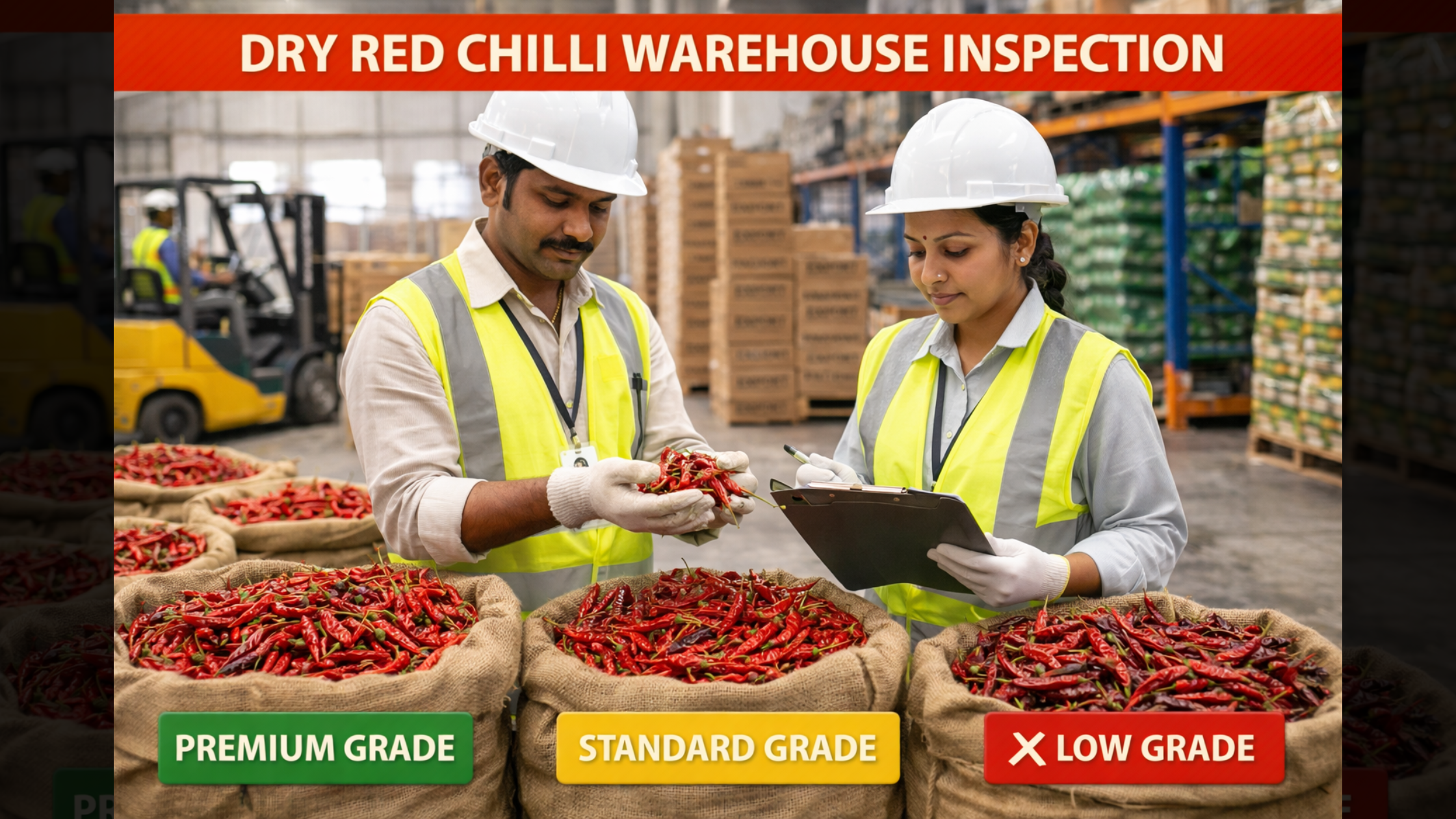
Proper storage preserves quality between purchase and use. Dry, cool environments away from direct sunlight are essential. Temperature fluctuations accelerate quality loss, so climate-controlled facilities are preferable for long-term holding.
Red chilli storage requirements include pest management protocols. Regular inspection and fumigation when necessary prevent insect damage. Store chillies separately from highly aromatic products to avoid flavour transfer, a consideration that applies equally to stored fresh fruits and other produce.
Calculate storage costs into your bulk purchasing decisions. Sometimes smaller, more frequent orders prove economical despite higher per-unit prices, especially if your storage capacity is limited or conditions are suboptimal.
How Bulk Quality Impacts Domestic and Global Trade
Quality consistency determines market access and pricing power. Premium-grade bulk dry red chillies command significantly higher prices in international markets where buyers prioritize reliability. Conversely, inconsistent quality relegates suppliers to price-sensitive segments with thinner margins.
For businesses exporting fruits vegetables alongside spices, maintaining quality standards across product lines strengthens overall brand credibility. Buyers notice suppliers who demonstrate comprehensive quality management systems.
Traceability and certification increasingly influence purchasing decisions. Organic certifications, fair trade credentials, and food safety accreditations open doors to premium markets. While these add costs, they often generate higher returns through access to discerning customer segments.
How Vipra Overseas Supports Agro Export Excellence
Navigating bulk procurement challenges requires experienced partners who understand quality standards and logistics complexities. Vipra Overseas specializes in exporting premium agricultural products to global markets, offering comprehensive support throughout the sourcing and shipping process.
Our portfolio includes fresh fruits sourced from the finest growing regions, ensuring ripeness and flavour meet international expectations. We work with verified farmers who follow good agricultural practices, maintaining quality from farm to port.
We supply fresh vegetables across multiple varieties, managing cold chain logistics to preserve freshness during transit. Our quality control teams inspect every batch against strict parameters before clearance for export.
Our beans selection covers multiple varieties suited for different culinary applications, with careful attention to size grading and packaging specifications required by importing countries.
For products requiring extended shelf life, we offer frozen products processed using advanced technology that locks in nutritional value and taste. Our frozen range spans fruits, vegetables, and prepared ingredients.
Our spices category includes dry red chillies, turmeric, black pepper, cumin, and other essential items. We understand the nuances of spice quality assessment and work exclusively with suppliers who meet our rigorous standards.
We also export grains including rice varieties, pulses, and specialty grains, serving both wholesale distributors and retail packaging operations worldwide.
With established relationships across agricultural belts in India and comprehensive export documentation capabilities, Vipra Overseas simplifies the complexity of international agro trade while ensuring quality integrity remains uncompromised.
Making Informed and Confident Bulk Purchasing Decisions
Buying dry red chillies in bulk demands methodical evaluation across multiple quality dimensions. From visual inspection and moisture testing to supplier verification and logistics planning, each step contributes to procurement success. The initial effort invested in thorough assessment pays dividends through reduced rejection rates, better shelf life, and stronger customer relationships.
Build relationships with suppliers who value transparency and quality consistency. Document your quality standards clearly and communicate expectations upfront. Regular market intelligence on pricing trends, crop conditions, and regulatory changes keeps your purchasing strategy competitive.
Whether sourcing for domestic markets or international export, approaching bulk procurement with professional rigor transforms it from a transactional activity into a strategic advantage. The right quality at the right price, delivered reliably—this combination builds businesses that thrive across market cycles.