
Why These Two Chillies Are Often Compared
When exploring Asian cuisines, two chilli varieties consistently capture attention: Korean gochugaru and Indian dry red chillies. Both hold cultural significance in their respective culinary traditions, yet they differ dramatically in processing, heat intensity, and application. Understanding these distinctions helps home cooks and professional chefs select the right spice for authentic flavour profiles.
The global spice trade has made these chillies increasingly accessible beyond their countries of origin. As Korean cuisine gains international popularity and Indian food maintains its worldwide presence, comparing these two becomes essential for anyone serious about authentic cooking or exploring the diverse world of chilli varieties.
What Exactly Is Gochugaru?
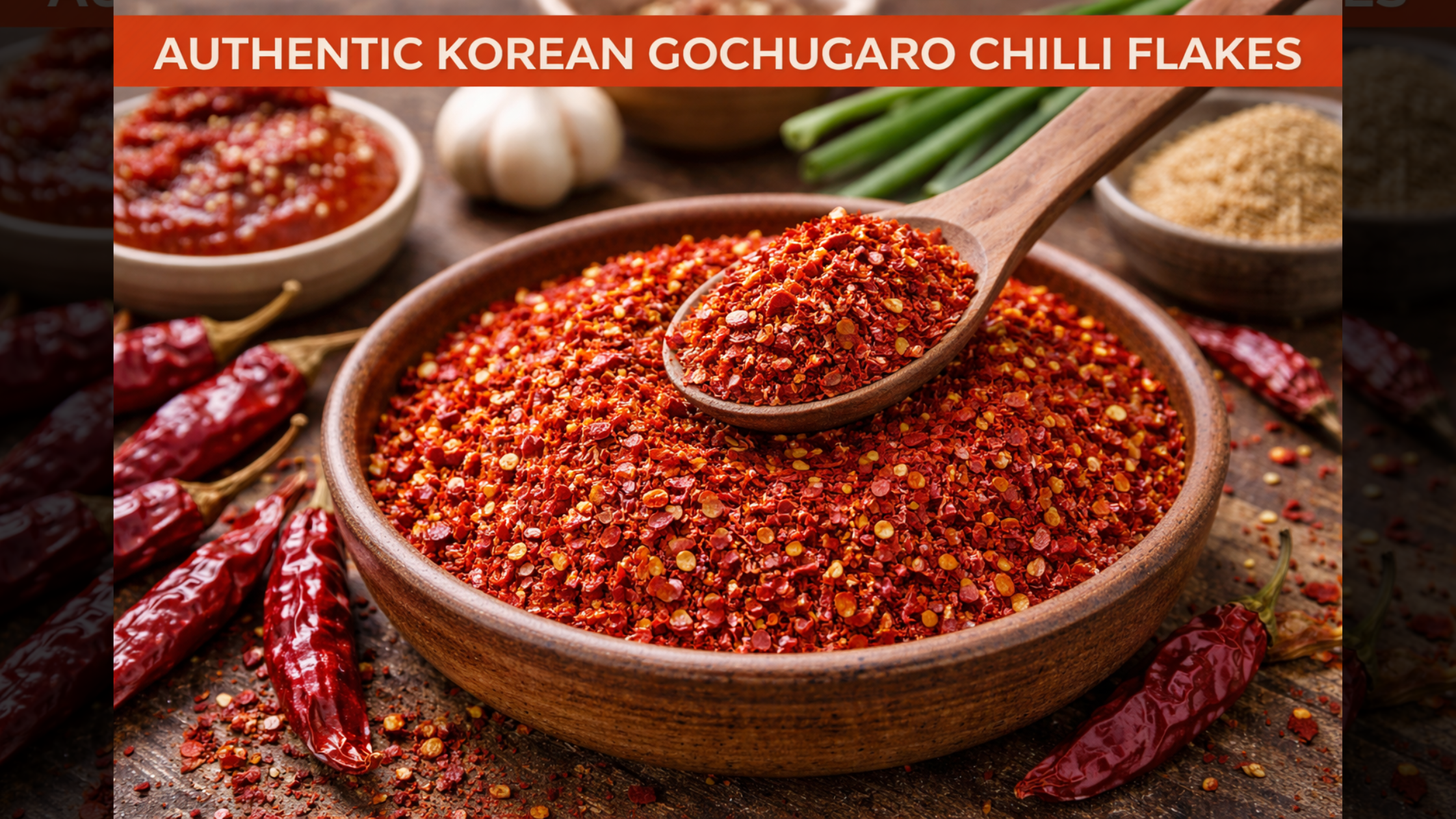
Gochugaru refers to Korean red chilli flakes made from sun-dried Korean red peppers, typically the taeyangcho variety. The peppers are deseeded before being coarsely ground, creating flakes with a distinctive texture—coarser than powder but finer than crushed chilli. This unique grinding method preserves the fruity, slightly sweet undertones that define Korean chilli character.
Traditional processing involves sun-drying whole peppers until they achieve optimal moisture levels, followed by mechanical or stone grinding. The result is vibrant red flakes that carry both heat and depth. Gochugaru serves as the foundation for kimchi, Korean stews, marinades, and countless banchan (side dishes), making it indispensable in Korean kitchens worldwide.
Indian Dry Red Chilli Varieties
India produces an extraordinary range of dry red chillies, each with distinct characteristics. Kashmiri chillies deliver brilliant colour with mild heat, while Guntur chillies from Andhra Pradesh pack intense spiciness. Byadgi chillies offer deep red hues and moderate heat, favoured in South Indian preparations. Sannam chillies provide balanced heat suitable for commercial processing.
These varieties undergo different preparation methods depending on regional traditions. Some are left whole for tempering in hot oil, others ground into fine powder for spice blends, and many are crushed into flakes for versatile cooking applications. The diversity within Indian chilli cultivation reflects centuries of agricultural development and culinary refinement across various climates and soil conditions.
Processing and Texture Distinctions
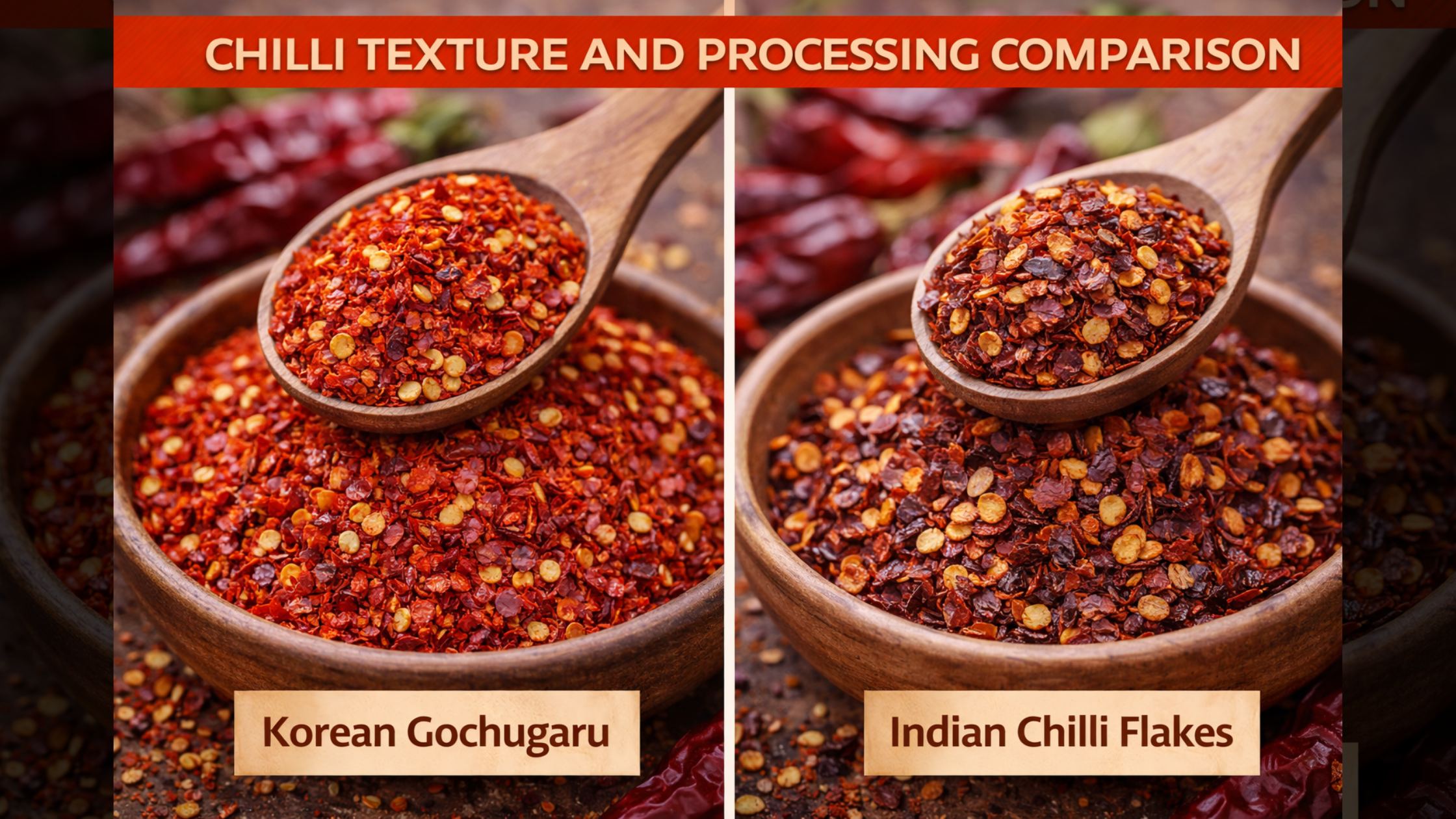
The most noticeable difference lies in how these chillies are processed. Gochugaru undergoes careful deseeding before grinding, resulting in flakes relatively free from seeds. This creates a cleaner, more uniform texture that disperses evenly in liquids and marinades. The grinding typically produces two grades: coarse (for visual appeal and texture) and fine (for pastes and marinades).
Indian dry red chillies may be sold whole, allowing cooks to control the final texture. When crushed, they often retain seeds, contributing additional heat and a grittier texture. The crushing method varies—stone grinding produces finer, more aromatic powder, while mechanical crushing yields coarser flakes. This versatility allows adaptation to countless regional cooking styles across the subcontinent.
Heat Levels and Scoville Measurements
Gochugaru typically registers between 1,500 to 10,000 Scoville Heat Units (SHU), depending on the pepper variety and harvest conditions. Most commercial gochugaru falls in the moderate range—warm rather than scorching—allowing its fruity, slightly smoky notes to shine through. This measured heat enables generous use without overwhelming dishes.
Indian chillies span a much wider spectrum. Kashmiri chillies may measure 1,000 to 2,000 SHU, prized for colour over heat. Conversely, Guntur varieties can exceed 30,000 SHU, delivering serious spiciness. This dramatic range means selecting the appropriate Indian chilli variety becomes crucial when substituting in recipes originally calling for gochugaru.
Flavour Profiles Beyond Heat
Gochugaru carries distinctive sweet-fruity notes with subtle smokiness, particularly when traditionally sun-dried. The deseeding process reduces bitterness, allowing natural pepper flavours to dominate. Many describe it as having a “clean” chilli taste without harsh vegetal notes, making it suitable for both raw applications (like kimchi) and cooked preparations.
Indian dry red chillies present more earthy, robust profiles. Kashmiri varieties offer mild sweetness with tangy undertones. Guntur chillies deliver sharp, pungent heat with less sweetness. Byadgi chillies provide balanced earthiness. These distinct characteristics developed through centuries of cultivation in diverse Indian microclimates, where regional soil composition and farming practices influence final flavour outcomes.
Colour and Aromatic Properties
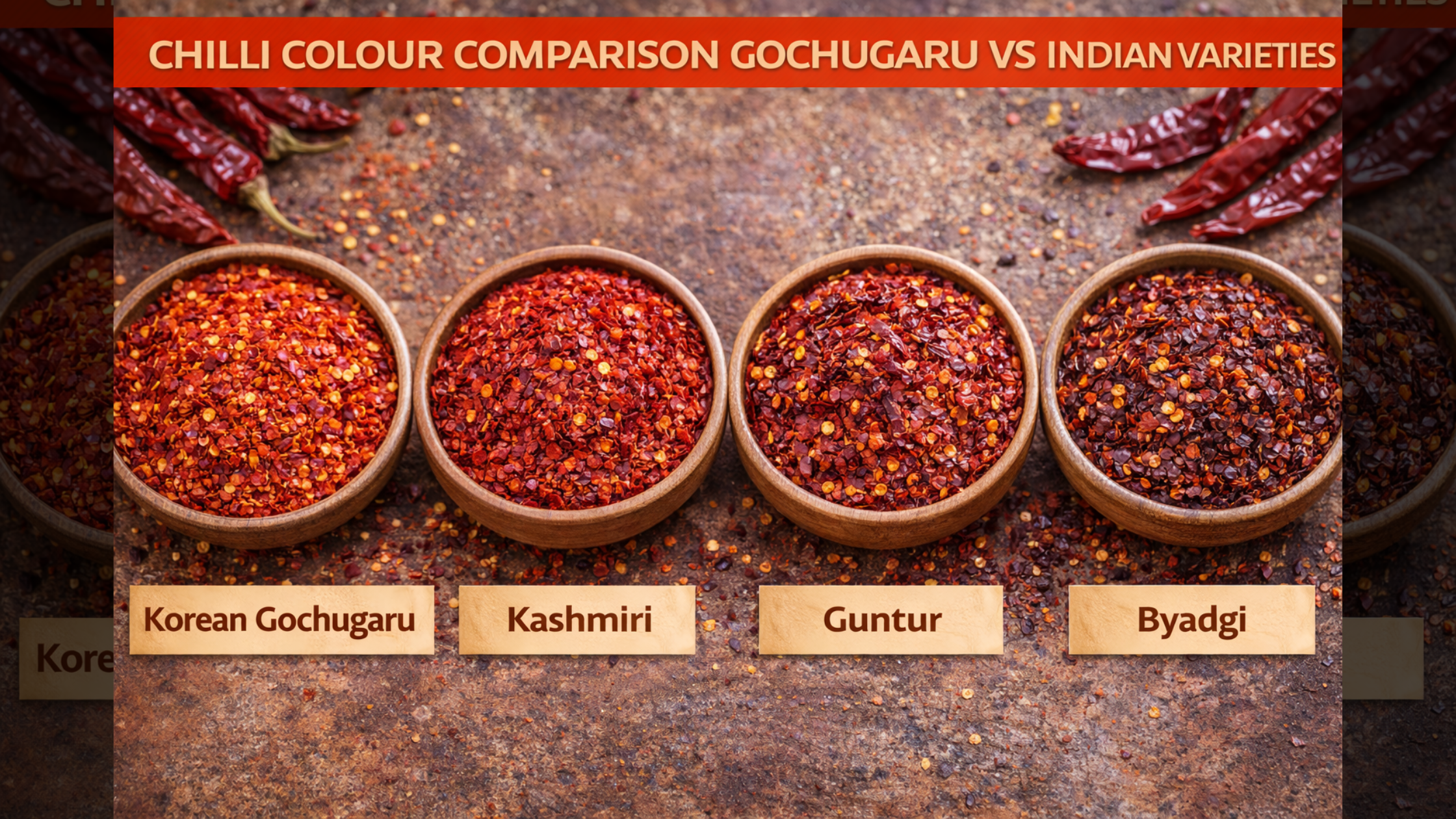
Gochugaru produces a brilliant scarlet-red colour that remains stable during cooking. The vibrant hue comes from capsanthin, a natural pigment preserved through careful drying and grinding processes. This colour stability makes gochugaru ideal for dishes where visual appeal matters—kimchi’s characteristic red coating or the glossy sheen on Korean fried chicken.
Indian chillies vary significantly in colour contribution. Kashmiri chillies are specifically cultivated for their deep red colour, used extensively in dishes where appearance matters. Other varieties provide more orange or brownish-red tones. The aromatic properties also differ—Indian chillies often release more pungent, sharp aromas when heated in oil, a technique called “tempering” that forms the flavour foundation in countless regional dishes.
Traditional Cooking Applications
In Korean cuisine, gochugaru appears in virtually every fermented preparation. Kimchi relies on it for signature colour, flavour, and fermentation properties. Gochujang (fermented chilli paste) begins with gochugaru. Korean stews like kimchi jjigae and budae jjigae depend on its moderate heat and visual appeal. Marinades for bulgogi and galbi incorporate it for depth without excessive spiciness.
Indian culinary traditions employ dry red chillies differently across regions. South Indian cooking features whole dried chillies tempered in hot oil with mustard seeds and curry leaves, creating aromatic bases for curries and stir-fries. North Indian cuisines often grind chillies into masala blends. Coastal regions use chillies in tangy seafood preparations. This versatility reflects India’s position as both a major producer and consumer within the global fruits and vegetables export network.
Can They Substitute Each Other?
Substitution depends on understanding the intended flavour profile. Using Indian chilli flakes instead of gochugaru in kimchi will alter both taste and appearance—the fruity sweetness unique to gochugaru will be missing, and the final colour may differ. However, milder Indian varieties like Kashmiri can approximate gochugaru’s moderate heat in certain cooked dishes, though flavour nuances remain distinct.
Conversely, replacing Indian chillies with gochugaru in traditional Indian recipes may produce unexpected results. The tempering technique that releases sharp, pungent aromas from Indian chillies won’t achieve the same effect with gochugaru’s sweeter profile. For authentic results, sourcing the correct chilli variety for each cuisine remains the best practice.
Growing Global Demand for Asian Chillies
International interest in authentic Asian ingredients has surged as global food culture becomes increasingly interconnected. Korean Wave (Hallyu) influence through K-dramas and K-pop has driven gochugaru demand beyond Korea. Similarly, Indian cuisine’s established global presence continues expanding, with regional specialties gaining recognition beyond generic “curry” preparations.
This growing appetite creates opportunities within the agricultural export sector. Countries producing quality chillies can access expanding international markets where consumers seek authentic ingredients. The fruits and vegetables export industry increasingly focuses on preserving traditional varieties while meeting modern food safety and packaging standards demanded by international buyers.
Vipra Overseas: Your Trusted Partner in Global Agro Export
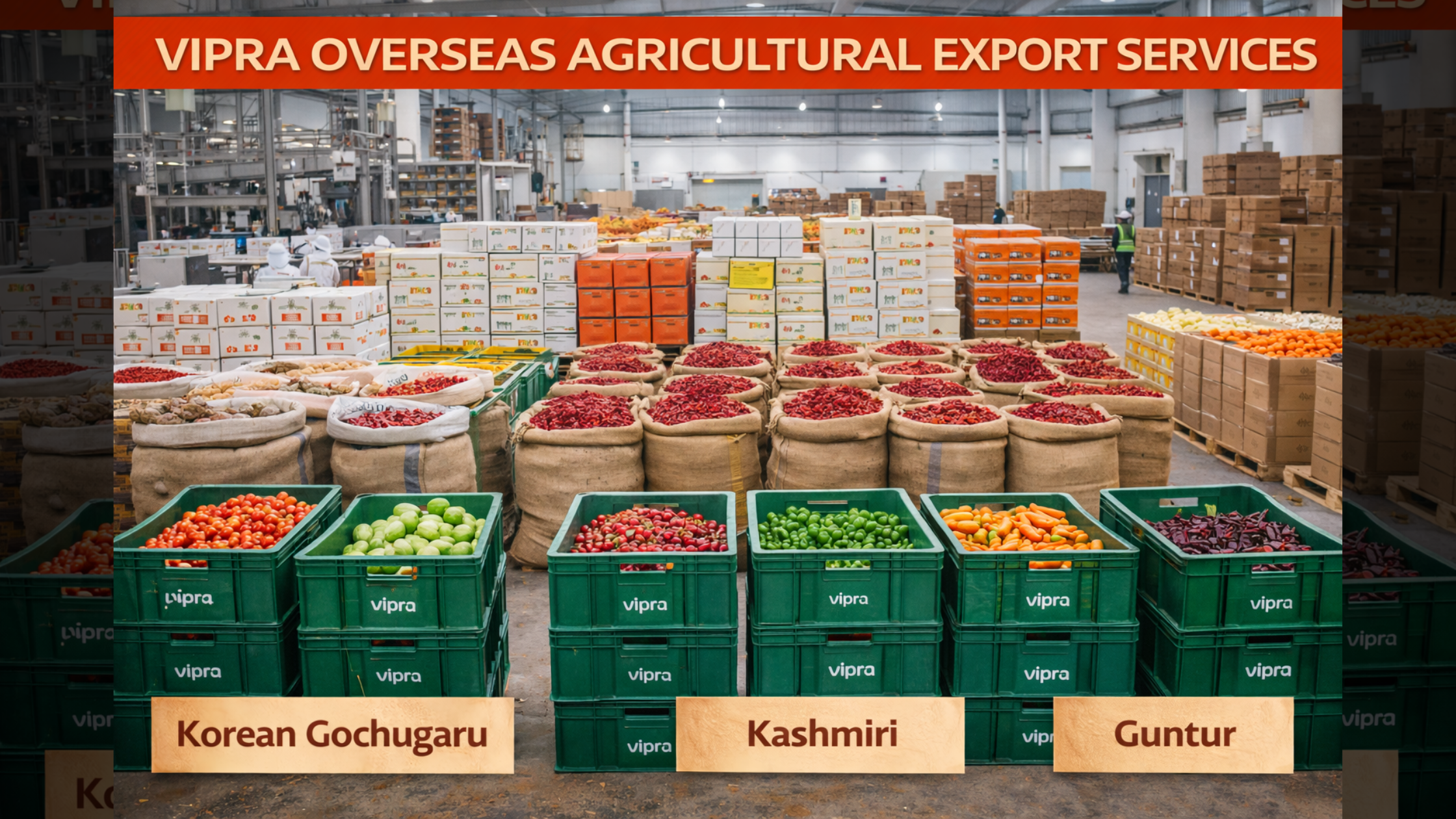
When sourcing premium-quality ingredients like Korean gochugaru or Indian dry red chillies, working with experienced exporters ensures consistency and authenticity. Vipra Overseas specializes in connecting global markets with India’s rich agricultural bounty, maintaining rigorous quality standards throughout the supply chain.
Our comprehensive export portfolio includes fresh fruits cultivated across India’s diverse growing regions, from tropical mangoes to temperate-climate apples. We supply fresh vegetables year-round, ensuring restaurants, retailers, and distributors receive produce at optimal freshness. Our beans category encompasses various pulses and legumes valued in international cuisines.
For ingredients requiring temperature-controlled logistics, Vipra Overseas offers frozen products that preserve nutritional value and extend shelf life. Our spices division supplies everything from whole dried chillies to premium blends, meeting the needs of food manufacturers and ethnic grocery chains worldwide. Additionally, we export grains including specialty rice varieties and millets gaining popularity in health-conscious markets.
Vipra Overseas understands that the fruits and vegetables sector demands expertise in post-harvest handling, phytosanitary compliance, and cold chain management. Our team coordinates with certified farms, manages documentation for international shipments, and ensures products arrive meeting destination country regulations. Whether you need container loads or sample quantities, our commitment remains consistent: delivering quality products that represent India’s agricultural excellence.
Making the Right Choice for Your Kitchen
Selecting between gochugaru and Indian dry red chillies ultimately depends on your culinary goals. For authentic Korean preparations—especially fermented foods like kimchi or traditional stews—gochugaru remains irreplaceable. Its unique processing, moderate heat, and fruity character define these dishes fundamentally.
For Indian cooking, choosing the appropriate regional variety matters more than finding substitutes. Kashmiri chillies for colour-focused dishes, Guntur for heat-intensive preparations, or Byadgi for balanced results—each serves specific purposes within India’s vast culinary landscape.
Both chilli types represent centuries of agricultural tradition and cultural significance. As the global fruits house of diverse cuisines continues expanding, understanding these differences elevates your cooking from merely following recipes to truly comprehending the ingredients that make each cuisine unique. Whether you’re a home cook exploring new flavours or a professional chef maintaining authenticity, choosing the right chilli makes all the difference.