
Dry red chillies are a cornerstone of Indian cooking, lending heat, colour, and depth to countless dishes. While many cooks toss them directly into hot oil or grind them into powder, rehydrating these dried pods can unlock a smoother texture, richer flavour, and more vibrant colour in your cooking. Understanding when and how to properly rehydrate dry red chillies transforms them from brittle spice pods into pliable, aromatic ingredients that blend seamlessly into curries, chutneys, and marinades.
The process isn’t complicated, but doing it correctly makes all the difference between achieving a smooth, restaurant-quality chilli paste and ending up with a grainy, bitter mixture that fails to deliver the desired punch.
Why Rehydration Changes Everything
When red chillies are dried for preservation, they lose most of their moisture content. This dehydration concentrates their capsaicin (the compound responsible for heat) and volatile oils, but it also makes them harder to blend and sometimes intensifies any bitterness present in the skin. Soaking dry red chillies in liquid allows the flesh to soften and swell, making it easier to create smooth pastes, remove seeds if needed, and distribute flavour evenly throughout your dish.
Rehydrated chillies also release their colour pigments more readily, giving gravies and sauces that deep red hue we associate with authentic Indian cuisine. The softened texture means your grinder or blender works less hard, and you avoid those unpleasant fibrous bits that can ruin an otherwise perfect curry.
When You Should Rehydrate
Not every recipe calls for soaking. If you’re tempering chillies in hot oil for a tadka or roasting them briefly before grinding into a coarse powder, keeping them dry works perfectly. However, rehydration becomes essential when making smooth chutneys, thick gravies, or marinades where texture matters.
Traditional recipes for Goan vindaloo paste, Kolhapuri masala, or Chettinad curries all benefit from properly soaked chillies. The same applies when preparing export-quality spice blends or pastes that need consistent texture and colour—something professional spice processors understand well.
Proven Methods for Perfect Rehydration
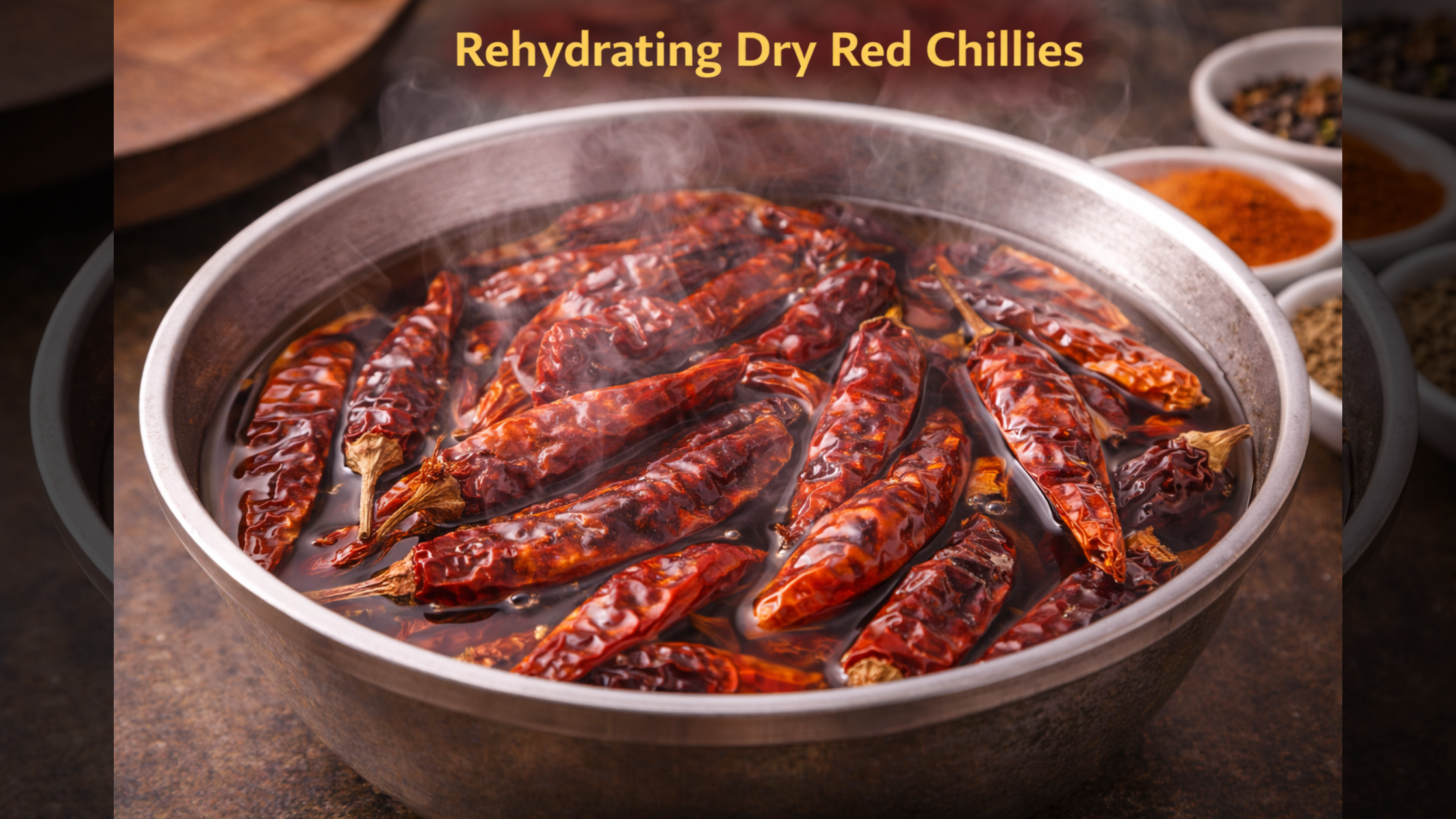
The most common approach involves warm water, which is gentle yet effective. Remove the stems from your dry red chillies and place them in a bowl. Pour warm water (not boiling) over them until fully submerged. The ideal temperature sits around 70-80°C—hot enough to speed up absorption but not so hot that it destroys delicate flavour compounds.
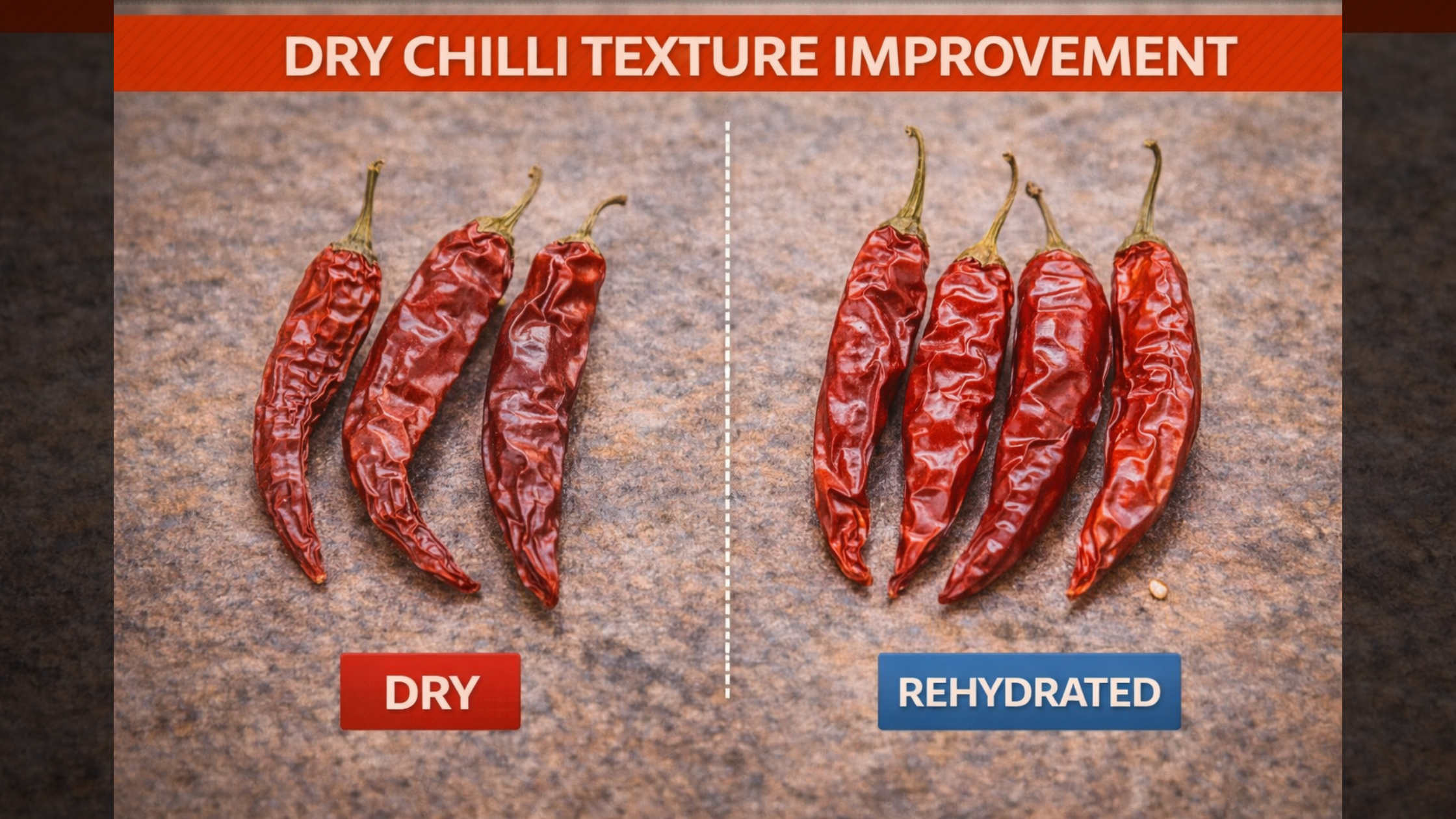
Let the chillies soak for 15 to 30 minutes, depending on their thickness and how dried out they are. Kashmiri chillies, which have thinner walls, soften faster than the thicker-skinned varieties. You’ll know they’re ready when they feel pliable and the flesh looks plump.
For recipes requiring milder heat with maximum flavour, try soaking chillies in warm milk instead of water. This method, popular in Mughlai cooking, mellows the capsaicin while adding a subtle creaminess. Some cooks also add a pinch of salt to the soaking liquid, which helps draw out any residual bitterness.
Temperature and Timing Guidelines
Water temperature matters more than most people realize. Cold water takes hours to fully rehydrate chillies and can leave them unevenly softened. Boiling water works faster but can make the skins tough and sometimes creates a slightly cooked flavour that doesn’t suit raw chutneys or uncooked pastes.
The sweet spot is warm water between 70-80°C. At this temperature, 20 minutes suffices for most varieties. If you’re working with particularly old or over-dried chillies, extending the time to 40 minutes helps, but avoid soaking beyond an hour as prolonged exposure can leach away too much flavour into the water.
Mistakes That Ruin Your Results
One common error is discarding the soaking water immediately. While you shouldn’t use bitter or overly dark water, the liquid often contains valuable colour and flavour compounds. Taste it—if it’s pleasantly spiced rather than bitter, consider using a few tablespoons in your curry base.
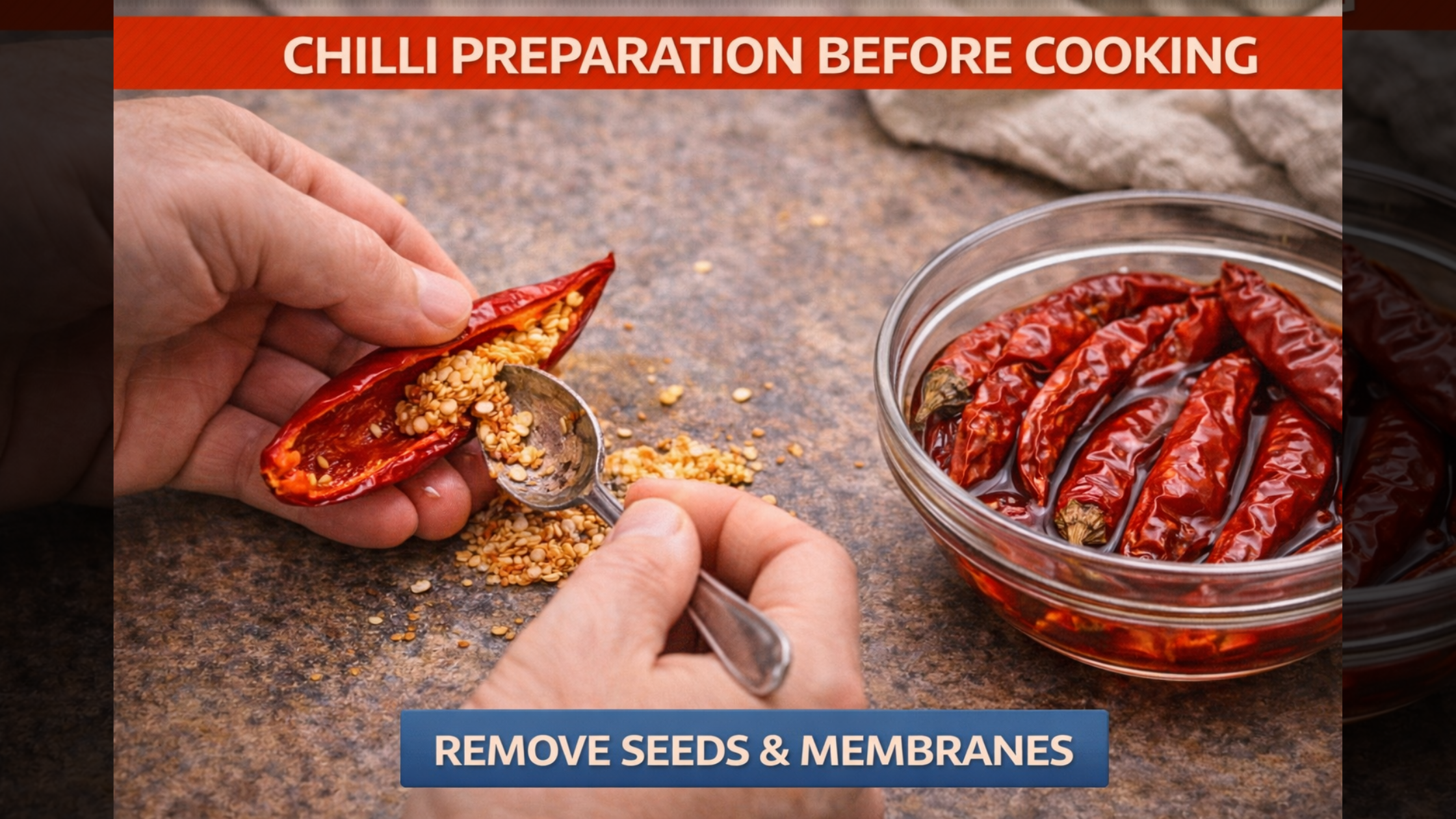
Another mistake is not deseeding after rehydration. While seeds add heat, they also contribute bitterness and prevent smooth blending. Once your chillies are soft, slit them open and scrape out the seeds. This step is especially important when making pastes for dishes where you want colour and mild heat rather than aggressive spiciness.
Squeezing rehydrated chillies too aggressively is another pitfall. Gentle pressing removes excess water without damaging the flesh. Overly vigorous squeezing can break apart the softened tissue and make blending more difficult.
Getting the Most from Your Rehydrated Chillies
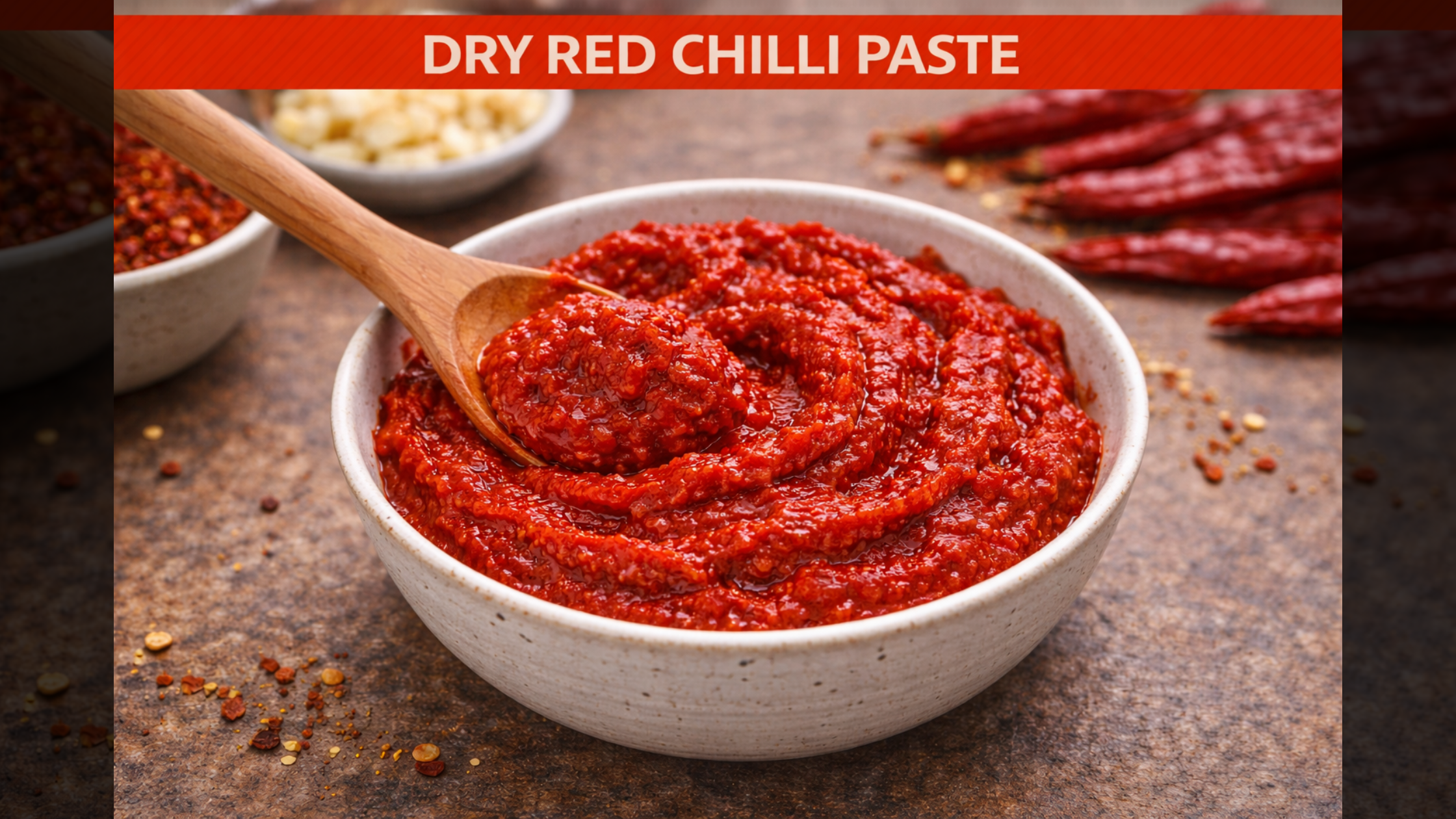
Once properly softened, these chillies become incredibly versatile. For smooth gravies, blend them with onions, tomatoes, ginger, and garlic to create a base paste that rivals any restaurant’s secret recipe. The soft texture ensures no fibrous bits interfere with your sauce’s silky consistency.
In marinades for tandoori preparations or grilled meats, rehydrated chilli paste distributes evenly and penetrates deeper than dry powder. The moisture helps it cling to proteins while the concentrated oils infuse flavour throughout.
For traditional pickles and condiments, rehydrated chillies mash more easily with jaggery, tamarind, and spices, creating that perfect balance of heat, sweet, and tang. Many home cooks preparing chutneys for storage find that starting with properly soaked chillies yields a more consistent product that keeps longer.
How Rehydration Affects Heat, Colour, and Aroma
The capsaicin level doesn’t change through soaking, but its distribution does. Rehydration allows you to control heat more precisely by removing seeds and membranes where most capsaicin concentrates. This gives you the vibrant colour and fruity undertones of the chilli flesh without overwhelming spiciness.
Colour extraction improves dramatically. Professional chefs preparing dishes where appearance matters—think bright red Kashmiri curries or deep red Andhra-style gravies—always rehydrate their chillies. The water helps release carotenoid pigments trapped in dried cell walls, yielding richer, more appetizing hues.
Aromatic compounds also behave differently. Dry chillies roasted in oil release sharp, almost acrid notes. Rehydrated chillies, when ground and cooked, develop a more rounded, complex aroma profile with fruity, earthy, and slightly sweet undertones that complement different fruits and vegetables in mixed preparations.
Proper Storage After Rehydration
Use rehydrated chillies immediately for best results. If you must store them, place them in an airtight container in the refrigerator and use within two days. For longer storage, blend them into a paste with a little salt and oil, then freeze in ice cube trays. These frozen portions can go directly into hot pans when needed.
Never try to re-dry rehydrated chillies. Once moisture is reintroduced, the cellular structure changes and drying them again invites mould growth and bacterial contamination. If you’ve soaked more than needed, making a large batch of chilli paste for freezing is always the smarter choice.
Vipra Overseas: Your Partner in Quality Agro Products
Whether you’re a home cook perfecting traditional recipes or a professional chef sourcing ingredients, understanding spice preparation is just one part of the equation. Quality raw materials make all the difference, and that’s where Vipra Overseas excels.
As a trusted name in agro-export, Vipra Overseas specializes in supplying premium fresh fruits, fresh vegetables, beans, frozen products, spices, and grains to markets worldwide. Their commitment to sourcing ensures that whether you need fruits fresh from farms or premium-grade dry red chillies for processing, you receive products that meet international quality standards.
For businesses looking to incorporate more fruits and vegetables into their product lines, or restaurants seeking reliable spice suppliers, Vipra Overseas provides the consistency and traceability that modern food operations demand. Their understanding of proper handling, storage, and export logistics means your ingredients arrive in optimal condition, ready to deliver the flavours your customers expect.

Bringing It All Together
Rehydrating dry red chillies isn’t about following rigid rules—it’s about understanding how moisture, temperature, and time interact to restore these preserved pods to their most useful state. Whether you’re making a smooth curry paste, a vibrant chutney, or a marinade that needs to penetrate and flavour meat thoroughly, taking the time to soak your chillies properly pays off in texture, colour, and depth of flavour.
Start with quality chillies, use the right temperature water, time your soaking appropriately, and avoid the common mistakes that leave you with bitter or unevenly textured results. The difference between dried pods thrown into a grinder and properly rehydrated chillies is the difference between acceptable cooking and exceptional cooking.
Master this simple technique, and you’ll notice the improvement in everything from your everyday dal tadka to your most ambitious restaurant-style curries. Your taste buds—and your guests—will thank you for the effort.