
The global appetite for authentic Indian spices continues to surge, with international retailers and food brands increasingly seeking reliable manufacturing partners who can deliver quality products under their own labels. Private label spice packaging services have emerged as a strategic solution for businesses looking to establish their presence in the competitive spice market without investing in production infrastructure. India, with its rich agricultural heritage and advanced processing capabilities, stands at the forefront of this growing industry.
Understanding Private Label Spice Packaging
Private label spice packaging refers to the comprehensive service where manufacturers process, package, and brand spice products according to the specifications provided by retailers or distributors. The client’s brand name and design appear on the final product, while the actual production remains with specialized facilities equipped to handle large-scale operations. This arrangement allows businesses to focus on marketing and distribution while leveraging the expertise of established processors.
The model has gained tremendous traction among international buyers who recognize the cost advantages and quality assurance that come with partnering with experienced Indian exporters. From turmeric and cumin to complex spice blends, these services cover the entire spectrum of products that grace kitchen shelves worldwide.

India’s Competitive Edge in Spice Packaging
India produces approximately 70% of the world’s spices, making it the natural choice for businesses seeking authentic flavors and reliable supply chains. The country’s well-established infrastructure for spice processing includes state-of-the-art cleaning, grinding, sterilization, and packaging facilities that meet international food safety standards.
Beyond raw material availability, Indian manufacturers have invested significantly in technology and certifications that global markets demand. APEDA registered spice exporters maintain stringent quality protocols, ensuring that products meet the regulatory requirements of destination countries. This combination of agricultural abundance and technical capability positions India as an unmatched partner for private label spice manufacturing.
The presence of different fruits and vegetables alongside spices in many export facilities further enhances operational efficiency. Integrated supply chains that handle multiple product categories, including fruits fresh from orchards and various spice fruits, enable manufacturers to offer comprehensive solutions to international clients.
Comprehensive Packaging Solutions Available
Modern private label spice packaging services in India encompass various formats designed to meet diverse market needs. Bulk spice packaging solutions cater to industrial buyers and food service providers, while retail spice packaging India focuses on consumer-ready presentations ranging from sachets to premium jars.
Packaging materials have evolved significantly, with food grade packaging materials now standard across reputable facilities. Options include multilayer laminated pouches that preserve aroma and prevent moisture ingress, stand-up pouches with zip locks for convenience, glass containers for premium positioning, and tin containers that offer durability and brand appeal.
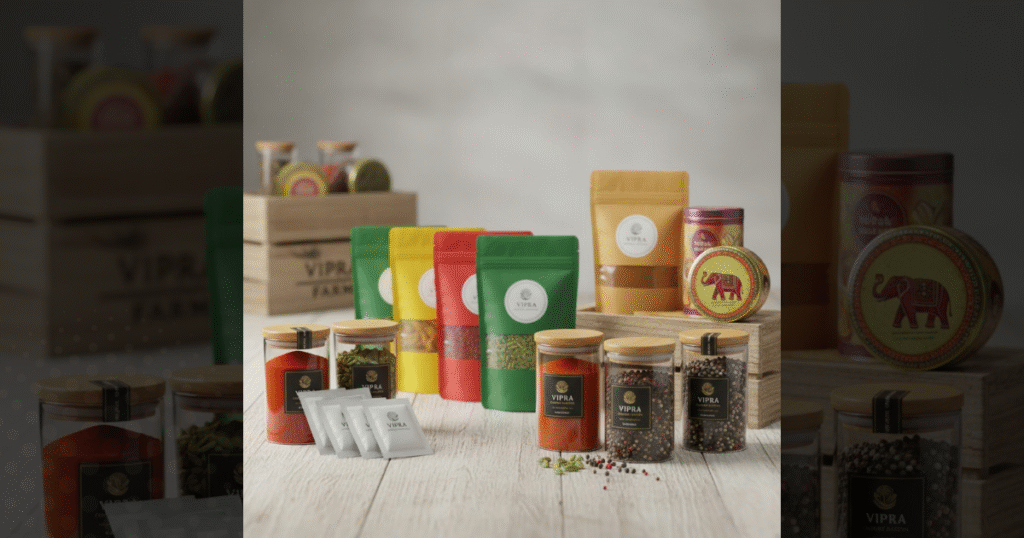
Each format serves specific market segments. Export packaging standards spices require careful consideration of shipping conditions, shelf life expectations, and retail display requirements in target markets. Manufacturers work closely with brand owners to select materials and designs that align with positioning strategies while ensuring product integrity throughout the supply chain.
Branding and Customization Capabilities
The visual identity of packaged spices plays a crucial role in consumer purchasing decisions. Customised spice labels incorporate brand logos, nutritional information, usage instructions, and legally required disclosures in formats that comply with destination country regulations. Design teams at packaging facilities collaborate with clients to create artwork that resonates with target audiences while maintaining authenticity.
Spice branding for global markets demands cultural sensitivity and market research. A design that appeals to European consumers might differ significantly from what works in Middle Eastern or Southeast Asian markets. Experienced private label spice exporters bring this market intelligence to the table, advising clients on color schemes, typography, and messaging that drive sales.
Turnkey spice packaging services extend beyond basic processing to include recipe development, sample creation, regulatory documentation preparation, and even assistance with international spice buyers connections. This comprehensive approach reduces the complexity that brands face when entering new markets.
Quality Assurance and Compliance Framework
Food safety remains paramount in the spice industry, particularly given the scrutiny that imported food products face. FSSAI compliance for packaged spices forms the foundation, but export-oriented facilities typically maintain additional certifications such as ISO 22000, HACCP, and organic certifications where applicable.
Quality control begins at the procurement stage, where spices undergo rigorous testing for moisture content, volatile oil levels, and contamination. Processing areas maintain controlled environments with temperature and humidity monitoring, while metal detectors and X-ray machines ensure foreign object elimination. Final products undergo microbiological testing and chemical analysis before receiving clearance for packaging.

Documentation accompanying each shipment provides complete traceability, a requirement that international retailers increasingly insist upon. This transparency builds trust and simplifies audit processes that brands conduct on their suppliers.
Strategic Value of Private Labelling
For businesses entering the spice market, private label food manufacturing offers distinct advantages over establishing proprietary production units. Capital investment remains minimal, time to market shortens dramatically, and operational risks transfer to experienced manufacturers. Brands can test new products and market responses without committing to infrastructure that might become obsolete if consumer preferences shift.
The flexibility inherent in private label arrangements allows brands to scale production volumes based on actual demand rather than capacity constraints. Seasonal fluctuations that characterize agricultural products become the manufacturer’s challenge to manage, not the brand’s burden to absorb.
Moreover, access to multiple product categories through integrated suppliers creates cross-selling opportunities. A brand sourcing packaged spices might expand into offering different fruits and vegetables, beans, frozen products, or grains through the same partnership, leveraging established logistics and payment terms across a broader product portfolio.
Selecting Your Packaging Partner
Choosing the right private label spice packaging service provider requires evaluation beyond price competitiveness. Facility visits reveal operational capabilities and hygiene standards that certifications alone cannot convey. References from existing clients provide insights into reliability, communication effectiveness, and problem-solving approaches during inevitable supply chain challenges.
Technical capabilities matter significantly. Can the facility handle the specific spice varieties you need? Do they have experience with your target markets and their unique regulatory requirements? What minimum order quantities apply, and how flexible are production schedules?
Financial stability and export track record indicate a partner’s ability to sustain long-term relationships. Established exporters with diverse client bases demonstrate resilience and market knowledge that newer entrants might lack.
Vipra Overseas: Comprehensive Export Solutions
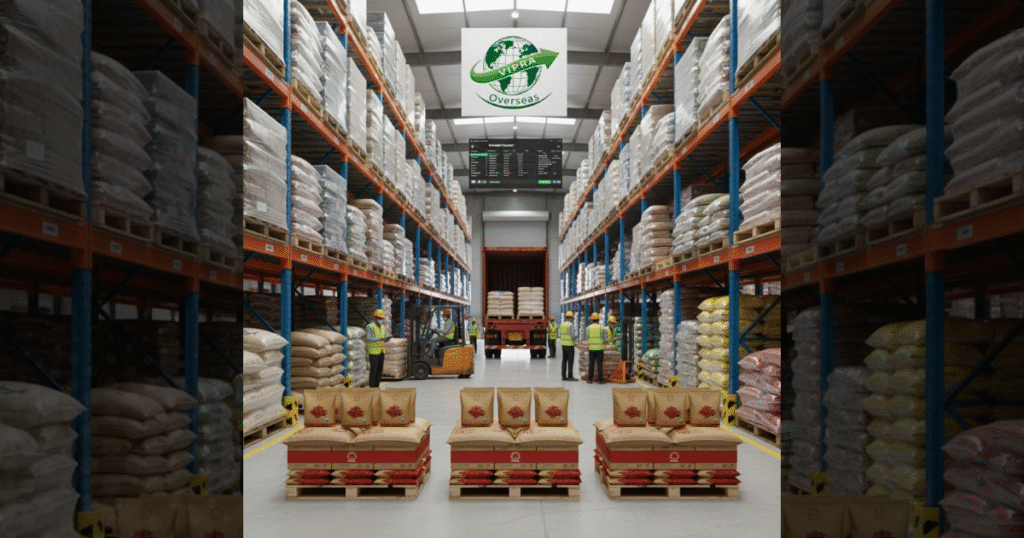
Vipra Overseas represents the evolution of agricultural export services in India, offering integrated solutions that extend well beyond traditional spice packaging. As a trusted partner for international buyers, the company facilitates the export of fresh fruits that meet the quality standards of discerning global markets, ensuring that fruits fresh from Indian orchards reach consumers in optimal condition.
The product range encompasses fresh vegetables sourced from certified farms, premium beans selected for consistency and quality, and frozen products processed using advanced techniques that preserve nutritional value and flavor. This diversity allows buyers to consolidate their Indian sourcing through a single reliable channel, simplifying procurement and logistics coordination.
Naturally, spices remain a core strength, with processing capabilities covering the full spectrum from whole spices to complex blends. Grains complete the agricultural portfolio, with offerings that include both conventional and specialty varieties tailored to specific market demands. This comprehensive approach positions Vipra Overseas as a one-stop solution for businesses seeking to build robust agro product supply chains anchored in Indian agriculture.
Making Private Label Work for Your Brand
Success in private label spice ventures depends on clear communication and realistic expectations from both parties. Detailed product specifications that cover not just the spice itself but also packaging materials, labeling requirements, and quality parameters prevent misunderstandings that could derail launch timelines.
Sample approval processes should be thorough, testing products under conditions that simulate actual distribution channels. This includes subjecting packages to temperature variations, handling stress, and shelf life studies that verify expiration date claims.
Building buffer inventory for popular items helps manage lead times that agricultural products inevitably face. While manufacturers maintain stocks of common spices, seasonal variations in quality and availability require planning that accounts for harvest cycles, especially when dealing with spice fruits and seasonal ingredients.
Conclusion
Private label spice packaging services in India offer international brands a proven pathway to market entry and expansion. The country’s unmatched spice production capabilities, combined with modern processing infrastructure and export expertise, create compelling value propositions for businesses across size categories. As consumer demand for authentic flavors and transparent sourcing continues growing, partnerships with established Indian exporters position brands to capitalize on these trends while maintaining operational flexibility and cost efficiency. Whether launching a new spice line or expanding an existing portfolio, the private label route deserves serious consideration from any business targeting growth in the global food marketplace.