
The global appetite for organic spices continues to expand, driven by health-conscious consumers and stringent food safety regulations. Among these, organic red chilli powder stands out as one of India’s most valuable agricultural exports, commanding premium prices in international markets. However, accessing these lucrative opportunities requires navigating a complex landscape of certification standards, documentation protocols, and compliance frameworks that vary across different importing nations.
Understanding Organic Red Chilli Powder Standards
Organic red chilli powder differs fundamentally from conventionally produced varieties. The entire production chain—from soil preparation and seed selection to harvesting, drying, and grinding—must adhere to strict organic principles. No synthetic pesticides, chemical fertilizers, or genetically modified organisms can touch the crop at any stage. This commitment to natural cultivation methods produces a product that meets international definitions of organic agriculture while preserving traditional farming wisdom.
The distinction extends beyond farming practices. Processing facilities must maintain complete segregation between organic and conventional products. Cross-contamination risks must be eliminated through dedicated equipment, separate storage areas, and rigorous cleaning protocols. These operational requirements ensure that the organic integrity remains intact from farm to final packaged product.

Why Certification Matters in Global Markets
International buyers won’t accept verbal assurances about organic status. Third-party certification from recognized bodies provides the verification that importers, retailers, and consumers demand. Without proper credentials, even genuinely organic products cannot enter premium market segments or command higher prices. Certification acts as a passport, opening doors to markets in North America, Europe, Japan, and other regions with sophisticated organic regulations.
Beyond market access, certification demonstrates professional credibility. It signals that an exporter understands quality systems, maintains proper documentation, and operates with transparency. This reputation advantage can lead to long-term buyer relationships and repeat orders that form the foundation of sustainable export businesses.
Indian Organic Certification Framework
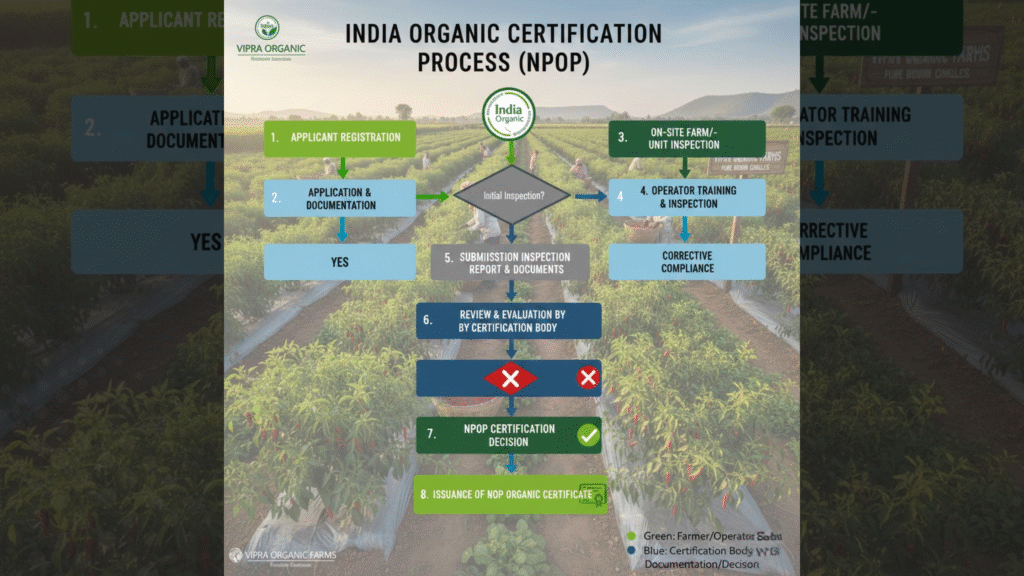
India’s National Programme for Organic Production (NPOP) serves as the backbone of domestic organic certification. Administered through the Agricultural and Processed Food Products Export Development Authority (APEDA), NPOP accredits certification bodies that inspect farms, processing units, and export operations. The system establishes standards equivalent to major international requirements, facilitating recognition in global markets.
Exporters must register with APEDA to gain official organic status. This registration process involves submitting detailed information about production areas, processing facilities, and handling procedures. APEDA-accredited certification agencies then conduct on-site inspections, review records, and verify compliance before issuing certificates valid for specific periods.
FSSAI compliance adds another layer of domestic regulation. The Food Safety and Standards Authority of India mandates licenses for food processing and export activities. Organic spice exporters must hold valid FSSAI licenses demonstrating that their facilities meet food safety standards, even as they pursue organic certifications.
International Standards Across Key Markets
Different importing nations maintain distinct organic regulations, though mutual recognition agreements have simplified some requirements. Understanding these variations proves essential for exporters targeting multiple regions.
The United States Department of Agriculture (USDA) operates its National Organic Program with specific rules about inputs, processing, and labeling. Products bearing the USDA Organic seal must come from certified operations that follow these regulations. Indian exporters can achieve USDA certification through NPOP equivalency or by working with USDA-accredited agencies operating in India.
European Union organic regulations set another major standard. The EU’s framework covers everything from farming practices to wine production, with detailed annexes addressing spice processing. Since Brexit, the United Kingdom maintains similar but separate organic rules. Exporters must verify whether their certifications satisfy current EU and UK import requirements.
Japan’s Japanese Agricultural Standard (JAS) for organic products, though smaller in market size, offers valuable opportunities. Canada, Australia, Switzerland, and several other nations each maintain organic systems with varying requirements. Smart exporters identify their target markets early and pursue appropriate certifications rather than scrambling after receiving purchase orders.
Documentation and Compliance Process
The paperwork trail for organic exports extends well beyond standard commercial documents. A transaction certificate, issued by the certification body, must accompany each shipment. This certificate verifies that the specific lot maintains organic integrity and meets destination country standards.
Detailed records form the foundation of organic certification. Farmers must document every field input, from organic manure applications to biological pest control measures. Processing units maintain batch records tracking raw material sources, processing dates, and quantities produced. Export firms keep comprehensive files linking purchased inventory to certified suppliers.
Traceability systems allow anyone to trace products backward from retail shelves to specific farms. This requirement demands meticulous record-keeping at every stage. When certification bodies conduct annual inspections, they scrutinize these records to verify that claimed organic practices actually occurred and that products weren’t mixed with conventional materials.

Processing, Segregation, and Traceability Requirements
Processing organic red chilli powder demands dedicated attention to preventing contamination. Mills and grinding units must clean equipment thoroughly before processing organic batches. Many operations maintain separate production lines exclusively for organic products, eliminating any risk of conventional residues transferring to organic goods.
Physical segregation applies to storage as well. Warehouses must clearly mark organic inventory, store it separately from conventional stock, and implement first-in-first-out systems that prevent old inventory from deteriorating. Temperature and humidity controls preserve quality while preventing mold growth that could render batches unusable.
Residue testing provides additional assurance. While organic certification doesn’t mandate chemical analysis of every batch, testing for pesticide residues helps verify that organic protocols effectively prevented contamination. Some buyers specifically request test reports, making this investment worthwhile for exporters serving quality-conscious markets.
Packaging, Labeling, and Transport Rules
Organic products must arrive at destination ports in packaging that maintains organic integrity. This means using new, food-grade materials free from prohibited substances. Recycled containers risk contamination, unless specifically approved for organic use.
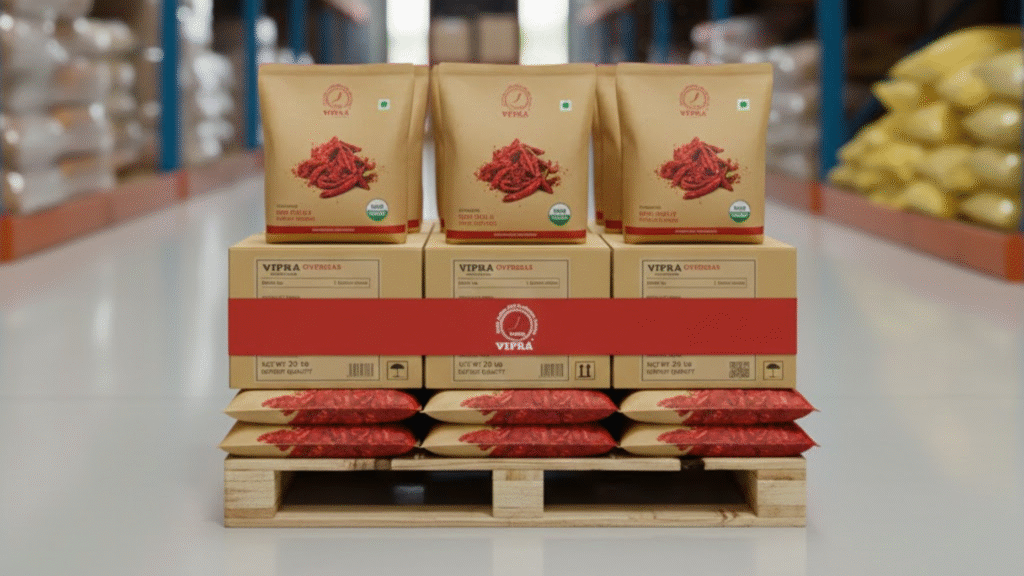
Labels must clearly identify products as organic and display certification marks according to destination requirements. The USDA Organic seal, EU organic logo, or other recognized symbols inform buyers and consumers about certification status. Mislabeling carries serious consequences, including loss of certification and legal penalties.
Transportation vehicles should be clean and free from previous cargoes that might contaminate organic shipments. While dedicated organic transport isn’t always required, exporters must ensure that mixed loads don’t compromise organic status. Documentation proving transport conditions helps satisfy importer verification requirements.
Common Certification Mistakes Exporters Should Avoid
New organic exporters frequently stumble over avoidable errors. Incomplete documentation tops the list—missing transaction certificates, expired certification documents, or inadequate traceability records can halt shipments at ports. Establishing robust document management systems prevents these costly delays.
Another frequent mistake involves mixing organic and conventional products during storage or transport. Even brief exposure can compromise organic status and require expensive remediation. Clear protocols and staff training eliminate these risks.
Some exporters underestimate the time required for certification. The process typically spans several months from application to certificate issuance. Planning ahead ensures certifications are in place before harvest seasons begin, allowing smooth export operations.
Failing to update certifications represents another pitfall. Annual renewals require timely inspections and documentation updates. Letting certificates lapse forces exporters to halt shipments until renewal completes, potentially damaging buyer relationships.
How Vipra Overseas Facilitates Agricultural Exports
Navigating organic certification complexities becomes significantly easier with experienced export partners. Vipra Overseas brings comprehensive knowledge of international compliance standards and maintains relationships with certification bodies, ensuring smooth processing of organic credentials.
The company’s export portfolio extends across diverse agricultural categories. Fresh fruits with vegetables move through their distribution network to markets worldwide, maintaining cold chain integrity throughout transit. Their fresh and vegetables program connects Indian farmers with international buyers seeking quality produce.
Beyond fresh categories, Vipra Overseas handles vegetables of fruits in processed forms, beans sourced from certified farms, frozen products meeting international specifications, premium spices including organic varieties, and various grains. This diversified approach allows agricultural producers to access multiple market channels through a single reliable partner.
Their certification support helps suppliers understand requirements, prepare documentation, and maintain compliance across different markets. This guidance proves invaluable for producers new to organic exports or those expanding into additional international regions.

Practical Guidance for Aspiring Organic Exporters
Success in organic red chilli powder exports requires patience, attention to detail, and willingness to invest in proper systems. Start by thoroughly understanding target market requirements before committing to certification paths. Research buyer preferences, price points, and competitive dynamics in specific regions.
Build relationships with accredited certification bodies early. Their inspectors can provide valuable feedback about farm and processing operations before formal certification begins, helping identify and correct issues proactively.
Invest in training for farm workers and processing staff. Everyone handling organic products must understand contamination risks and proper protocols. Regular refresher training maintains awareness as staff changes occur.
Consider starting with domestic organic markets to gain experience before pursuing international certifications. India’s growing organic sector offers opportunities to refine operations while learning regulatory requirements in a familiar business environment.
Network with other organic exporters through industry associations and trade events. Experienced exporters often share practical insights about certification processes, buyer preferences, and common challenges. These connections can prove invaluable as export operations expand.
Conclusion
Organic red chilli powder exports offer substantial opportunities for Indian agricultural businesses willing to meet international certification standards. While the requirements appear complex initially, systematic approaches to compliance, documentation, and quality management make success achievable. Understanding the differences between NPOP, USDA, EU, and other organic systems allows exporters to strategically target markets matching their capabilities.
The investment in organic certification pays dividends through premium pricing, access to quality-conscious buyers, and competitive differentiation. As global demand for organic spices continues growing, properly certified Indian exporters are positioned to capture increasing market share. With careful planning, robust systems, and reliable export partners, organic red chilli powder can become a cornerstone of profitable international trade operations.