
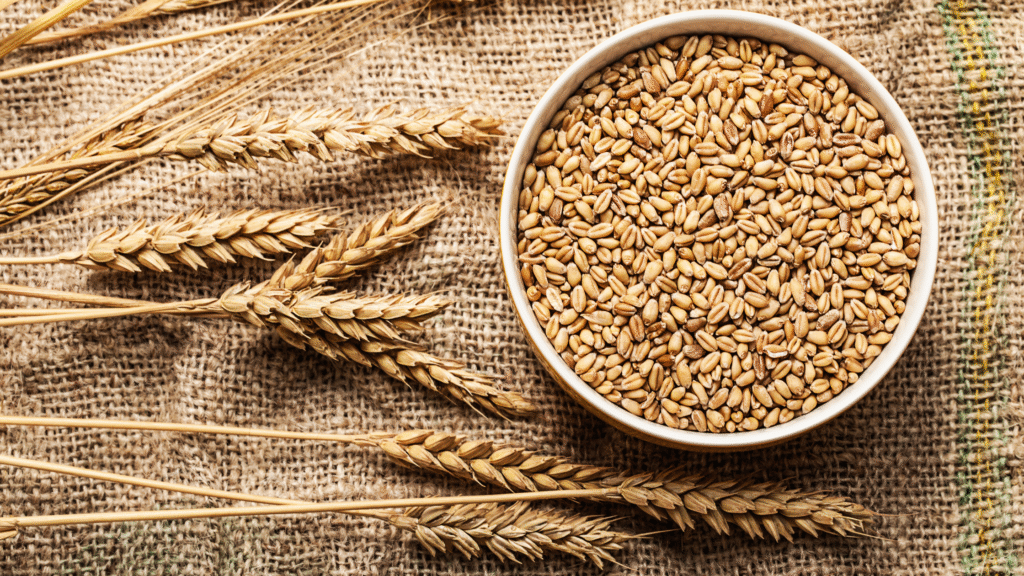
 Wheat is one of the most important cereal crops grown on large farms across many regions. Its wide use in daily food, stable demand, and long storage life make it a dependable crop for large-scale cultivation. However, growing wheat successfully on a large farm is not just about sowing seeds and waiting for harvest. It requires planning, discipline, proper machinery use, and timely decisions at every stage. When managed correctly, wheat farming can deliver consistent yields and strong market value year after year.
Planning the Crop Before the Season Begins
Large-scale wheat farming starts well before the first seed touches the soil. Planning includes understanding local  climate conditions, soil type, water availability, and labor requirements. Selecting fields with good drainage and uniform soil structure helps ensure even crop growth across large areas.
Farmers also need to plan input availability such as seeds, fertilizers, irrigation systems, and harvesting equipment. Proper scheduling avoids delays that can affect yield quality later in the season.
Preparing the Land for Large-Scale Cultivation
Land preparation is critical when working with large fields. The soil should be ploughed deeply to break compact 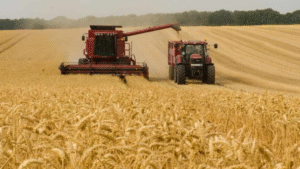 layers and improve root penetration. Laser leveling is often used on large farms to ensure uniform field height, which helps with even irrigation and reduces water waste.
After ploughing, the field should be cleaned of weeds and crop residue. A smooth seedbed allows machines to operate efficiently and helps seeds germinate evenly.
Selecting the Right Seed Variety
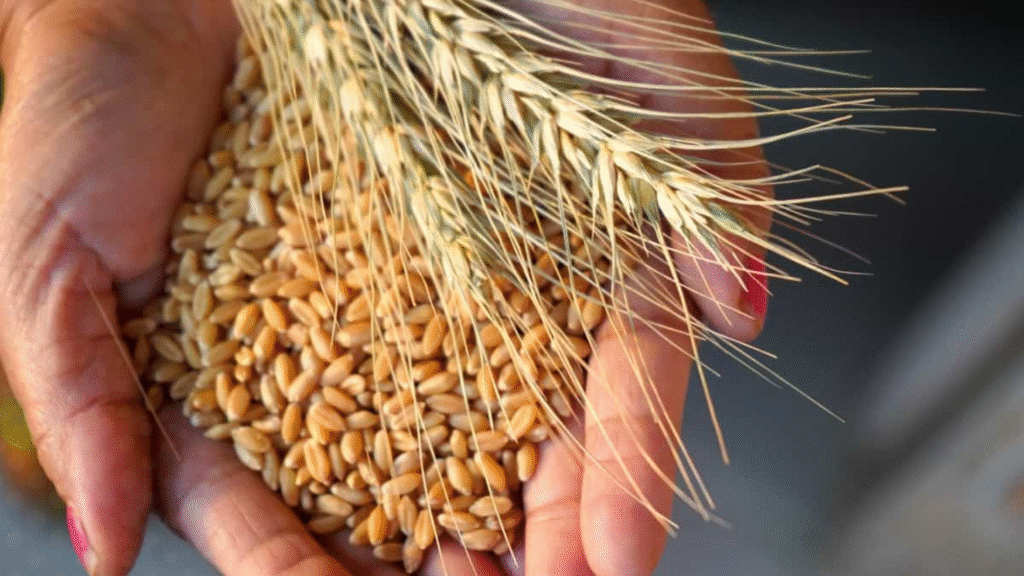 Seed selection plays a major role in large-scale wheat farming. Farmers should choose high-yielding varieties suited to local weather patterns and resistant to common diseases. Certified seeds with high germination rates help maintain uniform crop density across the field.
Using quality seed reduces the risk of patchy growth, which can cause uneven ripening and complicate harvesting operations on large farms.
Sowing Techniques for Large Farms
Mechanized sowing is essential for large-scale wheat cultivation. Seed drills allow precise placement of seeds at the 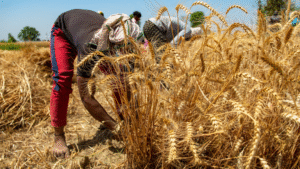 correct depth and spacing. This ensures efficient use of seed and uniform plant growth.
Sowing should be done within the recommended time window. Delayed sowing often leads to reduced tillering and lower grain weight. On large farms, timely sowing depends heavily on equipment readiness and labor coordination.
Managing Water Across Large Fields
Water management becomes more complex as farm size increases. Wheat does not tolerate waterlogging, so proper 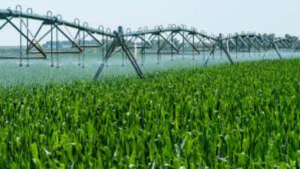 drainage is essential. Irrigation should be scheduled carefully during critical stages such as tillering, flowering, and grain filling.
Modern large farms often use controlled irrigation methods to ensure water reaches all parts of the field evenly. Avoiding over-irrigation helps prevent root diseases and nutrient loss.
Balanced Nutrient Management
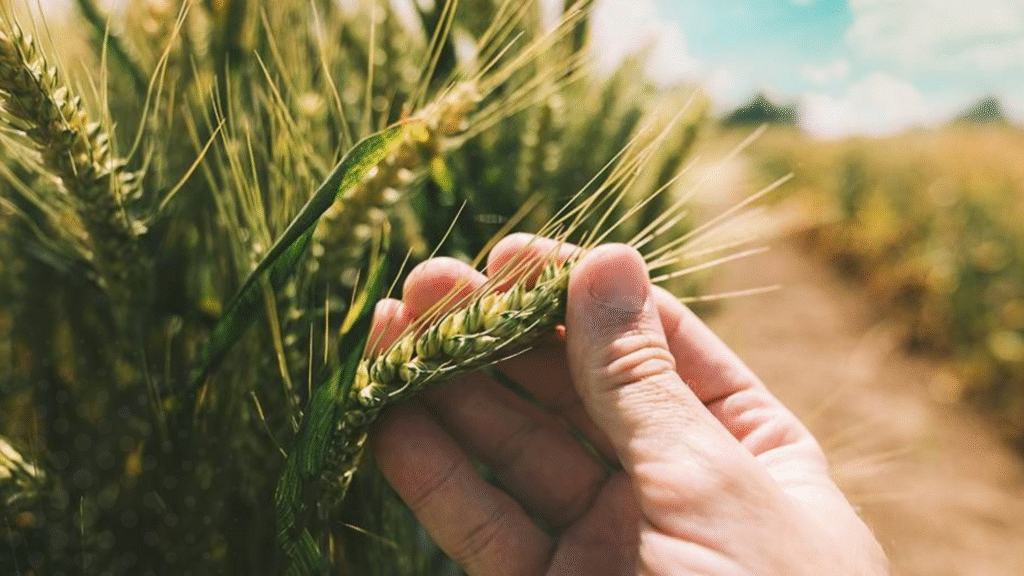 Large wheat fields require well-planned nutrient strategies. Soil testing before sowing helps determine the exact nutrient requirements. Applying fertilizers in stages rather than all at once improves nutrient uptake and reduces waste.
Nitrogen supports vegetative growth, phosphorus strengthens roots, and potassium improves grain quality. Balanced nutrition helps plants withstand stress and supports uniform growth across wide areas.
Controlling Weeds, Pests, and Diseases
Weed control is especially important on large farms because weeds spread quickly across open land. Early-stage weed  management helps reduce competition for nutrients and water.
Regular field monitoring helps detect pest or disease outbreaks early. Preventive measures, proper crop rotation, and timely interventions protect yield without disturbing the overall farm ecosystem.
Harvesting Wheat Efficiently
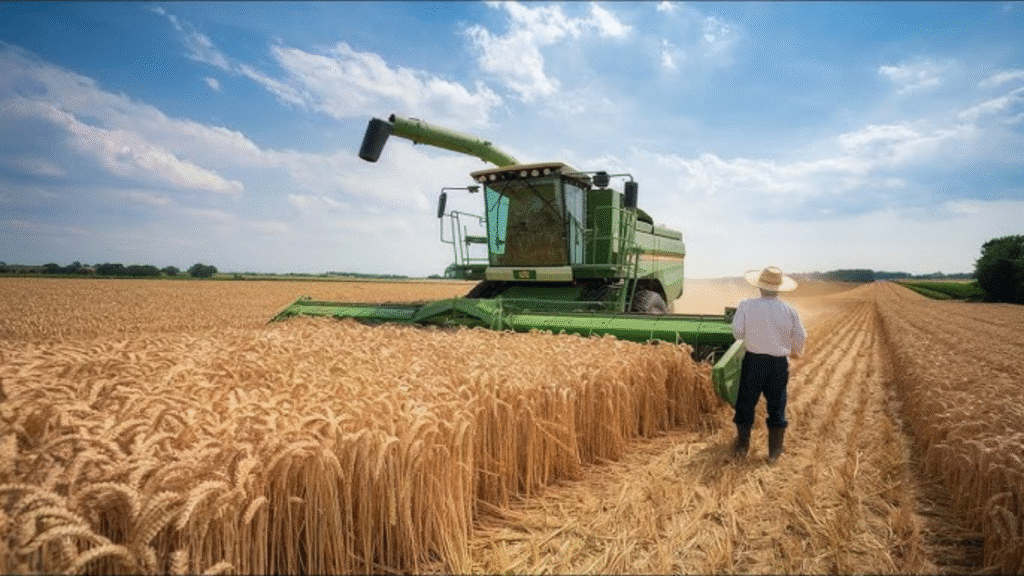
Harvest timing is critical in large-scale wheat farming. Harvesting too early affects grain quality, while late harvesting increases losses due to  shattering or lodging. The ideal time is when grains are hard and moisture levels are appropriate.
Combine harvesters are commonly used on large farms to speed up the process and reduce labor dependency. Proper machine calibration helps minimize grain loss during harvesting.
Post-Harvest Handling and Storage
 After harvesting, wheat must be dried and stored properly to maintain quality. Large farms often use bulk storage facilities with ventilation systems to control moisture and temperature.
Clean storage conditions prevent pest infestation and spoilage. Proper handling ensures wheat remains suitable for milling, trading, and long-distance transport.
Large-Scale Wheat Farming in the Global Context
Wheat grown on large farms plays a major role in feeding populations 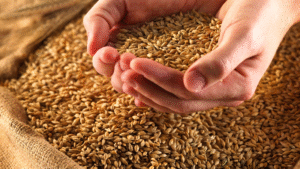 beyond local markets. Large-scale production supports food security not only within farming regions but also across borders. Wheat contributes significantly to farming systems in india and continues to supply demand across the world, supporting stable food chains and trade networks. Its reliable production makes it one of the most trusted crops in modern farming.
Vipra Overseas and the Export of Agro Products
 Vipra Overseas plays an important role in connecting large farms with international markets. The company supports the export of fresh fruits, fresh vegetables, beans, frozen products, spices, and grains, ensuring quality at every step. From sourcing and quality checks to export-grade packaging and international logistics coordination, Vipra Overseas helps agricultural produce reach global buyers in excellent condition. This export support strengthens market access and helps farmers gain better value for their produce.
Why Discipline Matters in Large Wheat Farms
Managing large farms requires consistency and attention to detail. Small mistakes can lead to large losses when spread across wide acreage. Farmers who follow disciplined schedules for irrigation, fertilization, and monitoring usually achieve more predictable results.
Technology, trained labor, and good planning together make large-scale wheat farming efficient and profitable.
Conclusion
Growing wheat on a large farm is a structured process that depends on preparation, timing, and careful management. From land preparation and seed selection to irrigation, nutrition, and harvesting, every step contributes to the final outcome. When done correctly, large-scale wheat farming delivers strong yields, consistent quality, and dependable income.
With rising global demand and export support from companies like Vipra Overseas, wheat grown on large farms continues to play a vital role in feeding populations and supporting agricultural economies for years to come.